Our top picks at a glance
Best for reliability and dealer support
Husqvarna Automower iQ seriesSee itPrice tier 4 of 4:Over $1,500Larger lawns and buyers who want local dealer support.Best wire-free for typical lawns
Segway Navimow i2 LiDAR seriesSee itPrice tier 3 of 4:$500–$1,500Typical lawns where you don't want to bury a boundary wire.Best for large or hilly lawns
Segway Navimow X4 seriesSee itPrice tier 4 of 4:Over $1,500Large or steep lawns with open sky.Best all-wheel-drive for big or tricky lawns
Mammotion LUBA 2 AWDSee itPrice tier 4 of 4:Over $1,500Big lawns with slopes.Best budget (wire-based)
Worx LandroidCheck pricePrice tier 3 of 4:$500–$1,500Smaller lawns and tighter budgets.
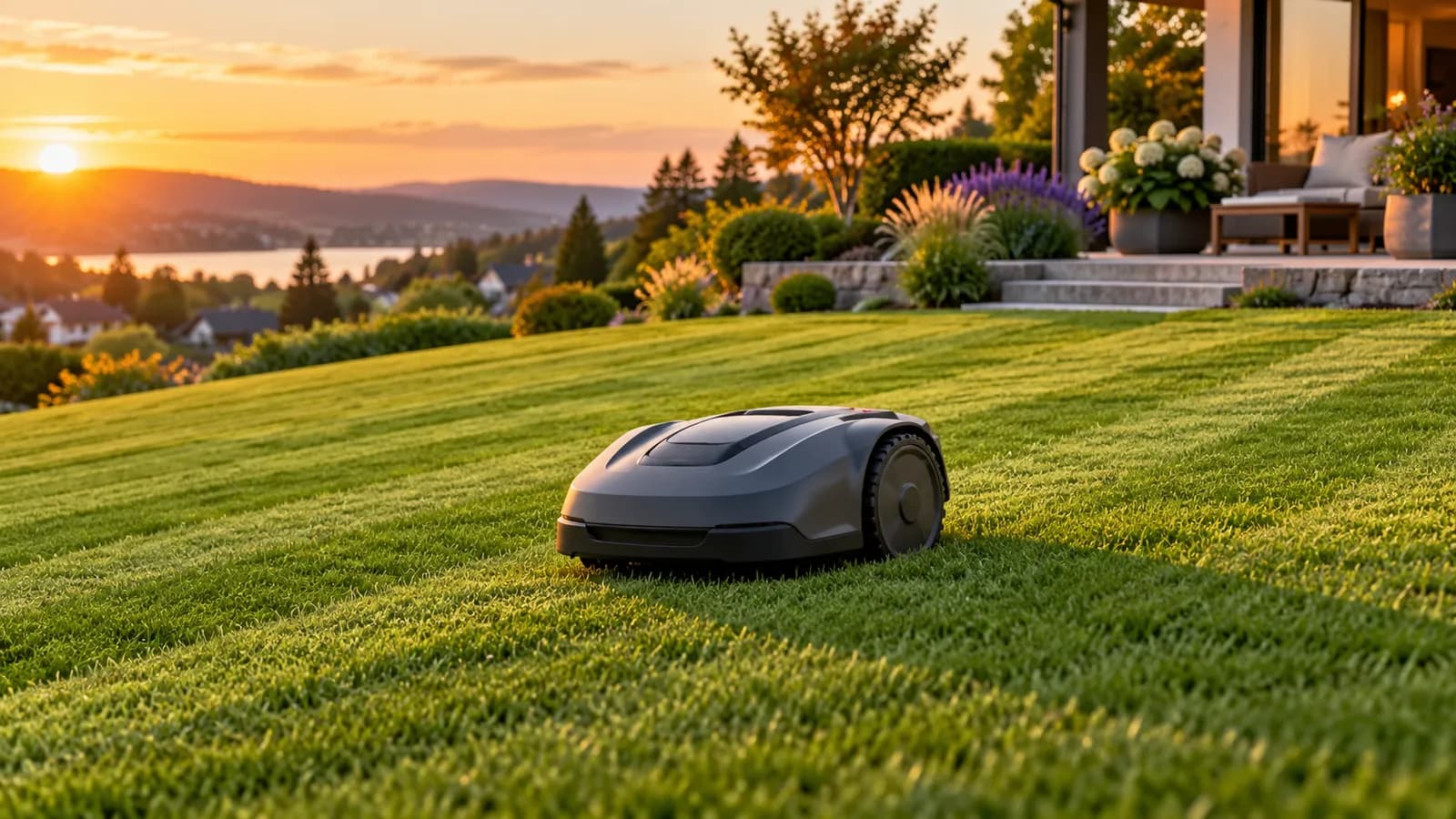
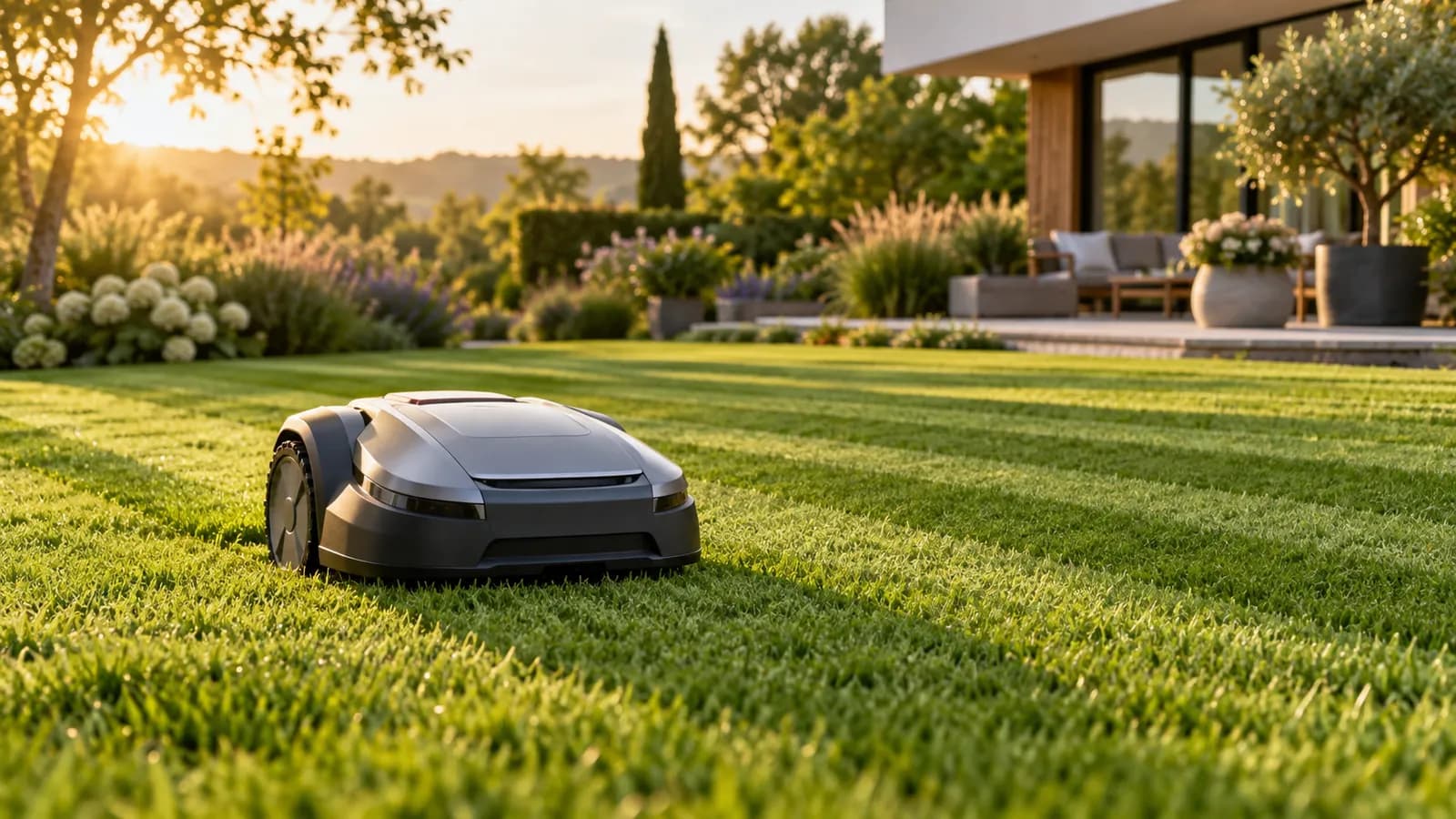
A robot mower doesn't replace a lawn mower so much as it replaces mowing. It cuts a little every day, quietly, while you do something else. The newest models skip the boundary wire entirely. But the right model depends heavily on your lawn: size, slope, trees and obstacles all matter.
Quick picks
- Most dependable, with dealer support: Husqvarna Automower iQ
- Best wire-free for typical lawns: Segway Navimow i2 LiDAR
- Large or hilly lawn: Segway Navimow X4
- All-wheel drive: Mammotion LUBA 2 AWD
- Budget: Worx Landroid
How we picked
We compare navigation methods, rated lawn areas, slope ratings and support options using the product information recorded in our catalog. This is a research-based comparison, not a hands-on mower test or a long-term owner study. A product's "Specs checked" month shows where details have been checked against the maker's page; it does not mean we tested its performance. Lineups, regional models and prices change, so confirm the exact mower's specifications before buying. See our methodology.
Our top picks
Best for reliability and dealer support
Husqvarna Automower iQ series
The dependable pick with a deep dealer network.
Husqvarna's residential Automower iQ line — the 410 iQ, 420 iQ and 440 iQ — is rated for roughly half an acre, one acre and two acres respectively (Husqvarna lists these as ±20%). The 435 iQ AWD is rated for slopes up to 70%. You can choose physical-wire or virtual-wire boundaries, and a dealer network handles installation and service. It's pricier than newer challengers.
What we like
- Residential 410 iQ / 420 iQ / 440 iQ models cover roughly 0.5, 1 and 2 acres per Husqvarna
- Offers both physical-wire and virtual-wire boundary options
- Dealer network handles installation and service
Trade-offs
- Typically needs a professional or careful DIY install
- Prices are higher than newer wire-free challengers
- Best for
- Larger lawns and buyers who want local dealer support.
- Skip it if
- You want a plug-and-play install with no dealer involvement.
Best wire-free for typical lawns
Segway Navimow i2 LiDAR series
A wire-free LiDAR mower for typical suburban lawns.
The Navimow i2 LiDAR series maps your lawn with LiDAR — no boundary wire to bury — across models rated for roughly 800 to 2,000 m² (about a fifth to half an acre). Segway lists a slope capability of up to about 45% for the series. LiDAR can struggle in very open, featureless areas; check availability and pricing in your region.
What we like
- LiDAR-based wire-free mapping (no boundary wire to bury)
- Models cover roughly 800 to 2,000 m² of lawn
- Listed slope capability of up to about 45% on the i2 LiDAR series
Trade-offs
- LiDAR can struggle in some very open or featureless spaces
- Check availability and pricing in your region
- Best for
- Typical lawns where you don't want to bury a boundary wire.
- Skip it if
- Your yard is very open or featureless, or you haven't confirmed availability and pricing in your region.
Best for large or hilly lawns
Segway Navimow X4 series
Network-RTK navigation for large, hilly lawns.
The X4 series uses network RTK positioning for big open areas, with models rated for roughly 2,000 to 5,000 m² and slopes up to about 84% (40°). RTK needs a good view of the sky and a strong signal, so yards under heavy tree cover can be a problem.
What we like
- Network RTK positioning for large open areas
- Listed slopes up to about 84% (40°) on the X4 series
- Models rated for roughly 2,000 to 5,000 m²
Trade-offs
- Needs a clear view of the sky and a strong network connection for RTK
- Premium pricing
- Best for
- Large or steep lawns with open sky.
- Skip it if
- Your yard has heavy tree cover.
Best all-wheel-drive for big or tricky lawns
Mammotion LUBA 2 AWD
An all-wheel-drive mower for big or tricky lawns.
Mammotion's LUBA 2 AWD is rated for up to about 3,000 m² with all-wheel drive for slopes and uneven ground. The lineup moves fast — newer LUBA models exist now, including larger and smaller options — so compare the current range.
What we like
- All-wheel drive for slopes and uneven terrain
- Listed coverage up to about 3,000 m²
- Part of a lineup with smaller 'mini' options
Trade-offs
- Model lineup changes quickly — newer LUBA models now exist
- Premium price
- Best for
- Big lawns with slopes.
- Skip it if
- You have a small or simple lawn, or you'd rather buy a newer LUBA model.
Best budget (wire-based)
Worx Landroid
An affordable wire-based robot mower for small to mid-size lawns.
An affordable wire-based robot mower for small to mid-size lawns, with a simple proven approach: bury a boundary wire around the lawn and let it mow. It's not built for very large or steep yards, and installing the wire takes an afternoon.
What we like
- One of the lower-priced ways into robot mowing
- Simple, proven boundary-wire approach
- Easy to set up and maintain
Trade-offs
- Requires running a boundary wire around your yard
- Not built for very large or steep lawns
- Best for
- Smaller lawns and tighter budgets.
- Skip it if
- You don't want to run a boundary wire, or your lawn is very large or steep.
How to choose a robot mower
1. Lawn size
Mower ratings are for the maximum area under ideal conditions. Don't buy a mower right at the limit of your lawn's size. For reference, 1 acre ≈ 4,047 m², so 2,000 m² is about half an acre.
2. Navigation: wire, RTK, LiDAR or vision
- Boundary wire: reliable and proven; requires installing wire around the lawn.
- RTK (satellite): great in big, open lawns with a clear sky; struggles under heavy tree cover.
- LiDAR and vision: works without sky view; can struggle in featureless areas or in low light.
3. Slope
Check the mower's slope rating and your yard's steepest spots. All-wheel drive helps on slopes and wet grass.
4. Obstacles and layout
Narrow passages, lots of flower beds, play equipment and pets complicate things. Many robot mowers handle obstacles well, but you'll still need to tidy toys and debris.
5. Installation and support
Some mowers are easy to set up yourself; others work best with a dealer installation. Consider who will help if something goes wrong.
6. Running costs and upkeep
Blades are consumables, and you'll need to clean the deck occasionally. Winter storage and battery care add a little work.
What a robot mower won't do
It won't edge along fences or flower beds, trim tight corners or cut very tall grass. You'll still need a trimmer for edges and the occasional tidy-up.
Pair it with smart irrigation
If you're automating the lawn, see our smart sprinkler controller guide.
Frequently asked questions
Are robot lawn mowers worth it?
If you have a fairly open lawn and you hate mowing, yes. They quietly mow every day or two, which keeps grass short and fine clippings return nutrients to the soil. They're a poor fit for very small, cluttered or extremely steep yards, and premium models cost as much as a good riding mower.
Do robot mowers need a boundary wire?
Older and entry-level models do. Newer 'wire-free' models use RTK (satellite), cameras or LiDAR to map the yard. Each approach has limits: RTK needs a clear view of the sky, LiDAR and cameras can be confused in open or low-light areas.
Can a robot mower handle hills?
Some can. Slope ratings vary by model, from around 45% on basic ones to 70% or more on all-wheel-drive models. Check the specific slope rating and your yard's steepest spots.
What about security and theft?
Most robot mowers include PIN locks, alarms and GPS tracking. Check the specific model's features and your own comfort level.
Alex Mercer brings 15 years of experience and a practical editorial approach to Backyard Review. Alex compares published product information, installation needs and ownership costs, highlighting trade-offs and distinguishing research from documented hands-on experience.