Our top picks at a glance
Best budget cantilever
Abba Patio offset cantilever umbrellaCheck pricePrice tier 2 of 4:$150–$500Budget-conscious buyers who need a cantilever shade fast.Best durable market umbrella
California Umbrella market umbrellaCheck pricePrice tier 2 of 4:$150–$500Dining tables and shade you don't want to replace every year.Best premium
Treasure Garden cantilever umbrellaCheck pricePrice tier 4 of 4:Over $1,500Permanent, high-use patios where shade really matters.
The right umbrella can change how you use your patio: it's the difference between eating outside at noon and retreating indoors. But a cheap umbrella that wobbles, fades or turns inside out in the first breeze is a miserable purchase. Here's how to choose.
Quick picks
- Best budget cantilever: Abba Patio offset umbrella
- Best everyday durability: California Umbrella market umbrella
- Best premium: Treasure Garden cantilever
How we picked
We compared umbrella lines on frame and hardware, fabric quality, wind performance, ease of use, warranty and value. Umbrella models are sold in many sizes and finishes, so we cover product lines and not individual SKUs — confirm sizes and base requirements before you buy. See our methodology.
Our top picks
Best budget cantilever
Abba Patio offset cantilever umbrella
A popular budget cantilever with a crank tilt.
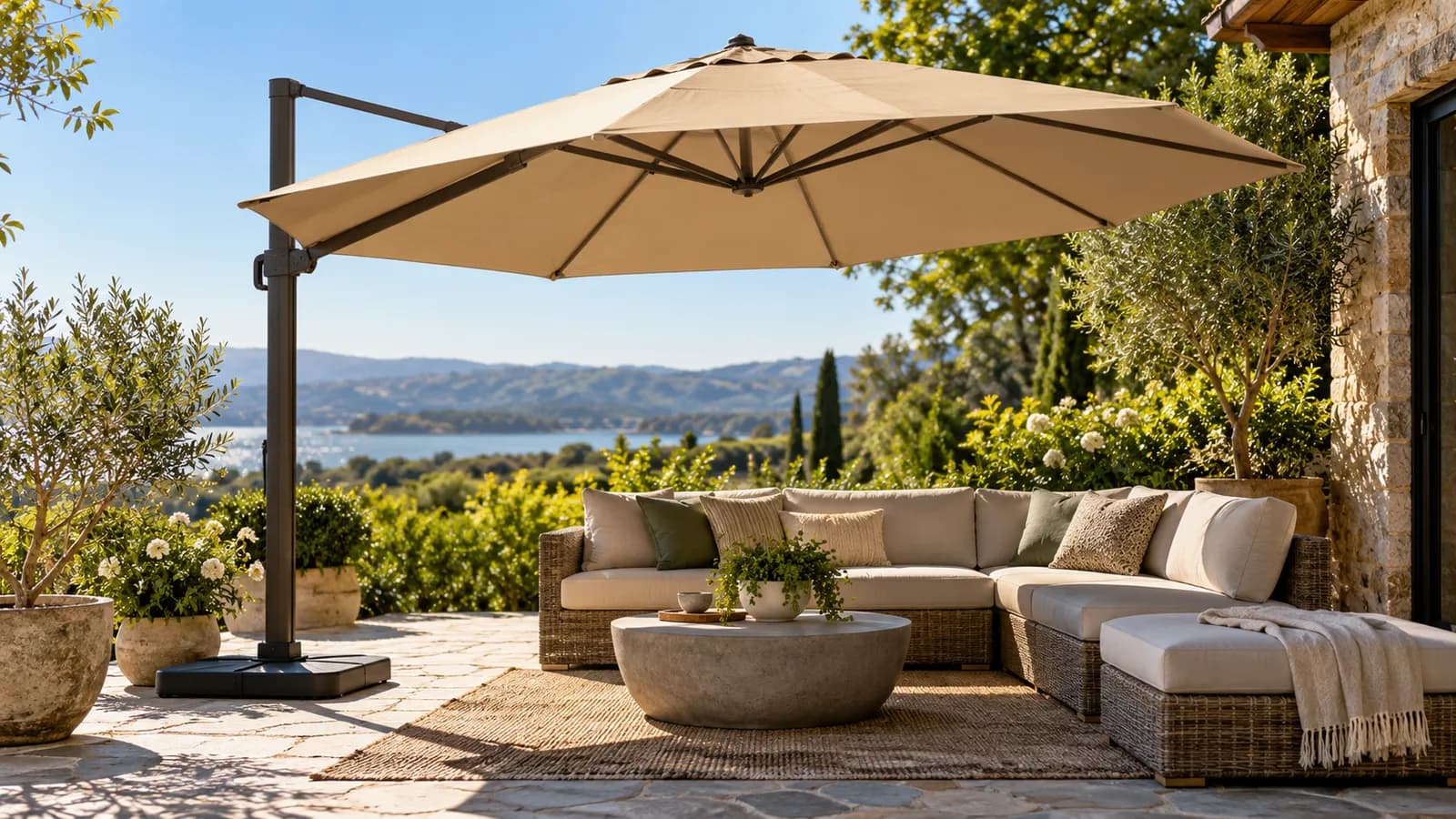
A popular offset umbrella with a crank and tilt, priced far below premium cantilevers. The offset design keeps a pole out of the middle of your table. The base is sold separately, so budget for a heavy one, and expect lighter fabric and hardware than premium models.
What we like
- Offset design clears the table so nobody sits next to a pole
- Crank and tilt let you chase the sun
- Affordable compared with premium cantilevers
Trade-offs
- Base is sold separately and must be weighted properly
- Fabric and hardware are lighter-duty than premium models
- Best for
- Budget-conscious buyers who need a cantilever shade fast.
- Skip it if
- You don't want to buy and properly weight a separate base, or you want premium fabric and hardware.
Best durable market umbrella
California Umbrella market umbrella
Durable commercial-style market umbrellas that last.
California Umbrella has a commercial heritage — you'll see its market umbrellas at restaurants and resorts — with fade-resistant fabric options and a simple, wind-tolerant design. The center pole sits in the middle of your table.
What we like
- Commercial heritage — widely used by restaurants and resorts
- Fabric options include fade-resistant outdoor fabrics
- Simple, wind-tolerant design
Trade-offs
- Center pole sits in the middle of your table
- Base is typically separate
- Best for
- Dining tables and shade you don't want to replace every year.
- Skip it if
- You don't want a pole through the middle of your table.
Best premium
Treasure Garden cantilever umbrella
A premium cantilever for people who hate replacing umbrellas.
A premium frame, smooth operation, strong fabric choices (including Sunbrella) and a long lifespan when properly based. It's expensive and needs a heavy base — best for permanent, high-use patios.
What we like
- Premium frame, hardware and fabric choices (including Sunbrella)
- Smooth operation and strong wind resilience when properly based
- Long lifespan compared with budget options
Trade-offs
- High price, plus a heavy base you'll need to buy
- Overkill for casual use
- Best for
- Permanent, high-use patios where shade really matters.
- Skip it if
- Your patio sees casual use (it's overkill there), or the premium price plus a heavy base is out of range.
How to choose
Market or cantilever?
- Market (center-pole): simpler, cheaper, more wind-tolerant; the pole goes through the table.
- Cantilever (offset): flexible shade with no pole in the middle; needs a heavy base and more care in wind.
Size and shape
Measure your table or seating area and choose a canopy that extends beyond it. Round umbrellas suit round tables; square or rectangular canopies suit rectangular layouts.
Fabric and frame
Solution-dyed acrylic fabric lasts longer than polyester. Aluminum and fiberglass frames are rust-resistant; fiberglass ribs flex in wind better than aluminum.
Base
The base is as important as the umbrella. Match base weight to the umbrella size and style, and consider a base that fits your patio layout. Water- or sand-filled bases are easy to move; cast or concrete bases are heavier and more stable.
Tilt and crank
A smooth crank and tilt mechanism makes daily use pleasant. Cheap mechanisms often fail first.
Care tips
Close the umbrella in wind and at night, clean fabric with mild soap and water, and cover it in storage or winter.
Complete the patio
See our guides to outdoor string lights, mosquito control and where to buy patio furniture.
Frequently asked questions
How big should my patio umbrella be?
A good rule of thumb is for the canopy to extend about two feet past each edge of the table. For a 4-person round table, that's usually a 9-foot umbrella; for larger tables or lounge areas, a 10- to 11-foot cantilever.
How heavy should the base be?
Heavier than most people expect. Market umbrellas typically need 40–75 lbs or more, and large cantilever umbrellas often need 100 lbs or more, depending on the model. Use the manufacturer's recommendation and close the umbrella in wind.
What fabric is best?
Solution-dyed acrylic (like Sunbrella) resists fading and mildew and lasts longest. Polyester is cheaper but fades sooner. Look for UV-blocking ratings if shade quality matters.
Should I leave my umbrella open in the wind?
No. Close and secure it when it's windy, even if it's a heavy-duty model. Wind is the main reason umbrellas break.
Alex Mercer brings 15 years of experience and a practical editorial approach to Backyard Review. Alex compares published product information, installation needs and ownership costs, highlighting trade-offs and distinguishing research from documented hands-on experience.