Our top picks at a glance
Best overall
Weber Spirit (3-burner)See itPrice tier 3 of 4:$500–$1,500Most households that want a reliable weeknight grill.Best premium
Weber Genesis (3-burner)See itPrice tier 4 of 4:Over $1,500Frequent grillers who want maximum durability.Best feature-rich alternative
Napoleon Rogue seriesCheck pricePrice tier 3 of 4:$500–$1,500Shoppers comparing mid-range gas grills who want more features.Best value for big families
Monument Grills 4-burnerCheck pricePrice tier 2 of 4:$150–$500Budget-minded households who want more burners and features per dollar.Best budget
Char-Broil Performance (4-burner)Check pricePrice tier 2 of 4:$150–$500First grill, rentals and tight budgets.
A great gas grill is the workhorse of the backyard: fast to start, easy to control, and ready for a weeknight dinner in ten minutes. The challenge is separating good grills from shiny ones. Here are our picks and the things that matter when choosing.
Quick picks
- Best overall: Weber Spirit (3-burner)
- Best premium: Weber Genesis
- Best value: Monument Grills 4-burner
- Best budget: Char-Broil Performance
How we picked
Gas grills are sold in countless variations of the same lines, so we compare by product family and focus on the factors that predict long-term satisfaction: build quality, heat distribution, parts availability, warranty and value. Verify the current model numbers and specs for your region before buying. See our methodology.
Our top picks
Best overall
Weber Spirit (3-burner)
The default recommendation for a no-regrets gas grill.
A three-burner Weber Spirit is the safe recommendation: even heating, dependable ignition, plenty of parts and strong resale. It's sized for families without taking over the patio. Model numbers change year to year, so compare the current specs.
What we like
- Even heating, dependable ignition and strong parts availability
- Sized well for families without taking over the patio
- Long track record and strong resale
Trade-offs
- Fewer premium features than the Genesis line
- Model numbers change year to year — compare current specs
- Best for
- Most households that want a reliable weeknight grill.
- Skip it if
- You want premium features (look at the Genesis), or you won't compare current specs, since model numbers change yearly.
Best premium
Weber Genesis (3-burner)
Premium gas grilling with room to grow.
The Genesis adds a heavier-duty build, more cooking space and features like sear zones on some models. It costs substantially more than the Spirit, and for weeknight grilling you may not need it — but if you grill several times a week and want it to last, it's the step up.
What we like
- Heavier-duty build and high-heat performance
- More cooking space and features such as sear zones (model dependent)
- Built to last a decade or more
Trade-offs
- Costs substantially more than the Spirit
- Not necessary for typical weeknight grilling
- Best for
- Frequent grillers who want maximum durability.
- Skip it if
- You mostly cook typical weeknight meals; the Spirit costs substantially less and covers that.
Best feature-rich alternative
Napoleon Rogue series
A feature-rich alternative to Weber at a similar price.
Napoleon's Rogue series packs features like side burners and infrared sear on some models, with good build quality for the price. The dealer network is smaller in some areas.
What we like
- Strong high-heat performance and good build quality for the price
- Features like side burners or infrared sear (model dependent)
- Generally good warranties
Trade-offs
- Smaller dealer network in some areas
- Slightly steeper learning curve than the simplest grills
- Best for
- Shoppers comparing mid-range gas grills who want more features.
- Skip it if
- You want the simplest learning curve, or a large local dealer network matters to you.
Best value for big families
Monument Grills 4-burner
Lots of grill for the money.
More burners and features for less money, often with a side burner. Build quality isn't at the level of the premium brands, so expect to replace burners and grates sooner.
What we like
- Four burners plus a side burner on many models at a lower price
- Good value for families who cook for a crowd
- Commonly available at big-box retailers
Trade-offs
- Build quality is not at the level of premium brands
- Expect to replace consumables like burners and grates sooner
- Best for
- Budget-minded households who want more burners and features per dollar.
- Skip it if
- You want premium build quality, or you'd rather not replace burners and grates sooner.
Best budget
Char-Broil Performance (4-burner)
A budget gas grill that does the basics well.
A solid starter grill that handles everyday cooking at a low price. Lighter-duty materials mean you should plan to replace parts and eventually the grill.
What we like
- Low price with everything needed for everyday grilling
- Easy to find replacement parts
- Good starter grill for new homeowners
Trade-offs
- Lighter-duty materials — plan to replace parts and eventually the grill
- Less consistent heat distribution than premium grills
- Best for
- First grill, rentals and tight budgets.
- Skip it if
- You want a grill built to last for years, or the most even heat across the grate.
What matters when buying a gas grill
Build quality beats BTUs
A thin-steel grill with a big BTU number will have hot spots and rust sooner. Look for thicker cast or stainless burners, a heavy lid, solid grates and good welds. Weight is a rough proxy for quality — heavier grills usually last longer.
Burners and layout
Three burners give you flexibility: high heat on one side, low or indirect on the other. Look for even burner spacing and a lid that seals well.
Grates
Cast iron and porcelain-coated cast iron retain heat and sear well but need care. Stainless-steel rod grates are lower-maintenance but sear less aggressively.
Ignition and controls
Reliable electronic ignition and smooth knobs make everyday use pleasant. Cheap grills often fail here first.
Warranty and parts
A longer warranty on burners and the firebox is a good sign. Make sure replacement parts (burners, igniters, grates) are available.
Propane vs. natural gas
Propane is portable and common. Natural gas is convenient if you have a line, but needs professional installation.
Extras worth paying for
Side burners, warming racks and infrared sear zones are useful if you'll use them. Skip features you won't cook with.
Other ways to grill
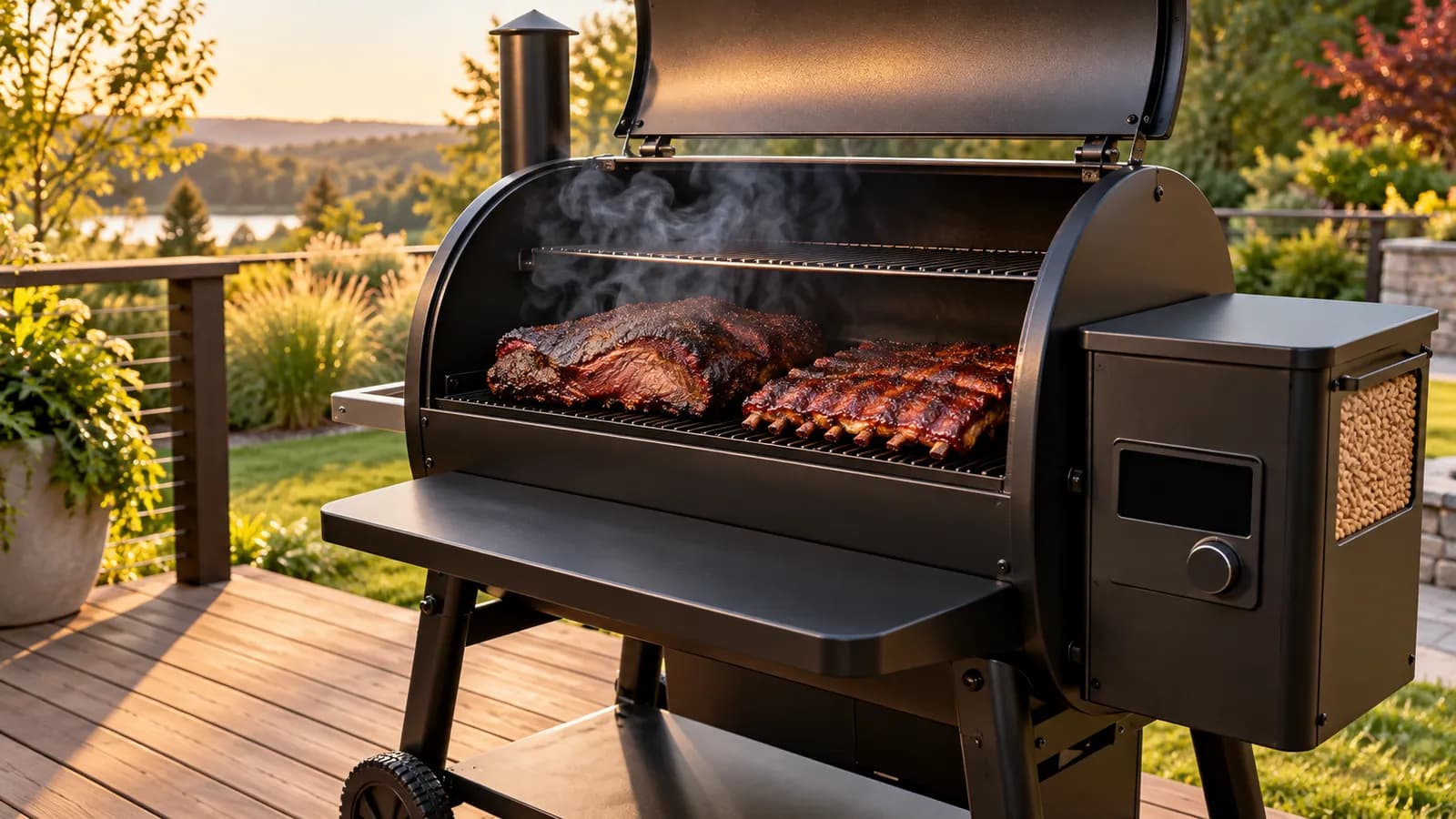
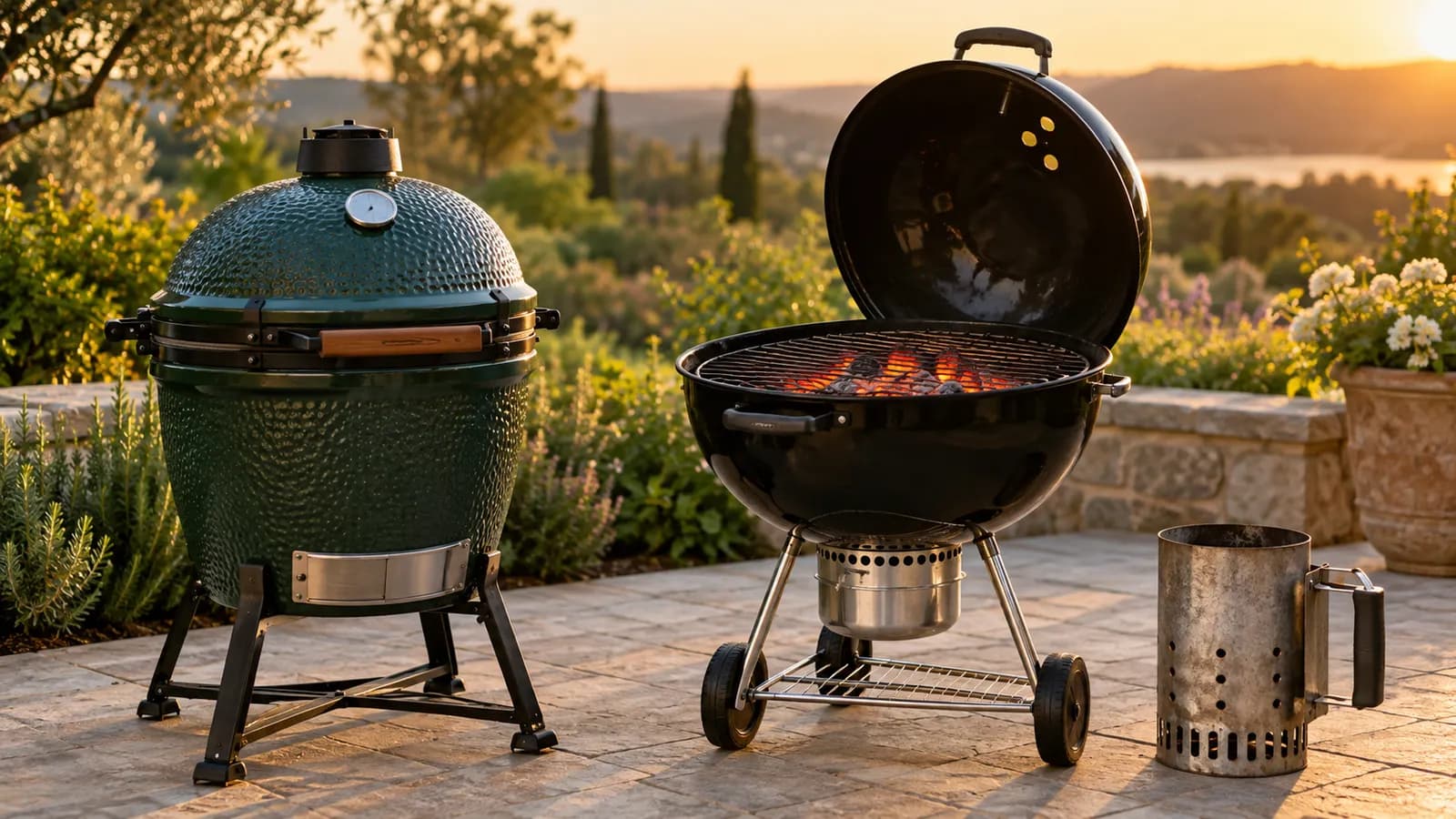
For smoke flavor, see best pellet grills and best charcoal and kamado grills. For breakfast and smash burgers, see flat-top griddles.
Frequently asked questions
Propane or natural gas?
Propane tanks make the grill portable and are the most common. Natural gas needs a gas line to your patio (installed by a professional) but you never run out of fuel and it's cheaper per cook. Many grills are available in either configuration.
How long does a gas grill last?
Budget grills often last 3–5 years. Well-made mid-range grills can last 10 years or more with care and replacement parts. Stainless-steel burners and thicker materials are the key.
How many burners do I need?
Three burners cover most families — you can sear on one side and cook indirectly on the other. Two burners suit couples and small patios. Four or more helps for large gatherings.
Is more BTU better?
Not necessarily. BTUs measure input, not performance. Heat retention, cooking area and build matter more. Compare BTUs per square inch rather than headline numbers.
Alex Mercer brings 15 years of experience and a practical editorial approach to Backyard Review. Alex compares published product information, installation needs and ownership costs, highlighting trade-offs and distinguishing research from documented hands-on experience.