Our top picks at a glance
An infrared pick that can go outdoors
Clearlight infrared saunas (Sanctuary and Premier lines)See itPrice tier 4 of 4:Over $1,500Shoppers who want an infrared sauna that can live outdoors and a strong warranty.A well-known indoor infrared line
Sunlighten infrared saunas (Signature, Amplify, mPulse)See itPrice tier 4 of 4:Over $1,500Garage, basement, spare-room or covered-porch infrared saunas.A traditional outdoor barrel
Almost Heaven Saunas barrel lineSee itPrice tier 4 of 4:Over $1,500Backyard saunas for small families.Best for comparing both types with a dealer
Finnleo saunas (traditional, infrared and outdoor)See itPrice tier 4 of 4:Over $1,500Buyers who are still deciding between traditional and infrared and want to talk it through with a dealer.A compact traditional sauna
Plunge Sauna MiniSee itPrice tier 4 of 4:Over $1,500Small yards where you want a traditional sauna and a cold plunge from the same company.
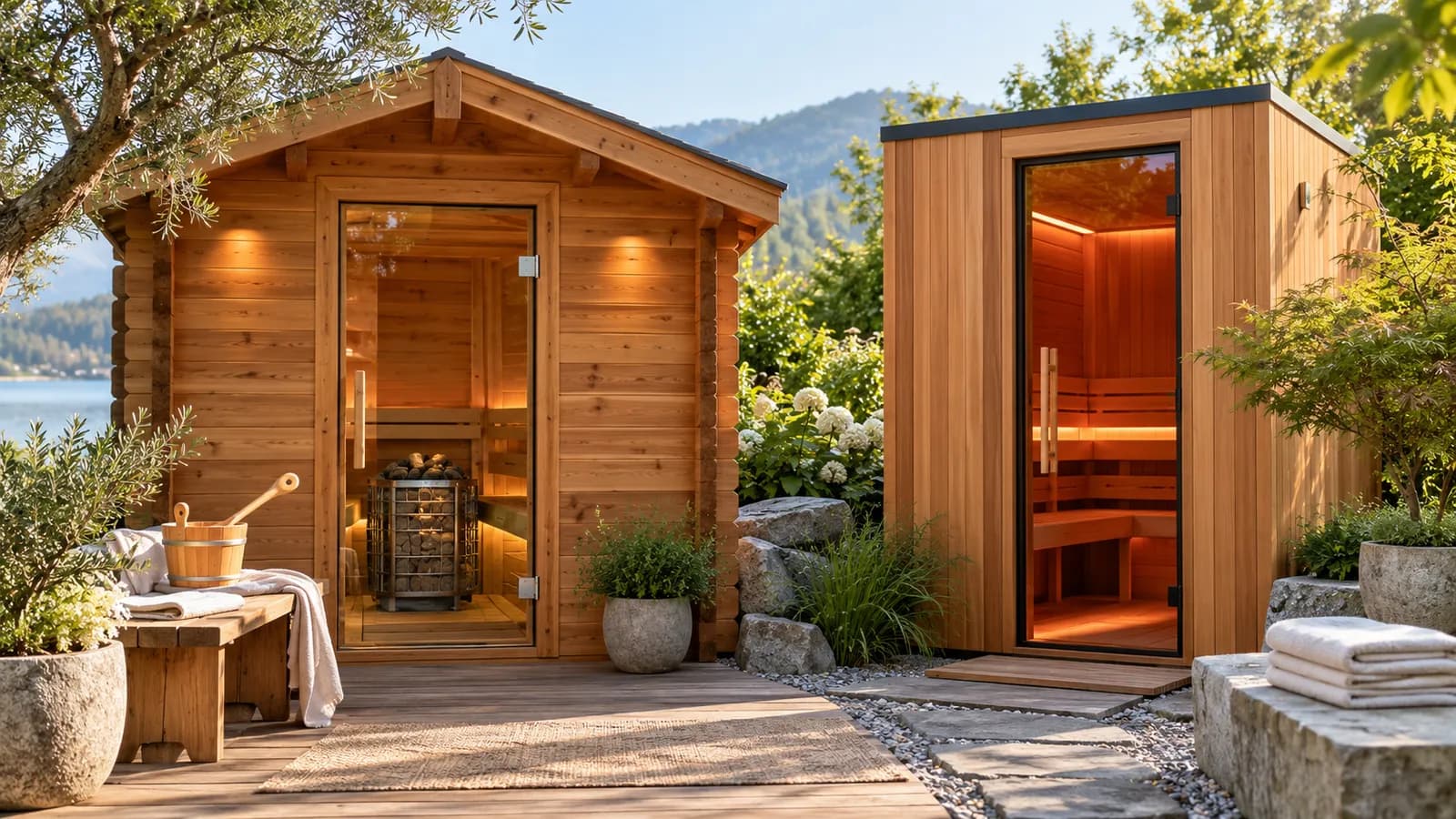
Infrared saunas and traditional saunas both make you sweat, but they get there in different ways. A traditional sauna heats the air (and often the rocks) until the whole room is hot. An infrared sauna uses emitters that warm your body directly at lower air temperatures. The one that fits you depends on the experience you want, the space you have and how it will be powered.
The short answer
- Choose traditional if you want the classic hot, dry (and optionally steamy) Finnish-style sauna, you're building outdoors, and you can supply a 240V circuit.
- Choose infrared if you prefer lower air temperatures, a faster warm-up, a simple plug-in install and an indoor or sheltered location.
- Outdoors: traditional barrels and cabins are made for it. For infrared, only buy a model the maker says is built for outdoor use.
How we picked
We compared the makers' own explanations of how each type works, their warranty pages and their product lineups, and we attribute the figures to the maker who gave them. We did not test these saunas ourselves, and we don't make health claims: what sauna use does for any one person is a question for their doctor. Sauna prices vary widely by size, wood and heater, so we show price tiers rather than exact prices. See our methodology.
Our top picks
An infrared pick that can go outdoors
Clearlight infrared saunas (Sanctuary and Premier lines)
An infrared-only maker that also sells outdoor models and a lifetime residential warranty.
Clearlight sells infrared-only saunas, including a separate outdoor line that its site lists in two-person and four- to five-person sizes. The maker backs residential saunas with a limited lifetime warranty (five years for commercial use). Pricing is premium, and infrared won't feel like a hot, steamy Finnish sauna.
What we like
- Sells indoor cabins plus an outdoor line, which the maker lists in two-person and four- to five-person sizes
- Limited lifetime warranty for residential use (five years for commercial), per the maker
- No steam or rocks to manage, so setup and daily use are simple
Trade-offs
- Premium pricing, and outdoor models need a site, base and electrical plan like any outdoor sauna
- Infrared heats you more than the air, so it won't feel like a hot Finnish-style sauna with steam
- Confirm electrical requirements and installation details with the maker before ordering
- Best for
- Shoppers who want an infrared sauna that can live outdoors and a strong warranty.
- Skip it if
- You want hot-rock steam, or you're not ready to spend at a premium level.
A well-known indoor infrared line
Sunlighten infrared saunas (Signature, Amplify, mPulse)
A big-name infrared line aimed at indoor placement, plus a portable option.
Sunlighten sells cabin saunas (Signature, Amplify and mPulse) plus a portable Solo System. The residential warranty is seven years on cabinetry and heaters, three on controls and one on glass doors and audio. The maker says its saunas aren't designed for outdoor placement and that a sauna cover is required for the warranty if you put one outside.
What we like
- Several cabin lines (Signature, Amplify, mPulse) plus a portable Solo System
- Residential warranty of seven years on cabinetry and heaters, three on controls, one on glass doors and audio, per the maker
- The Amplify line is marketed as reaching up to about 170°F in ideal conditions, hotter than many infrared cabins
Trade-offs
- The maker says its saunas aren't designed to be placed outdoors, and a sauna cover is required for the warranty if you do
- Premium pricing, with several tiers to compare
- Best for
- Garage, basement, spare-room or covered-porch infrared saunas.
- Skip it if
- You want a sauna that sits uncovered in the yard.
A traditional outdoor barrel
Almost Heaven Saunas barrel line
A long-running U.S. maker of outdoor barrel saunas and kits.
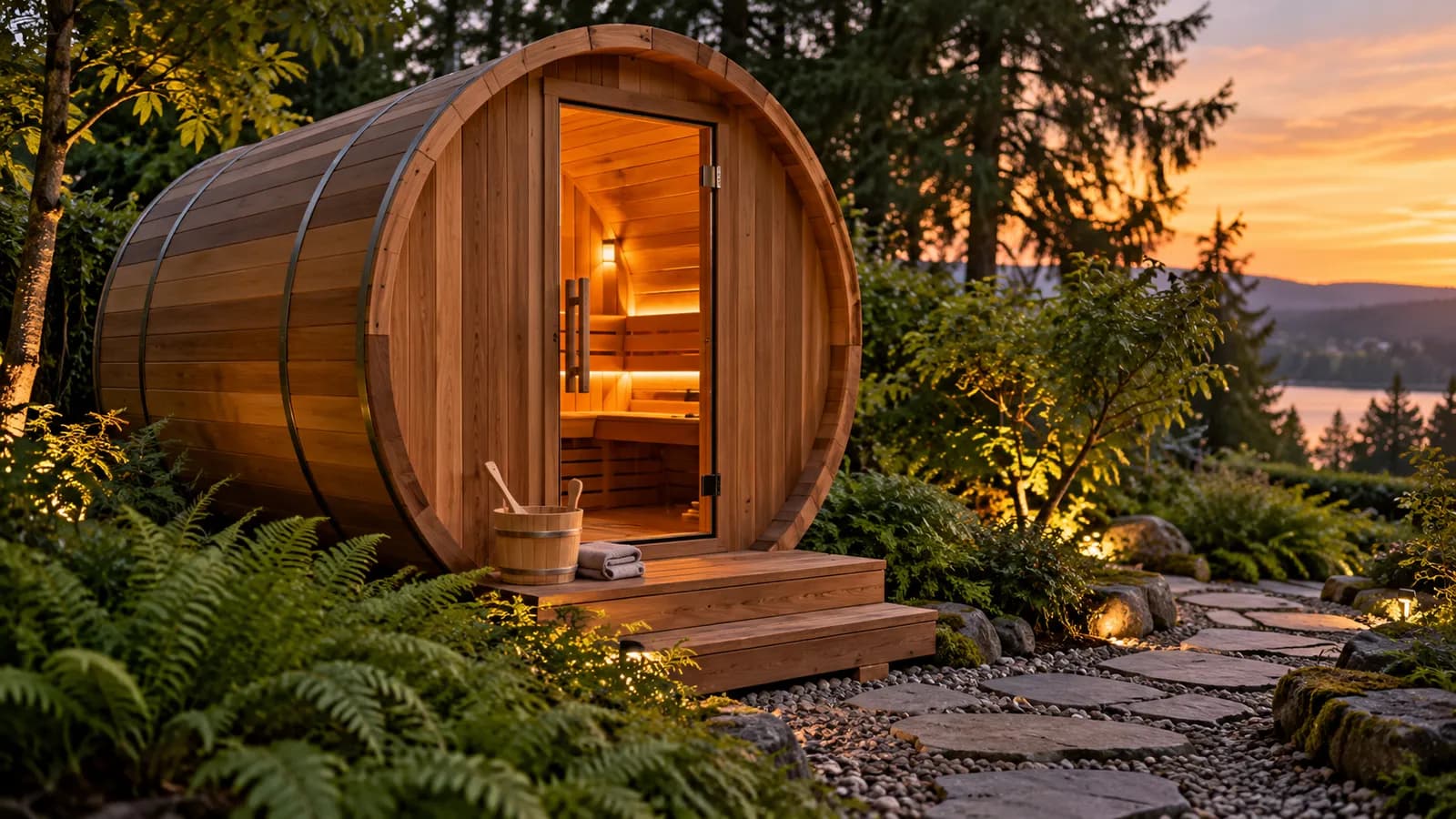
Almost Heaven is a long-running U.S. maker of outdoor barrel saunas and kits in several sizes. A barrel heats efficiently and suits a small footprint. You'll need a heater, a level base and delivery planning, and it's a substantial investment.
What we like
- Barrel shape heats efficiently and suits small footprints
- Several sizes, from 2-person to larger family models
- Established brand with replacement parts and support
Trade-offs
- Expect a substantial investment plus a heater and a level base
- Delivery and assembly planning required
- Best for
- Backyard saunas for small families.
- Skip it if
- You don't want to plan delivery and assembly, or budget for a heater and a level base.
Best for comparing both types with a dealer
Finnleo saunas (traditional, infrared and outdoor)
A maker that sells traditional, infrared and outdoor saunas under one roof.
Finnleo sells traditional indoor, infrared and outdoor saunas, and it publishes a plain-language comparison of the two heat types. You buy through a dealer, so pricing and lead times aren't a simple online checkout. Confirm models, wood and heaters with your dealer.
What we like
- Offers traditional indoor, infrared and outdoor models, so you can compare types within one brand
- Publishes a plain-language comparison of traditional and infrared saunas
- Sold through dealers who can help with sizing and installation planning
Trade-offs
- You buy through a dealer, so pricing and lead times aren't a simple add-to-cart
- Premium pricing; confirm models, wood and heaters with your dealer
- Best for
- Buyers who are still deciding between traditional and infrared and want to talk it through with a dealer.
- Skip it if
- You want a simple add-to-cart purchase with fixed pricing and lead times.
A compact traditional sauna
Plunge Sauna Mini
A compact weatherproof-cedar sauna with a stone heater and app scheduling.
Plunge's Sauna Mini is built from weatherproof cedar and heated by a HUUM stone heater, with app scheduling. It's a traditional-style sauna rather than infrared, and its list price is in five figures at the time we checked. It's residential only.
What we like
- Built from weatherproof cedar and heated by a HUUM stone heater, so it's a traditional-style sauna rather than infrared
- Compact design for small spaces, and sessions can be scheduled from an app
- Plunge sells matching cold plunges, so you can build a hot-and-cold setup from one brand
Trade-offs
- A five-figure list price at the time we checked
- Residential only, and you'll need the right electrical supply and a level base
- Best for
- Small yards where you want a traditional sauna and a cold plunge from the same company.
- Skip it if
- You want the lowest price, or you need space for more than a couple of people.
Side-by-side
| Traditional | Infrared | |
|---|---|---|
| How it heats | Heater and rocks warm the air | Emitters warm your body directly |
| Typical air temperature | Roughly 150–185°F (Finnleo) | Often around 120–140°F (Finnleo) |
| Humidity | Dry, with steam if you add water to the rocks | Closer to normal room humidity |
| Warm-up | About 30–40 minutes (Finnleo) | Much shorter; usable once it's on (Finnleo) |
| Electrical | Example: 4.5 kW, 240V, dedicated circuit (Finnleo) | Typically 1.5–1.7 kW on a 120V, 15-amp plug-in (Finnleo) |
| Outdoor use | Common (barrels and cabins) | Only models the maker says are built for it |
| Social feel | Good for groups and conversation | Often a quieter, more private session |
The figures in the table are Finnleo's, which sells both types. Other makers' numbers differ, and some premium infrared models advertise higher temperatures. Treat them as a guide rather than a spec.
How to choose
The experience
Traditional saunas feel like the classic sauna: hot air, a stone heater and the option to add steam. Infrared is a gentler heat at a lower air temperature. Neither is better; the sauna you'll use most is the right one.
Where it goes
Outdoors, a traditional barrel or cabin is the more straightforward choice. Infrared saunas are mostly designed for indoor use, so check the maker's guidance on outdoor placement, covers and warranty before putting one outside. See our guide to the best backyard saunas for outdoor options.
Power and installation
Infrared cabins often run on a standard household plug, while a traditional electric heater may need a 240V dedicated circuit installed by a licensed electrician. A wood-burning stove needs a flue, clearances and attention to fire safety. You may need permits, so check local rules.
Size and seating
Two- to four-person saunas suit most homes. Bigger cabins need more heater power and more space. Think about how many people will use it at once.
Warranty and parts
Compare what's covered and for how long. Clearlight lists a limited lifetime residential warranty; Sunlighten lists seven years on cabinetry and heaters. Read the terms, including what voids them (such as outdoor placement).
Safety
Follow the manufacturer's instructions for clearances, ventilation and session length. Don't use a sauna after drinking alcohol, stay hydrated, and talk to a doctor if you have a heart condition, high or low blood pressure, are pregnant or take medication.
Build a hot-and-cold routine
Many people pair a sauna with a cold plunge. If that interests you, read cold plunge vs. ice bath and see the best cold plunge tubs. If you'd rather soak, the hot tub buying guide covers the real costs.
Frequently asked questions
Is an infrared sauna hotter than a traditional sauna?
No. Traditional saunas heat the air, typically to roughly 150–185°F according to Finnleo, while infrared saunas heat your body more directly at lower air temperatures, often around 120–140°F. Some premium infrared models advertise higher figures, for example Sunlighten says its Amplify can reach up to 170°F in ideal conditions.
Can I put an infrared sauna outdoors?
Only if the maker says that model is built for it. Clearlight sells a dedicated outdoor line, while Sunlighten says its saunas aren't designed for outdoor placement and require a sauna cover to keep the warranty valid if you place one outside. Check the manual and warranty for the exact model.
Which is cheaper to run and install?
Infrared saunas typically plug into a standard 120V outlet, while Finnleo's example of a traditional heater is 4.5 kW at 240V on a dedicated circuit. That generally makes infrared simpler to install and a traditional sauna more demanding, but sizes and heaters vary, so check the electrical requirements for the model you're considering and use a licensed electrician when needed.
Are saunas safe for everyone?
No. Heat exposure can be risky for people with certain health conditions, for pregnant women, and for anyone who has been drinking alcohol. Talk to a doctor before you start using a sauna, follow the manufacturer's instructions, and get out if you feel unwell. This is general information, not medical advice.
Alex Mercer brings 15 years of experience and a practical editorial approach to Backyard Review. Alex compares published product information, installation needs and ownership costs, highlighting trade-offs and distinguishing research from documented hands-on experience.