Our top picks at a glance
Our gas pick
Ooni Koda 2See itPrice tier 2 of 4:$150–$500Couples and small families who want great pizza with the least fuss.Our wood-fired pick
Ooni Karu 2See itPrice tier 2 of 4:$150–$500People who want the flavor and ritual of a live fire without a giant oven.Our do-everything pick
Gozney Dome (Gen 2)See itPrice tier 4 of 4:Over $1,500Serious home cooks building an outdoor kitchen around a showpiece oven.
Every pizza-oven shopper hits the same fork in the road: gas or wood? The honest answer is that both make great pizza. What differs is how much effort you want to put in — and how often you'll actually use the oven.
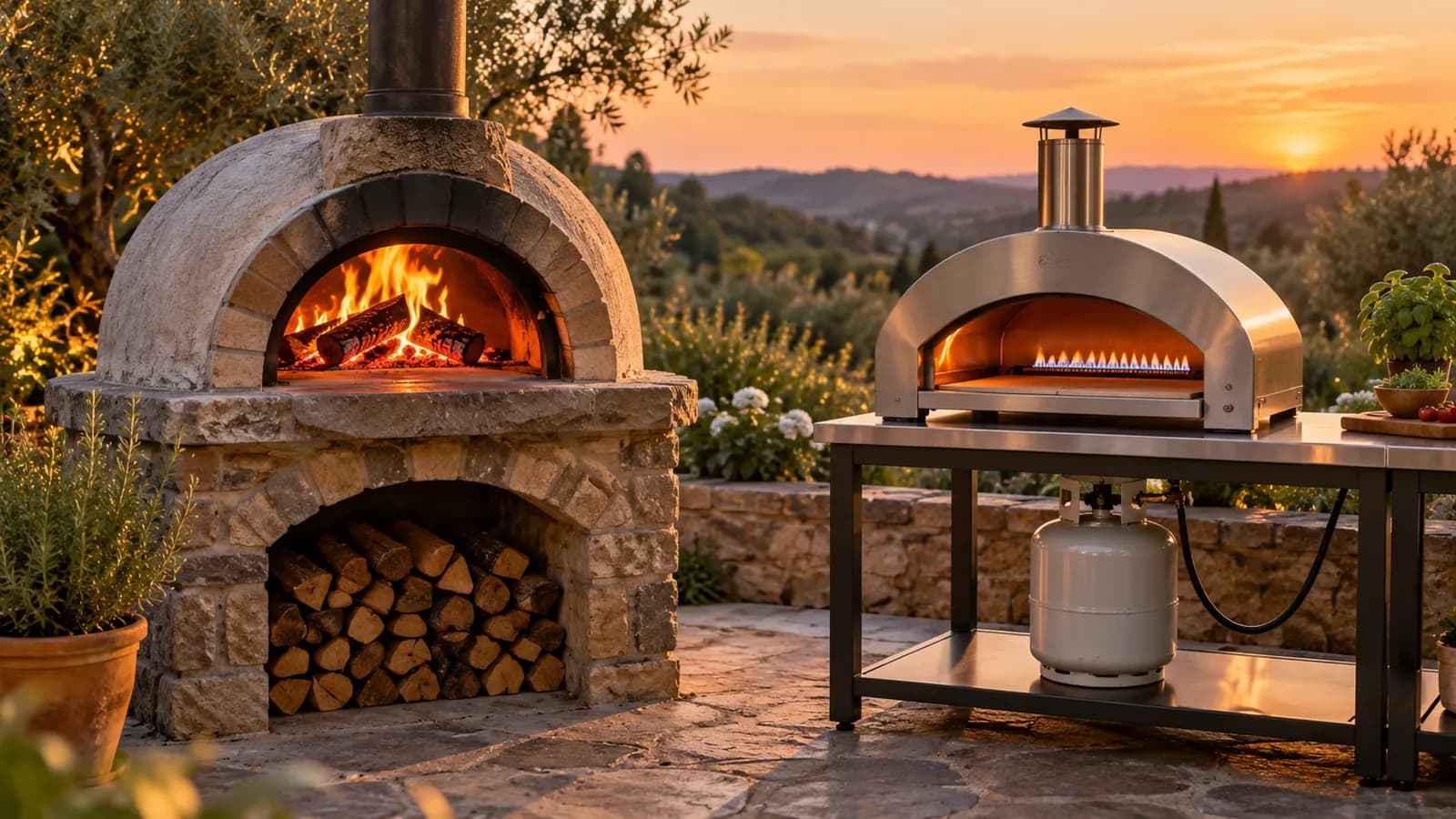
Gas ovens: the easy button
A gas oven connects to a propane tank (or, on some models, a natural-gas line). You turn a dial, light it, and in about 15 to 20 minutes the stone is ready.
Pros
- Fast, predictable heat-up and consistent temperature control
- No fuel to split, no ash to clean
- Easy to learn — you can focus on the dough
- Usually lighter than a comparable wood oven
Cons
- No smoky flavor
- You need propane tanks (or a gas line)
- A little less "ritual"
Best for: busy households, beginners and anyone who wants pizza on a Tuesday.
Wood and charcoal: the live-fire experience
Wood-fired ovens burn small, dry logs or charcoal. You build a fire, push it to one side, and bake on the hot stone next to the flames. It takes more practice — the oven's temperature is a conversation, not a setting — but a lot of people find that the ritual is the whole point.
Pros
- Subtle smoky flavor
- The look and feel of a real wood-fired oven
- Cheap fuel if you have a good wood supply
Cons
- Longer heat-up and more tending
- Smoke and ash to manage; needs seasoned hardwood
- Steeper learning curve
Best for: people who love fire and cooking as a hobby.
Multi-fuel: the compromise
Multi-fuel ovens burn wood or charcoal and also accept gas, so you can choose depending on your mood and schedule. Ooni's Karu line takes an optional gas burner, and Gozney's Dome burns wood, charcoal or propane. The compromise is price: the gas add-on costs extra, and multi-fuel ovens are usually heavier.
Side-by-side
| Gas | Wood / charcoal | Multi-fuel | |
|---|---|---|---|
| Learning curve | Low | Higher | Medium |
| Heat-up time | Short | Longer | Depends on fuel |
| Flavor | Clean | Smoky | Your choice |
| Cleanup | Minimal | Ash | Ash if using wood |
| Fuel cost | Propane | Wood / charcoal | Either |
| Best for | Weeknights | Weekend cooks | Flexibility |
Our recommendation
If you aren't sure, buy gas. It removes the biggest reason ovens end up unused — the effort. If you already love live-fire cooking, or you'd choose a campfire over a stovetop, go wood or multi-fuel.
Our top picks
Turn the dial, light it, cook. The Koda 2 is the easiest way into 950°F pizza, with no fire to manage.
What we like
- Gas-fired and ready to use out of the box — turn the dial, light it, cook
- Reaches 950°F; bakes a Neapolitan-style pizza in about 60 seconds
- Compact at roughly 35 lbs, so it's easy to move and store
Trade-offs
- Tops out at 14-inch pizzas, which is tight for big families
- Gas only — no wood or charcoal flavor
- Best for
- Couples and small families who want great pizza with the least fuss.
- Skip it if
- You regularly feed 5+ people or want to bake bread and roast in it.
- Fuel: Gas (propane)
- Max pizza size: 14 in
- Max temp: 950°F
- Weight: ≈35 lb
Our wood-fired pick
Ooni Karu 2
Wood or charcoal flavor in a light, compact oven.
Wood or charcoal out of the box, with a glass door, in a roughly 34-lb package. A gas burner is a separate add-on if you change your mind.
What we like
- Burns wood or charcoal out of the box; a gas burner is a separate add-on
- Glass door lets you watch the pizza without losing heat
- Around 34 lbs and reaches about 850°F in roughly 15 minutes
Trade-offs
- 12-inch pizzas only
- Fire management takes practice — it's more hands-on than gas
- Best for
- People who want the flavor and ritual of a live fire without a giant oven.
- Skip it if
- You want a dial-and-cook experience every time.
- Fuel: Wood, charcoal (gas burner sold separately)
- Max pizza size: 12 in
- Max temp: 950°F
- Weight: ≈34 lb
Our do-everything pick
Gozney Dome (Gen 2)
A restaurant-grade hybrid-fuel dome for dedicated cooks.
Burns wood, charcoal or propane, so you can choose by mood. It's big, heavy and premium-priced — a centerpiece oven.
What we like
- Burns wood, charcoal or propane (natural-gas version in select regions)
- Three layers of commercial-grade insulation and a 30 mm cordierite stone
- Fits one 16-inch or two 10-inch pizzas and can bake bread, roast and more
Trade-offs
- Around 137 lbs — you'll want a dedicated stand or counter
- Premium price that only makes sense if you'll use it constantly
- Best for
- Serious home cooks building an outdoor kitchen around a showpiece oven.
- Skip it if
- Portability or budget matter more than capability.
- Fuel: Wood, charcoal or propane
- Cooking area: 1 × 16 in or 2 × 10 in pizzas
- Weight: ≈137 lb
Fire and fuel safety basics
- Use outdoor ovens only outdoors, away from walls, overhangs, fences and dry vegetation.
- Place the oven on a stable, heat-safe stand — never on a wooden or plastic table unless the maker says it's safe.
- Check gas hoses and connections for damage, and test for leaks with soapy water.
- Let the oven cool completely before covering it.
- Follow your local fire rules; some areas restrict wood fires during dry periods.
Ready to choose? See the best pizza ovens or use the pizza oven finder.
Frequently asked questions
Does wood-fired pizza taste better than gas?
It tastes different. Wood adds a subtle smoky note, but the biggest factor in great pizza is a very hot, well-preheated stone and good dough. Most people can't reliably tell gas from wood in a blind test when the dough and temperature are the same.
Are gas pizza ovens safe?
Used outdoors, with a regulator and hose in good condition and following manufacturer clearances, yes. Always check connections for leaks, never use an outdoor oven indoors or in a garage, and keep it away from walls and overhead structures.
Can I convert a wood oven to gas later?
On some ovens, yes. Ooni's Karu line accepts an optional gas burner (sold separately), and Gozney's Roccbox accepts an optional wood burner. Check compatibility for your exact model.
Alex Mercer brings 15 years of experience and a practical editorial approach to Backyard Review. Alex compares published product information, installation needs and ownership costs, highlighting trade-offs and distinguishing research from documented hands-on experience.