Our top picks at a glance
Portable pit that's easy to place
Solo Stove Bonfire 2.0See itPrice tier 2 of 4:$150–$500Most households with a patio or lawn who want an easy, mostly smokeless fire.Permanent pit for a dedicated spot
Breeo X SeriesSee itPrice tier 3 of 4:$500–$1,500People who want a permanent centerpiece that doubles as an outdoor cooking station.
"How far should my fire pit be from the house?" is the most important question you can ask before lighting your first fire. There's no single answer that works everywhere, but there are common rules of thumb — and a few things people forget.
Important: This is general guidance, not legal or safety advice. Your local fire code and your fire pit's manual take priority. When they differ from anything here, follow them.
The usual distances
| From the fire pit to… | Common guidance |
|---|---|
| House, garage or other structure | At least 10–25 feet; many local codes cite 15 feet for portable fireplaces and 25 feet for recreational fires |
| Fences, sheds, play structures | The same as for the house |
| Overhead — trees, eaves, awnings, pergolas | Keep a clear vertical space; many sources recommend 20 feet or more |
| Dry grass, brush, mulch, leaves | Clear the area and keep it clear |
| Property line | Check local rules; some require a set distance |
| Propane tanks and fuel storage | Keep them far away from the fire |
Surface matters
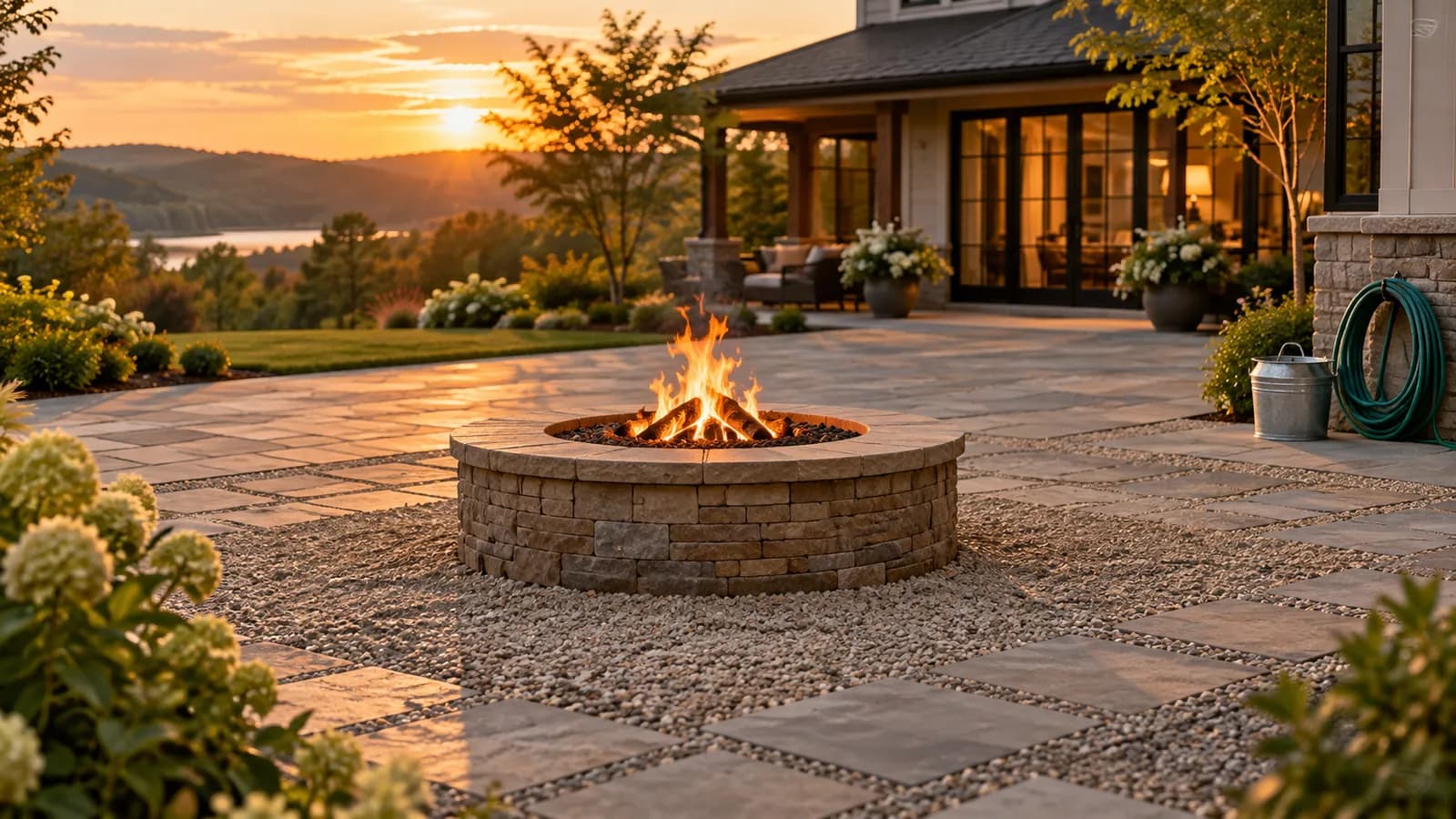
Fire pits should sit on a non-combustible surface: pavers, gravel, concrete or bare earth. Putting a pit directly on grass can scorch the lawn, and putting it on a wood deck or composite decking is risky unless the pit and base are designed for it. Even then, use a heat shield or fireproof pad and follow the manufacturer's instructions.
Wind and smoke
Choose a spot sheltered from strong winds so sparks don't blow toward the house, trees or neighbors. Consider where smoke will go — and your neighbors' open windows.
Covered areas are off-limits
Don't use a fire pit under a roof, pergola, gazebo or in an enclosed space. Beyond the fire hazard, fires and propane burners produce carbon monoxide that can accumulate in covered areas.
A simple safety checklist
- Check local fire rules and burn bans before lighting up.
- Put the pit on a non-combustible surface with clearance on all sides.
- Keep a hose, bucket or extinguisher within reach.
- Use only dry, seasoned wood (or the right fuel for gas models).
- Never leave the fire unattended and extinguish it fully before leaving.
- Dispose of ashes in a metal container — embers can stay hot for days.
- Keep kids and pets at a safe distance and teach them the rules.
Our top picks
Portable pit that's easy to place
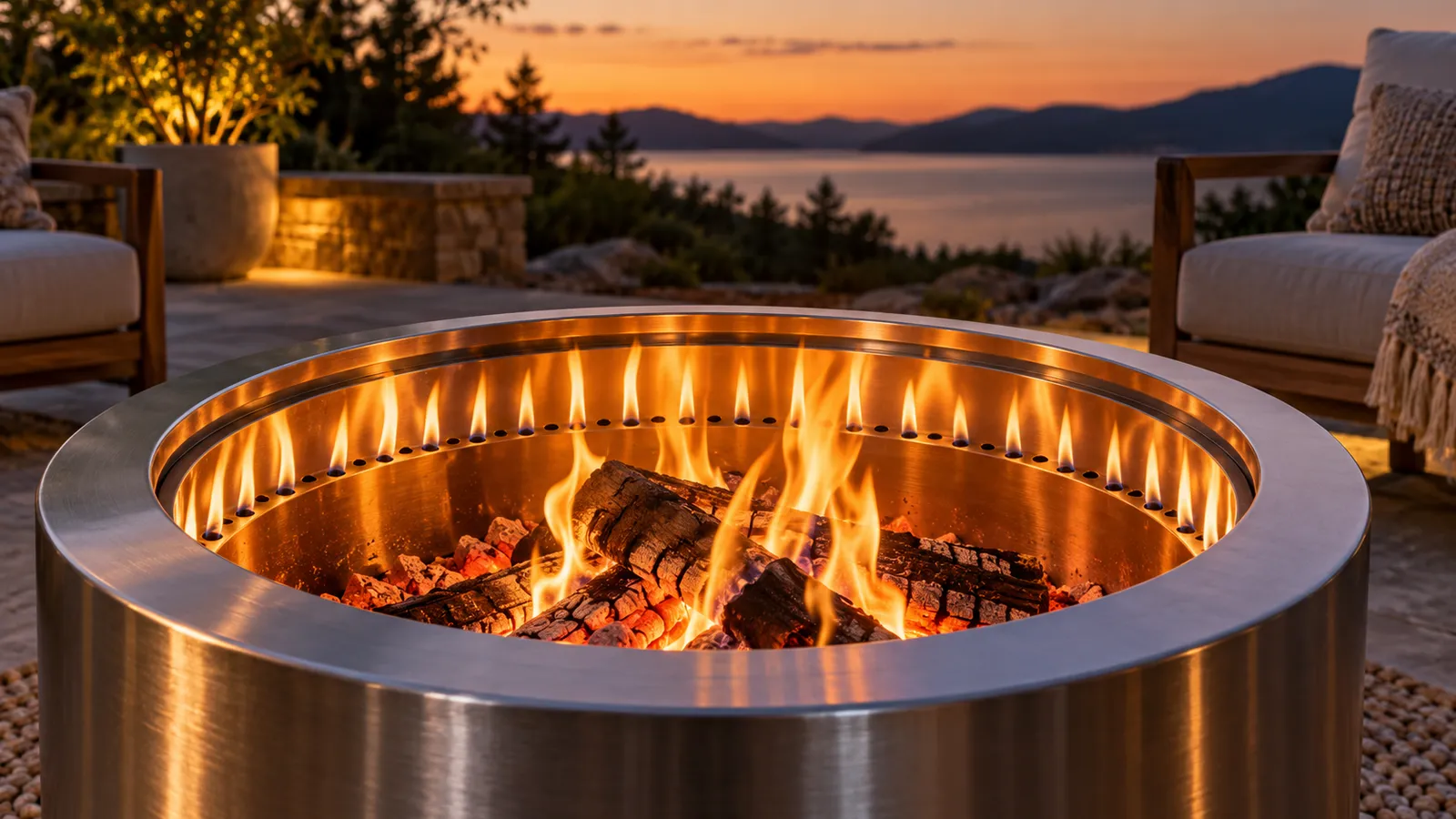
Solo Stove Bonfire 2.0
The default smokeless fire pit — and still the best all-rounder.
A portable pit like the Bonfire 2.0 lets you move the fire to the best, safest spot on your property. Pair it with a stand or heat shield if you're not on a non-combustible surface.
What we like
- Double-wall design pulls air through to burn wood more completely, so less smoke
- Portable stainless steel construction that's easy to move and store
- Large accessory ecosystem: stands, shields, lids, cooking tools
Trade-offs
- Needs dry, seasoned wood to stay smokeless
- Stainless steel discolors with heat — that's normal, but not everyone likes it
- Best for
- Most households with a patio or lawn who want an easy, mostly smokeless fire.
- Skip it if
- You want a pit you can leave out and forget — consider a heavier steel pit.
Permanent pit for a dedicated spot
Breeo X Series
The heavy-duty smokeless pit built to live outside.
If you've chosen a permanent location with proper clearance, a heavy Corten-steel pit like the Breeo X Series is designed to stay put.
What we like
- Thick Corten steel that's built to weather outdoors for years
- Smokeless airflow design and a wide range of cooking accessories
- Available in multiple sizes up to large installations
Trade-offs
- Heavy — plan on a permanent location
- Costs more than portable stainless pits
- Best for
- People who want a permanent centerpiece that doubles as an outdoor cooking station.
- Skip it if
- You want something portable or inexpensive.
Making a permanent fire area
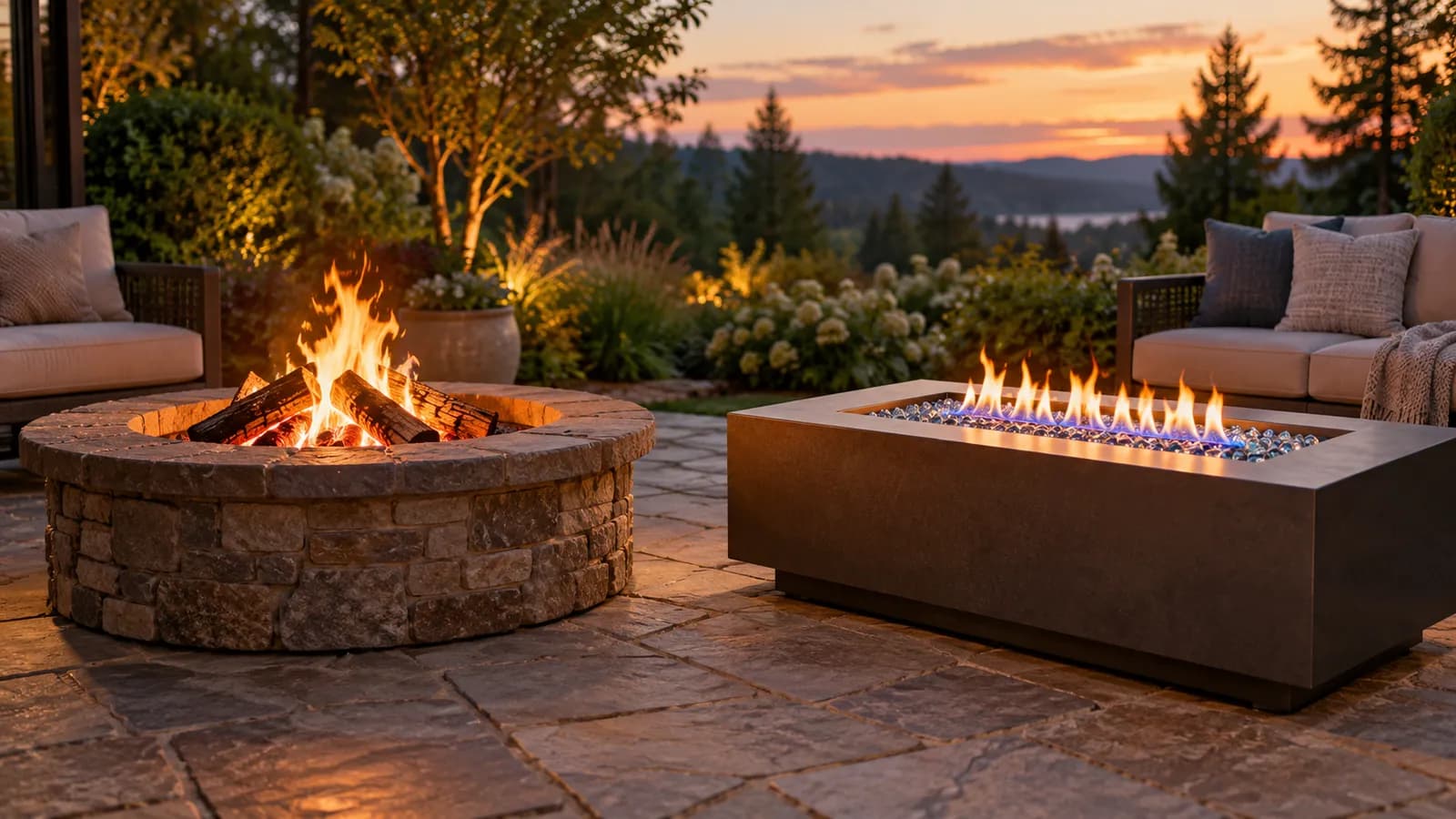
If you're building a permanent fire pit area, think about the layout in advance: a paver or gravel base, a ring of seating at a comfortable distance, and clear space around it. For a built-in fire pit, hire a landscaper or hardscape pro who knows your local codes.
See also our best smokeless fire pits and wood vs. propane comparison.
Frequently asked questions
How far should a fire pit be from the house?
Many fire codes and manufacturer instructions call for at least 10–25 feet from structures, with 15 feet common for portable outdoor fireplaces and 25 feet common for open recreational fires. Your local rules and the pit's manual take priority.
Can I put a fire pit under a pergola or covered patio?
Generally not. Flames, sparks and heat can damage or ignite the structure, and fire pits produce carbon monoxide that collects under cover. Follow the manufacturer's instructions and local rules.
Is it safe to put a fire pit on a wood deck?
Only if the manufacturer says it's designed for that, with a heat shield or stand and a fireproof pad under it. Embers can ignite decking.
Do I need a permit for a fire pit?
It depends on your city or county. Some require permits or ban wood fires during dry periods. Check with your local fire department or municipality.
Alex Mercer brings 15 years of experience and a practical editorial approach to Backyard Review. Alex compares published product information, installation needs and ownership costs, highlighting trade-offs and distinguishing research from documented hands-on experience.