Our top picks at a glance
Best frame screen
Elite Screens Yard Master 2See itPrice tier 2 of 4:$150–$500A reliable, flat picture on a lawn or patio that you will set up often.Best for big crowds
Inflatable outdoor movie screensCheck pricePrice tier 2 of 4:$150–$500Large parties and neighborhood movie nights on open, calm lawns.Best budget screen
Foldable and tripod outdoor screens (budget)Check pricePrice tier 1 of 4:Under $150A first backyard cinema on a budget in a sheltered spot.
A good screen makes the same projector look noticeably better. It gives you a flat, evenly lit surface, and the right size and setup for your yard matters more than any single feature.
The short answer
- Most people: a frame screen like the Elite Screens Yard Master 2.
- Big groups, quick setup: an inflatable screen, on a calm night.
- On a budget or sheltered patio: a foldable screen.
How we picked
We compared how each style of outdoor screen is built and sold, and weighed them on what matters outdoors: how flat the surface stays, how it behaves in wind, how long setup takes and how it stores. We list screen types and one well-known frame line rather than exact models, and we have not hands-on tested them. See our methodology.
Our top picks
Best frame screen
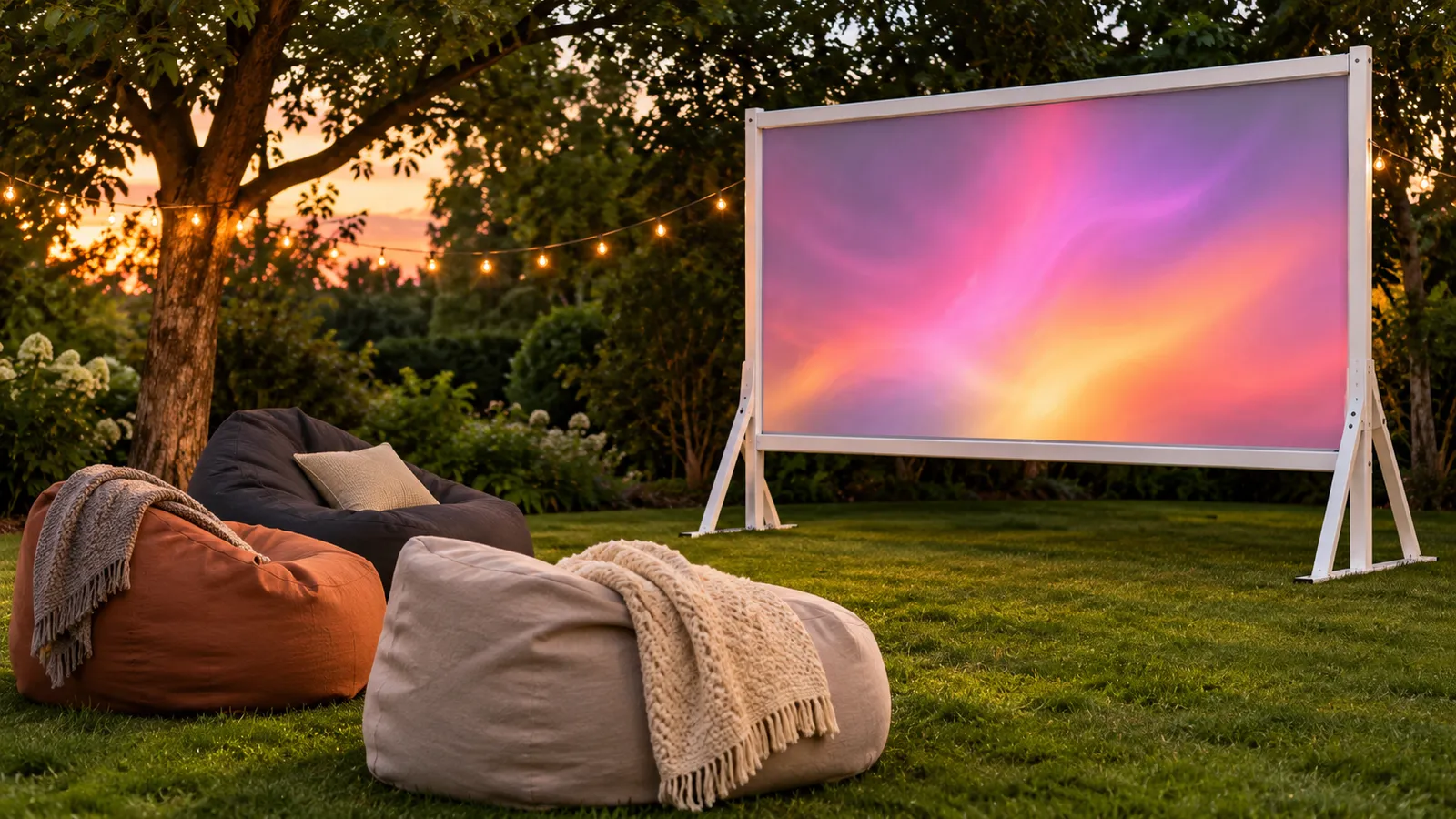
Elite Screens Yard Master 2
A freestanding frame screen made for outdoor movie nights.
A freestanding, tensioned frame keeps the picture flat and does not rely on trees or posts. It takes some assembly, and the larger sizes act like sails in wind, so stake or weight the legs.
What we like
- A tensioned frame keeps the picture flat, unlike a sheet that ripples in the breeze
- Freestanding legs mean you do not need trees or posts to hang it from
- Comes in several sizes, and it breaks down for storage
Trade-offs
- It takes time to assemble and disassemble
- Larger sizes can catch wind like a sail, so stake or weight the legs
- A bulky box to store
- Best for
- A reliable, flat picture on a lawn or patio that you will set up often.
- Skip it if
- You want something that sets up in one minute.
Best for big crowds
Inflatable outdoor movie screens
Big, quick-to-raise screens held up by a small blower.
Inflatable screens give you a very big picture quickly, and they pack into a bag. The blower needs power and makes noise, wind is a real risk, and quality varies a lot between makers, so read recent reviews closely.
What we like
- Big pictures are affordable compared with large frame screens
- Sets up fast, because a blower inflates it in minutes
- Many fold down into a bag
Trade-offs
- The blower needs power and makes noise
- Wind is a real risk, and it has to be staked or tied down
- Quality, seams and screen material vary widely between makers
- Best for
- Large parties and neighborhood movie nights on open, calm lawns.
- Skip it if
- Your yard is windy, or you have no outdoor power near the screen.
Best budget screen
Foldable and tripod outdoor screens (budget)
Cheap, quick, and fine for sheltered patios and small groups.
Foldable and tripod screens are the cheapest way to get a real, white screen surface, and they store small. They are light, so they want sheltered spots, and creases can show in the picture.
What we like
- The lowest cost way to get a real screen surface
- Quick to set up and small to store
- Fine for small groups on a patio
Trade-offs
- Lightweight, so it needs shelter from wind
- Fabric can crease, and the picture is not always perfectly flat
- Often smaller than frame or inflatable screens
- Best for
- A first backyard cinema on a budget in a sheltered spot.
- Skip it if
- You have wind or you want a big, crisp screen.
How to choose
Screen type
A frame screen is the most reliable for a flat picture. An inflatable is the cheapest way to go big. A foldable screen is quick and small but light.
Size and brightness
Pick the size from your seating distance and your projector's brightness, not from the biggest number in the listing. Our projector and screen calculator shows picture brightness and seating distance for any size.
Gain and surface
Most backyard screens are plain white with a gain near 1.0, which is fine. Gray screens help with ambient light but are rare outdoors. Whatever you pick, keep the surface clean and free of creases.
Wind
Wind is the biggest threat to any outdoor screen. Plan to stake or weight it, and be ready to take it down in gusts.
Front or rear projection
Most people project from the front, from the same side as the audience. Some screens allow rear projection, which hides the projector and cords behind the screen, but you need space behind it.
Pair it with the right projector
See our guide to the best outdoor projectors and our walk-through on setting up a backyard movie night.
Frequently asked questions
Can I just hang a white sheet?
You can, and it works for a first night. But a sheet ripples with every breeze and absorbs some light, so the picture is dimmer and less sharp. A tensioned screen is a big upgrade for not much money.
What size outdoor movie screen should I buy?
A 100-inch screen is a common fit for a patio or small lawn. Go bigger only if your projector is bright enough, because the same light spread over a larger area looks dimmer. Our screen-size calculator shows the brightness for any size.
What is screen gain?
Gain measures how much light a screen reflects toward the viewer compared with a standard white surface. A gain of 1.0 is the reference. Higher gain can make a dim projector look brighter but narrows the viewing angle, and most backyard screens are plain white around 1.0.
How do I keep a screen from blowing over?
Stake or weight every leg, add guy lines on large frames, aim to face away from the wind where you can, and lower or take down the screen if gusts pick up. An inflatable screen needs its tie-downs used every time.
Alex Mercer brings 15 years of experience and a practical editorial approach to Backyard Review. Alex compares published product information, installation needs and ownership costs, highlighting trade-offs and distinguishing research from documented hands-on experience.