Our top picks at a glance
A fried-style bird without the hot oil
Char-Broil The Big Easy oil-less turkey fryerSee itPrice tier 2 of 4:$150–$500People who want fried-style turkey with less risk.More controls, less flame
Outdoor electric turkey fryersCheck pricePrice tier 2 of 4:$150–$500People who want to fry turkey with more built-in controls.Protect your hands
Heat-resistant grill glovesCheck pricePrice tier 1 of 4:Under $150Anyone moving hot grates and trays.
A deep-fried turkey is crispy, juicy and fast, and it is also one of the riskiest things you can do in a backyard. Hot oil and a big wet bird do not mix. If you are going to do it, do it exactly right, or choose one of the safer options below.
Safety first. Follow your fryer's manual and any local rules. This is general guidance and does not replace them. If a fire starts, never use water, turn off the fuel if you can do so safely, move away, and call 911.
The short answer
Fry outdoors, on flat ground, far from structures. Use a completely thawed and dry bird, the right amount of oil, and never leave it unattended. Or avoid the oil altogether with an oil-less fryer, an electric fryer or a smoker.
The safety rules that matter
- Fry outdoors only. Never in a garage, on a deck, under an overhang or near the house. Use a flat, stable, non-flammable surface well away from structures and anything that burns.
- Thaw completely. A frozen or partly frozen turkey can make oil boil over violently.
- Dry the bird. Pat it dry inside and out. Water and hot oil cause dangerous spattering.
- Measure the oil. Put the turkey in the empty pot, cover it with water, mark the level, remove the bird and dry everything. Fill with oil only to that line, never past the fryer's maximum.
- Turn the burner off while lowering the bird. Then lower it very slowly and relight.
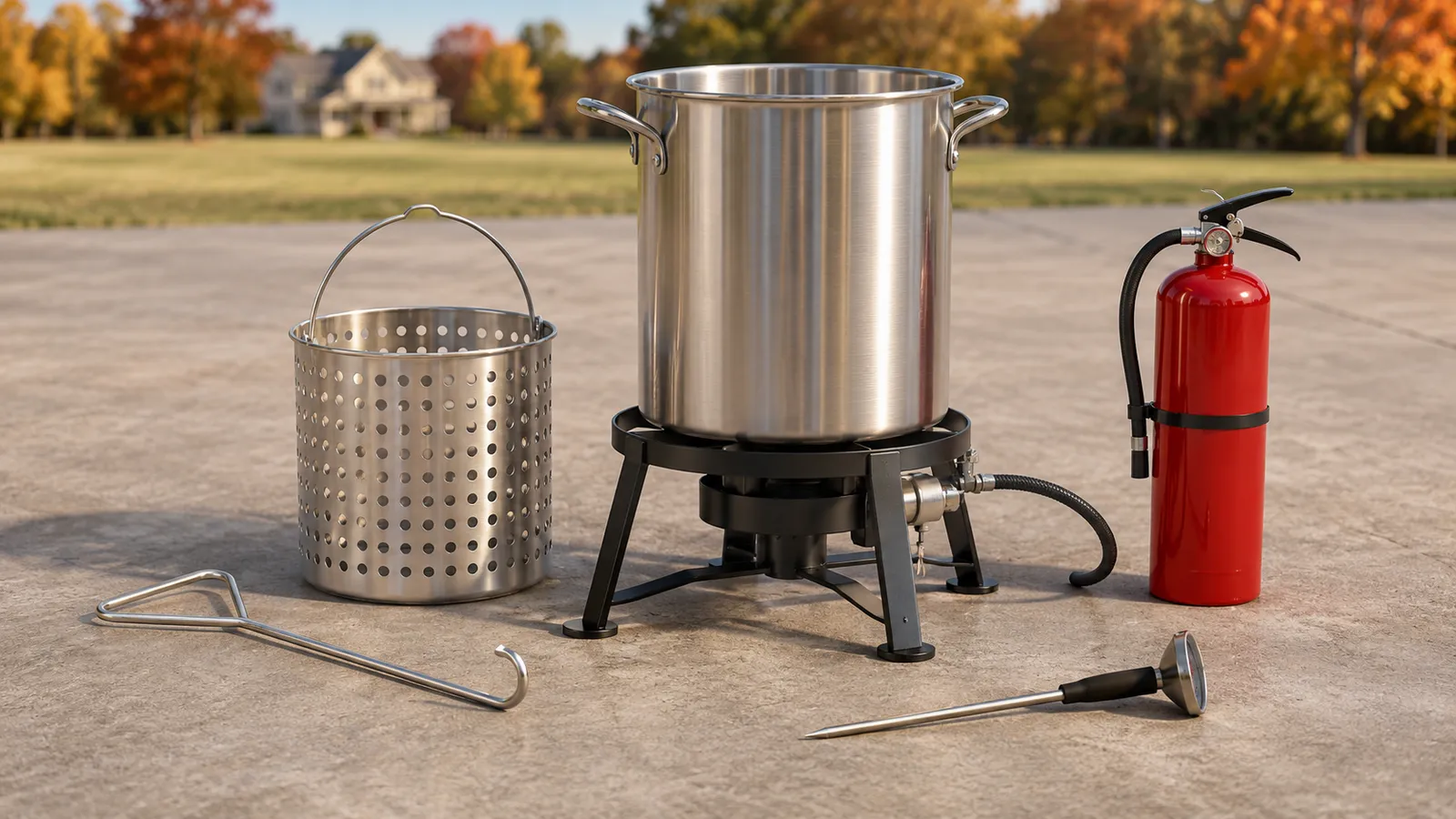
- Use the right equipment. A thermometer for the oil, a lifting hook or basket, long gloves and a good extinguisher rated for grease fires.
- Never leave it unattended, and keep children and pets well away.
- Mind the size. Check your fryer's manual for the maximum bird weight. Smaller birds are safer and cook more evenly.
Timing and temperature
- Heat the oil to about 350°F.
- Plan on about 3 to 4 minutes per pound.
- The turkey is done when a thermometer reads 165°F in the thickest part of the breast, the thigh and the wing.
- Let it rest before carving, and refrigerate leftovers within two hours.
Safer alternatives
- Oil-less fryers use infrared heat and no oil, which removes the biggest risk.
- Electric fryers have thermostats and often safety features, although they still use hot oil.
- Smoking gives you a great bird with no oil at all. See how to smoke a turkey, and our cook-time planner.
Our top picks
A fried-style bird without the hot oil
Char-Broil The Big Easy oil-less turkey fryer
An infrared, oil-free option that avoids the dangers of a pot of hot oil.
An infrared, oil-free fryer removes the biggest hazard of traditional frying. The texture differs from oil-fried turkey, and capacity limits the bird size.
What we like
- No hot oil, which removes the biggest danger of traditional frying
- Cooks a turkey without a large oil purchase
- Easy to use outdoors
Trade-offs
- Different texture from oil-fried turkey
- Capacity limits the size of the bird
- Needs a propane tank and outdoor space
- Best for
- People who want fried-style turkey with less risk.
- Skip it if
- You want the classic oil-fried result.
More controls, less flame
Outdoor electric turkey fryers
Thermostat-controlled fryers with safety features such as automatic shutoffs.
Thermostat-controlled electric fryers often include safety features, and there is no open flame under the oil. They still involve hot oil, so follow every instruction and keep them outdoors, away from structures.
What we like
- Thermostat control and safety features on many models
- No open flame under a pot of oil
- Often has a basket and drain valve
Trade-offs
- Still involves hot oil, so follow every instruction
- Capacity limits bird size
- Needs a safe outdoor outlet, away from structures
- Best for
- People who want to fry turkey with more built-in controls.
- Skip it if
- You do not want to handle hot oil at all.
Protect your hands
Heat-resistant grill gloves
Silicone or aramid gloves for handling hot grates, trays and pans.
Heat-resistant gloves help when handling hot baskets and hooks. Wet gloves can conduct heat, so keep them dry.
What we like
- Protects hands on hot surfaces
- Makes cleaning a warm grill easier
- Washable
Trade-offs
- Check the stated temperature rating and read the care label
- Wet gloves can conduct heat
- Bulky gloves reduce dexterity
- Best for
- Anyone moving hot grates and trays.
- Skip it if
- You rarely handle hot parts.
Related guides
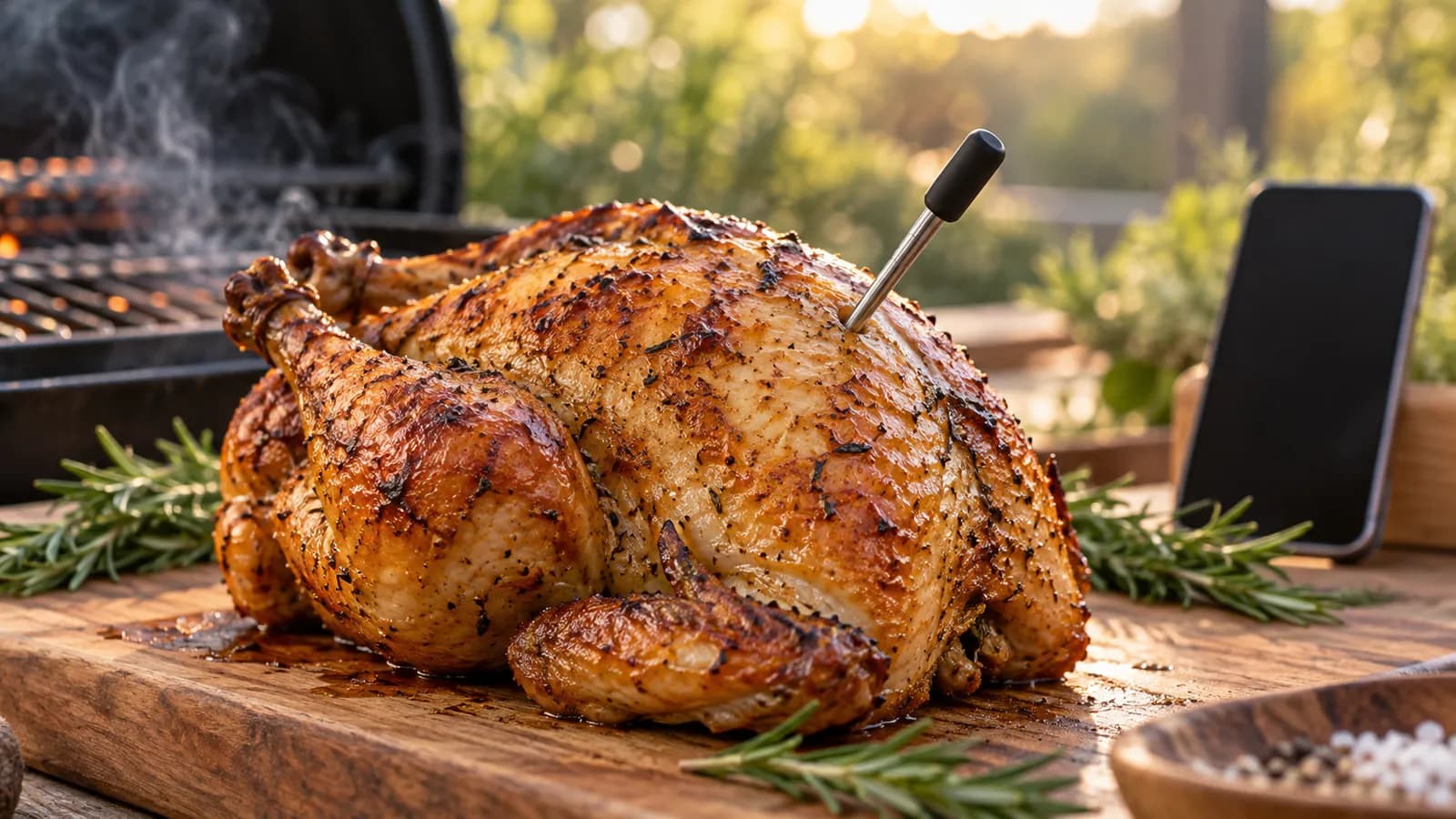
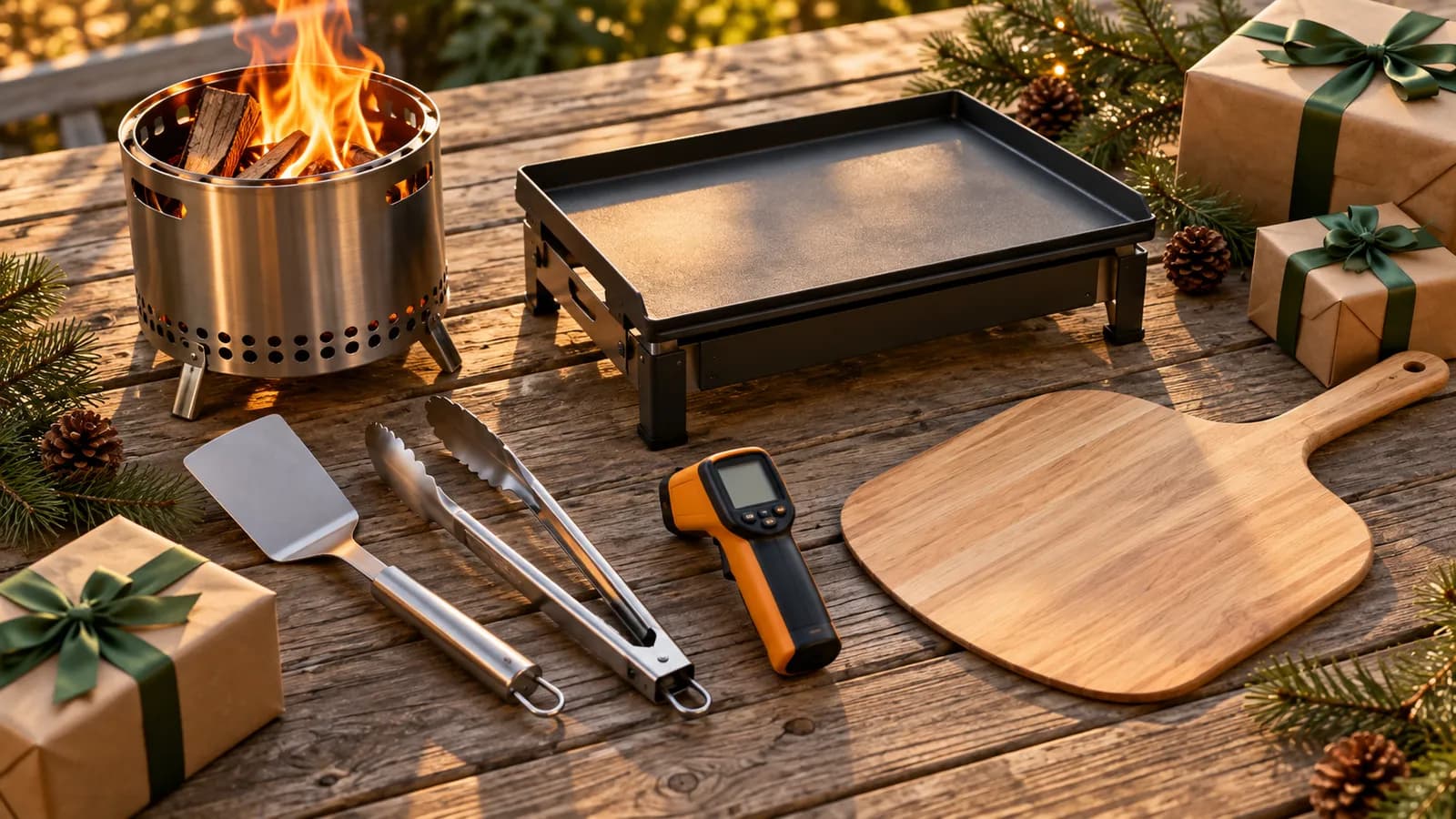
A good wireless meat thermometer takes the guessing out of any turkey, and you will find more ideas in our gift guide for backyard cooks.
Frequently asked questions
Is it safe to deep-fry a turkey?
It can be done safely, but turkey fryers cause a lot of fires and burns every year, mostly from overflowing oil, frozen or wet birds and poor setup. Follow every safety rule or choose an oil-less or electric fryer, or smoke the turkey instead.
Why does a turkey fryer catch fire?
Usually oil overflows when a bird is too big for the pot or still frozen or wet, and drips onto the flame. Unstable setups and fryers used on decks, in garages or near structures make it worse.
How do I know how much oil to use?
Put the turkey in the empty pot, add water until the bird is covered, mark the level, then remove the bird and dry everything thoroughly. That water line shows how much oil to use. Never fill past your fryer's max line.
How long does it take to deep-fry a turkey?
A common guideline is about 3 to 4 minutes per pound at 350°F. Always confirm 165°F in the thickest part of the breast, the thigh and the wing.
What should I do if the oil catches fire?
Turn off the fuel if it is safe to do so, and keep away. Never use water. Use a fire extinguisher rated for grease fires, and call 911 if the fire spreads.
Alex Mercer brings 15 years of experience and a practical editorial approach to Backyard Review. Alex compares published product information, installation needs and ownership costs, highlighting trade-offs and distinguishing research from documented hands-on experience.