Our top picks at a glance
A simple leave-in probe
MEATER ProSee itPrice tier 1 of 4:Under $150Most home cooks who want a simple, affordable leave-in probe for roasts, chicken and steaks.Best for watching several spots
ThermoWorks SignalsSee itPrice tier 2 of 4:$150–$500Pitmasters tracking pit temperature and several cuts for a long overnight smoke.A pellet grill that can sear and smoke
Weber SearwoodSee itPrice tier 3 of 4:$500–$1,500Cooks who want one grill for smoked brisket on Sunday and seared steaks on Tuesday.A popular pellet grill
Traeger IronwoodSee itPrice tier 4 of 4:Over $1,500People who value convenience, an app and brand support over raw value.Dry, quality pellets
Food-grade hardwood BBQ pelletsCheck pricePrice tier 1 of 4:Under $150Pellet grill owners chasing steady temperatures.
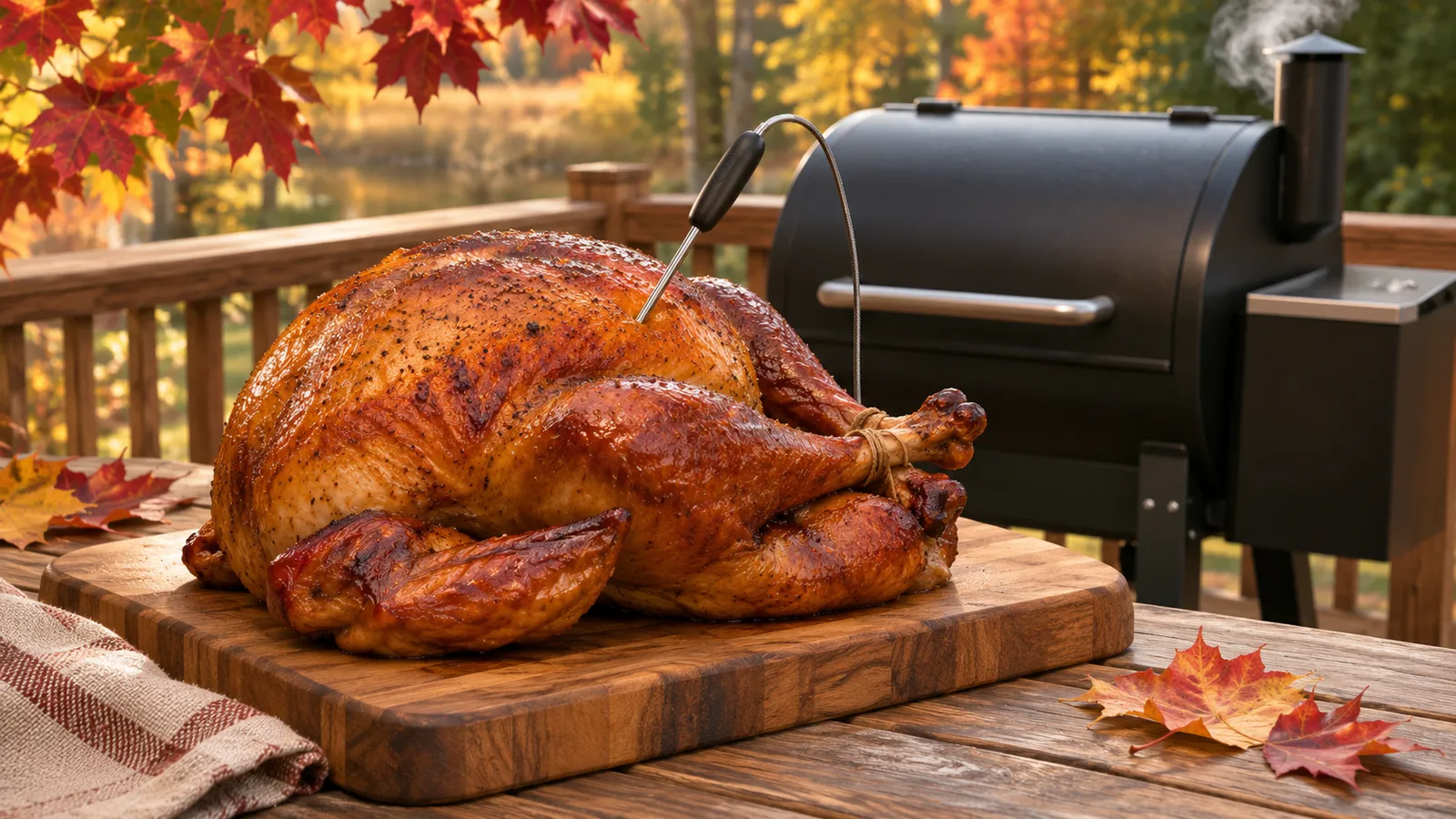
Smoked turkey is the Thanksgiving upgrade that people talk about for a year. It is easier than it looks, because a smoker or pellet grill does the work, and it frees up your oven. The two keys are cooking hot enough and trusting a thermometer.
The short answer
Thaw it in the fridge, dry brine it, smoke it unstuffed at 275 to 325°F until the breast, thigh and wing all read 165°F, then rest it 30 to 45 minutes. Our cook-time planner works out your start time and thaw date.
The Thanksgiving timeline
| When | What |
|---|---|
| Several days before | Start thawing in the refrigerator, allowing about 24 hours per 4 to 5 pounds. A 14-pound bird needs 3 to 4 days. |
| Day before | Dry brine: pat dry, rub with salt, and leave uncovered on a tray in the refrigerator. |
| Morning of | Take it out, pat dry, rub with oil or butter and your spices. Light the smoker. |
| Cook | 275 to 325°F, about 13 to 20 minutes per pound. |
| Rest | 30 to 45 minutes, loosely tented. |
Step by step
1. Pick the right size
Smaller birds, around 12 to 16 pounds, cook more evenly than giant ones. For a crowd, smoke two small turkeys rather than one monster.
2. Thaw safely
Thaw in the refrigerator, allowing about 24 hours per 4 to 5 pounds. In a hurry, cold-water thaw at about 30 minutes per pound, changing the water every 30 minutes, and cook right away. Never thaw on the counter.
3. Dry brine
Pat the bird very dry, rub kosher salt on and under the skin, and leave it uncovered in the refrigerator for a day or two. Dry skin crisps better. Do not wash raw turkey, because it spreads bacteria around the sink.
4. Season and oil
Rub with oil or softened butter and your spice mix. Leave it unstuffed.
5. Choose your wood
Mild fruit woods such as apple or cherry and nut woods such as pecan suit turkey. Strong woods like hickory or mesquite can overwhelm it.
6. Smoke at 275 to 325°F
Hotter temperatures crisp the skin and shorten the cook. Put a probe in the thickest part of the breast, away from bone.
7. Know when it is done
The USDA minimum safe internal temperature is 165°F in the thickest part of the breast, the thigh and the wing. Check all three with a thermometer. A wireless thermometer makes this easy.
8. Rest and carve
Rest for 30 to 45 minutes, loosely tented, then carve.
9. Leftovers
Refrigerate leftovers within two hours of cooking.
Our top picks
A simple leave-in probe
MEATER Pro
A single wireless probe with long-range Bluetooth and a dishwasher-safe build.
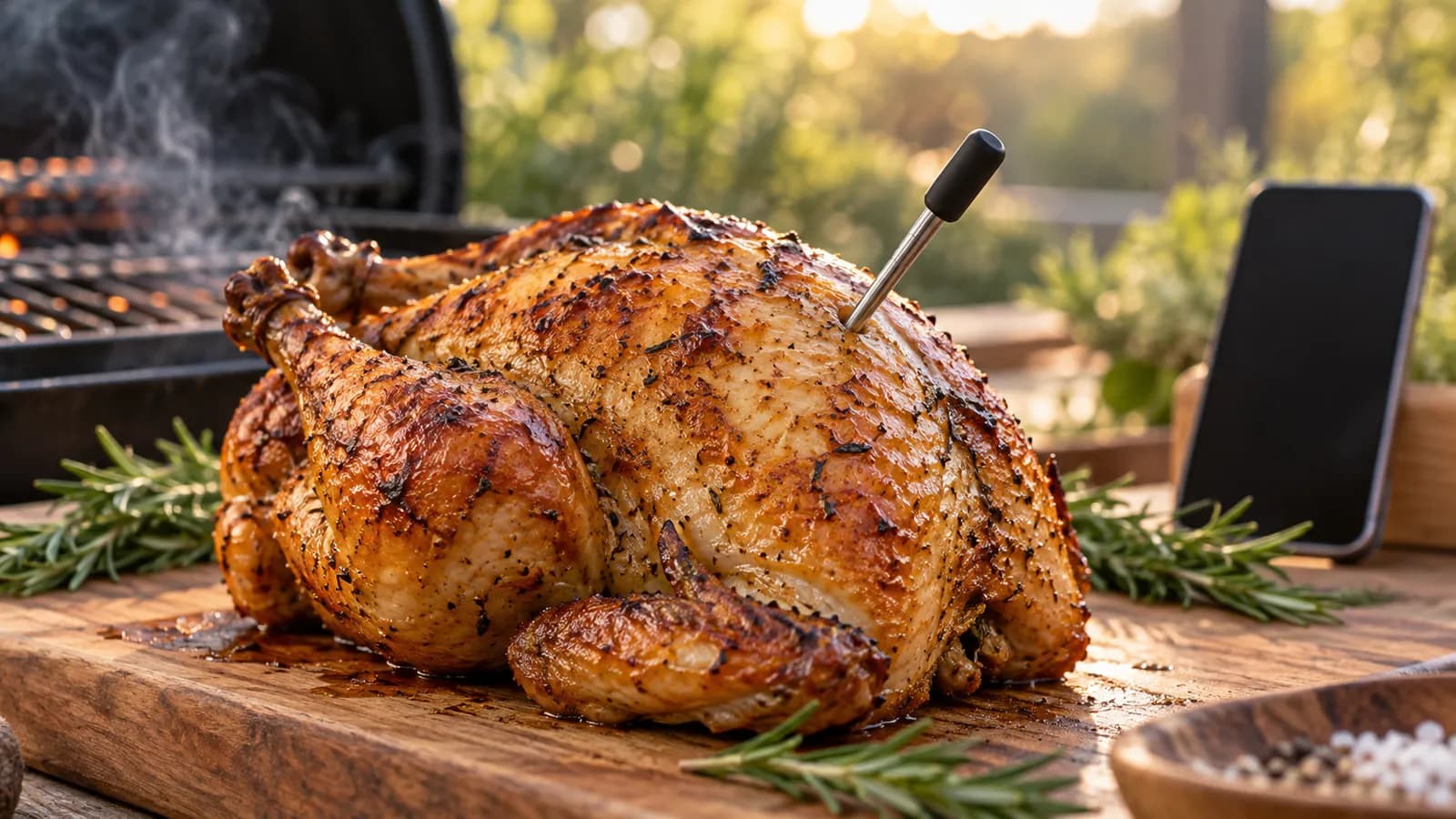
One wireless probe in the thickest part of the breast lets you watch the temperature from inside. Single probe, so check the thigh and wing with an instant-read thermometer too.
What we like
- Five internal sensors plus one ambient sensor, with ±0.5°F accuracy, per the maker
- Rated for ambient temperatures up to 1000°F, so it can sit in a hot grill or smoker
- A 30-minute charge gives 24+ hours of battery life, and the probe is dishwasher safe
Trade-offs
- No built-in Wi-Fi: you extend range with MEATER Link or MEATER Cloud on a second phone or tablet
- One probe per unit, so a multi-meat cook means buying more probes
- The maker's 2,500 ft range is open air; its typical home range is about 250 ft
- Best for
- Most home cooks who want a simple, affordable leave-in probe for roasts, chicken and steaks.
- Skip it if
- You regularly cook several cuts at once or want built-in Wi-Fi.
- Sensors: 5 internal + 1 ambient
- Connectivity: Bluetooth 5.2 (no built-in Wi-Fi)
- Max internal temp: 221°F
- Max ambient temp: 1000°F
Best for watching several spots
ThermoWorks Signals
A four-channel Wi-Fi and Bluetooth monitor for long smokes (probes are wired).
A multi-probe thermometer lets you track the breast, the thigh and the smoker temperature at the same time. It costs more than a single probe.
What we like
- Monitors up to four probes at once, with independent alarms and ±1.8°F accuracy
- Wi-Fi and Bluetooth feed the ThermoWorks app for graphing, cloud logging and remote alerts
- Physical buttons and a backlit display, so you can use it without a phone
Trade-offs
- The probes are wired to the base, so it isn't a leave-in wireless probe like MEATER or Typhur
- More cable management than a single wireless probe
- Costs more than the other picks on this page
- Best for
- Pitmasters tracking pit temperature and several cuts for a long overnight smoke.
- Skip it if
- You want a probe with no cables for roasts and steaks.
- Channels: 4
- Connectivity: Wi-Fi + Bluetooth
- Accuracy: ±1.8°F (probe dependent)
A pellet grill that can sear and smoke
Weber Searwood
A pellet smoker that can actually sear.
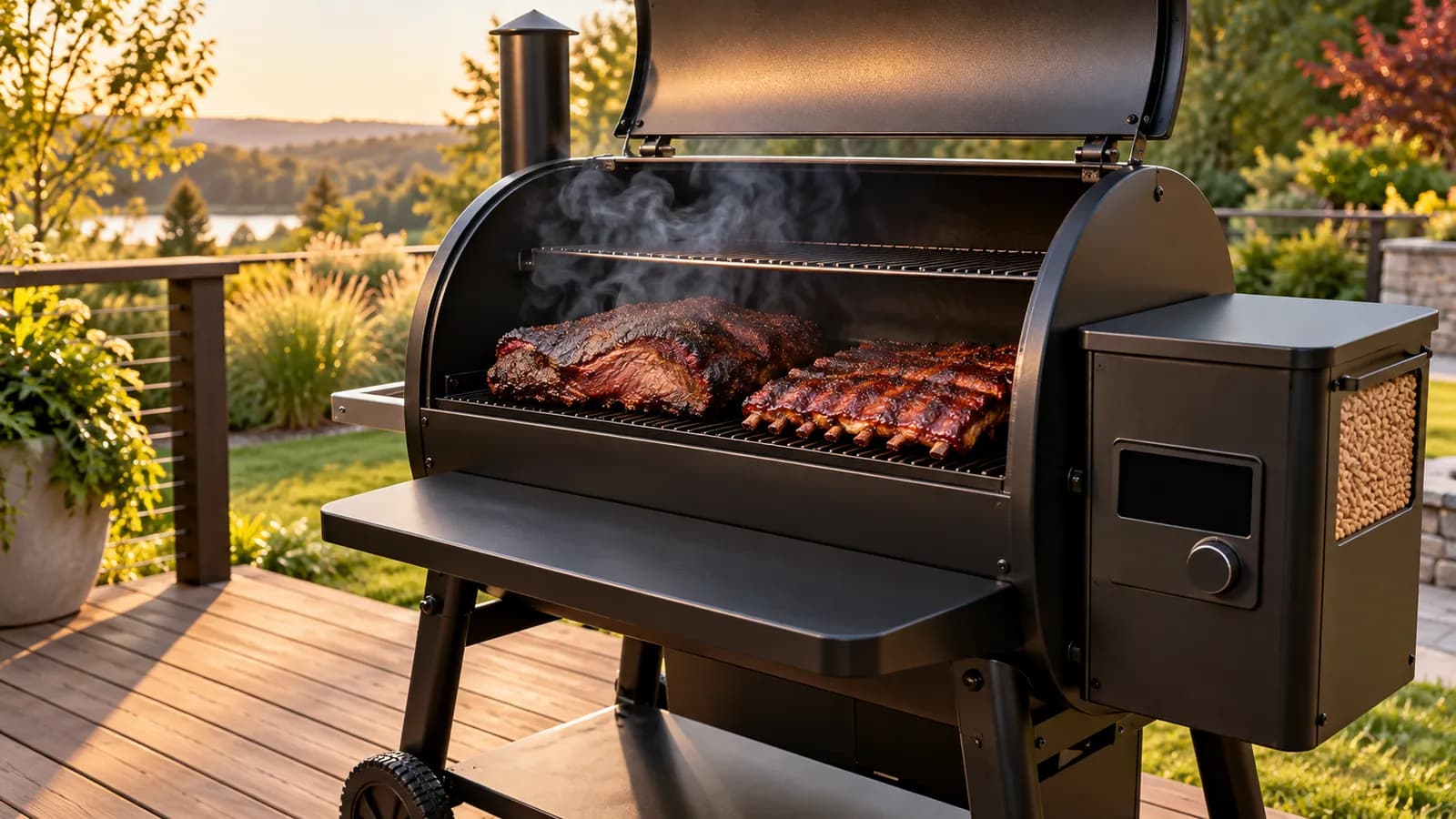
A versatile pellet grill that handles smoking and higher-heat roasting. See the pellet grill guide for the trade-offs.
What we like
- Direct-flame access lets it reach steakhouse-style sear temperatures that most pellet grills can't
- Excellent for both low-and-slow smoking and weeknight grilling
- Backed by Weber's long record of build quality and parts support
Trade-offs
- Priced above entry-level pellet grills
- Wi-Fi and app features are fine but not the main reason to buy
- Best for
- Cooks who want one grill for smoked brisket on Sunday and seared steaks on Tuesday.
- Skip it if
- Your budget is firmly under $500.
A popular pellet grill
Traeger Ironwood
The polished, app-connected set-it-and-forget-it smoker.
A widely available pellet grill with simple temperature control. Check the current model and the pellet grill guide before buying.
What we like
- Wi-Fi connected with a polished app and pellet-level sensing
- Easy to run for beginners — consistent temperatures with minimal attention
- Large cooking area suits big cooks and gatherings
Trade-offs
- Premium price compared with similarly capable pellet grills
- Searing is limited compared with grills that have direct-flame access
- Best for
- People who value convenience, an app and brand support over raw value.
- Skip it if
- You're price-sensitive — rivals deliver similar smoking for less.
Dry, quality pellets
Food-grade hardwood BBQ pellets
Dry, sealed pellets burn cleaner and jam the auger less.
Dry, sealed pellets burn cleaner and keep temperatures steady. Mild woods like apple, cherry or pecan suit turkey, and strong woods like hickory can overpower it.
What we like
- Dry, sealed bags keep moisture out
- Hardwood blends add flavor
- Less ash from quality pellets
Trade-offs
- Premium blends cost more
- Must be stored dry after opening
- Check that the pellets suit your grill brand
- Best for
- Pellet grill owners chasing steady temperatures.
- Skip it if
- You do not own a pellet grill.
Related guides
Browse the best wireless meat thermometers, pellet grills and electric smokers. Thinking about frying instead? Read how to deep-fry a turkey safely.
Frequently asked questions
How long does it take to smoke a turkey?
At 275°F, plan on roughly 15 to 20 minutes per pound, and about 13 to 18 minutes per pound at 325°F. A 14-pound turkey takes about 3.5 to 5 hours, so use a thermometer and our cook-time planner.
What temperature should I smoke a turkey at?
275°F to 325°F is a good range. It cooks the bird in a reasonable time and crisps the skin better than low and slow temperatures, which can leave the skin rubbery.
What internal temperature is a smoked turkey done?
The USDA minimum safe temperature is 165°F, checked in the thickest part of the breast, the thigh and the wing. Check all three with a thermometer.
Should I brine a turkey before smoking it?
A brine or a dry brine helps keep the meat juicy. A dry brine (salt rubbed on and left uncovered in the refrigerator for a day or two) is simpler and needs no big container. If you wet brine, keep the bird below 40°F the whole time.
Should I stuff a smoked turkey?
No. Stuffing slows the cook and is harder to bring to a safe temperature. Cook the stuffing separately.
Alex Mercer brings 15 years of experience and a practical editorial approach to Backyard Review. Alex compares published product information, installation needs and ownership costs, highlighting trade-offs and distinguishing research from documented hands-on experience.