Our top picks at a glance
Best long-lasting tube feeder
Droll Yankees tube feedersSee itPrice tier 2 of 4:$150–$500A feeder you will keep for years and refill every week.Best squirrel-resistant feeder
Brome Squirrel Buster feedersSee itPrice tier 2 of 4:$150–$500Anyone in a losing war with squirrels.Best budget feeder
Perky-Pet wild bird feedersSee itPrice tier 1 of 4:Under $150A first feeder on a budget.Best for woodpeckers
Suet cage feedersCheck pricePrice tier 1 of 4:Under $150Winter and woodpecker fans.Best for close-up viewing
Window-mounted bird feedersCheck pricePrice tier 1 of 4:Under $150Apartments, small spaces and watching from a desk.
A good bird feeder is one you will actually keep filled and clean. Put the right one in the right spot with the right seed, and a bare window becomes a nature show within a few days.
The short answer
- Most people: a Droll Yankees tube feeder with a baffle.
- Squirrels winning? The Brome Squirrel Buster.
- Trying the hobby: a Perky-Pet feeder.
- Want more variety: add a suet cage for woodpeckers.
How we picked
We compared the makers' own descriptions of each feeder line and weighed them on durability, how well they cope with squirrels, how easy they are to refill and clean, and how they suit different seeds. We list product lines rather than exact models, and we have not hands-on tested them. See our methodology.
Our top picks
Best long-lasting tube feeder
Droll Yankees tube feeders
Metal-port tube feeders built to outlast the squirrels and the seasons.
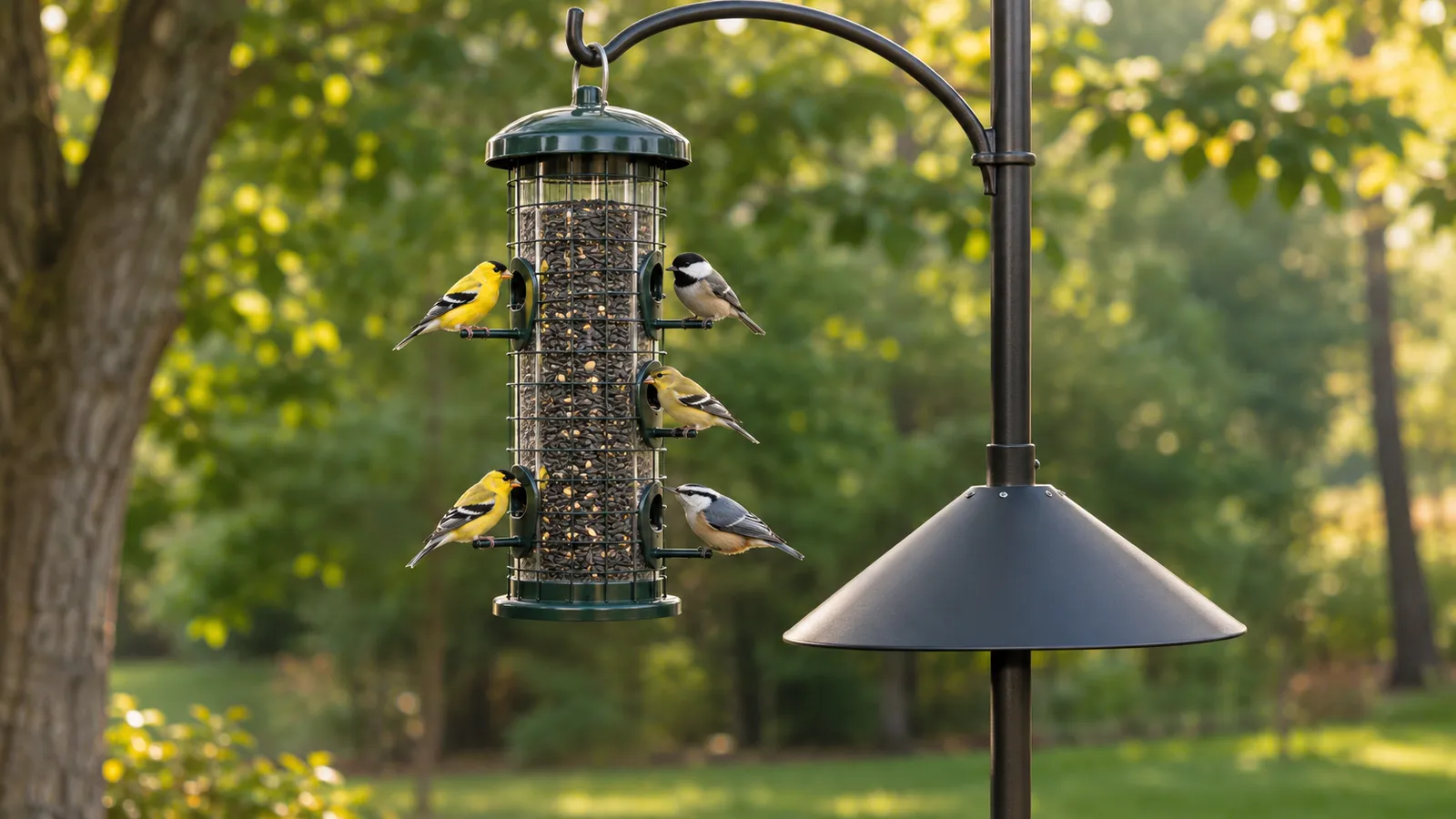
Metal ports resist chewing, and the build is made to last for years, so it is a feeder you can refill all winter. It costs more than plastic, and it is not squirrel-proof on its own, so pair it with a baffle.
What we like
- Metal feeding ports resist chewing better than all-plastic feeders
- Sturdy construction that is designed to be used for years
- Several sizes and port styles for different seeds
Trade-offs
- Costs more than plastic feeders
- Not squirrel-proof on its own, so pair it with a baffle
- Different models suit different seeds, so check which you are buying
- Best for
- A feeder you will keep for years and refill every week.
- Skip it if
- You want the cheapest feeder to test the hobby.
Best squirrel-resistant feeder
Brome Squirrel Buster feeders
Weight-activated shrouds close the feeding ports when a squirrel lands.
A weight-sensitive shroud closes the ports when something heavier than a bird lands, while birds feed normally. It costs more than basic feeders and takes a little setup, so it is for yards where squirrels have already won a few rounds.
What we like
- A weight-adjustable shroud shuts the ports when something heavier than a bird lands
- Among the better-known squirrel-resistant designs
- Birds can still feed normally
Trade-offs
- Priced higher than basic tube feeders
- Needs setup to adjust the weight setting
- Can be a puzzle to refill and clean at first
- Best for
- Anyone in a losing war with squirrels.
- Skip it if
- Squirrels are not a problem in your yard.
Best budget feeder
Perky-Pet wild bird feeders
Affordable seed feeders in lots of styles.
A wide range of affordable feeders that is perfect for trying the hobby. Plastic parts wear out and squirrels will chew them, so expect to replace one eventually.
What we like
- Low prices and wide availability
- Plenty of styles for different seeds
- Good for trying the hobby
Trade-offs
- Plastic parts wear and get chewed
- Not squirrel-resistant
- May need replacing sooner than premium feeders
- Best for
- A first feeder on a budget.
- Skip it if
- Squirrels are a serious problem.
Best for woodpeckers
Suet cage feeders
A simple wire cage that brings in woodpeckers, nuthatches and chickadees.
A cheap wire cage that brings in woodpeckers, nuthatches and chickadees, which is especially useful in cold weather. Suet melts in heat and attracts starlings, so it is a winter pick.
What we like
- Very cheap
- Brings in species that skip seed
- Valuable in cold weather
Trade-offs
- Suet melts in hot weather
- Attracts starlings and squirrels
- Needs regular refills
- Best for
- Winter and woodpecker fans.
- Skip it if
- Summers are hot where you live.
Best for close-up viewing
Window-mounted bird feeders
A feeder that sticks to the glass for close-up viewing.
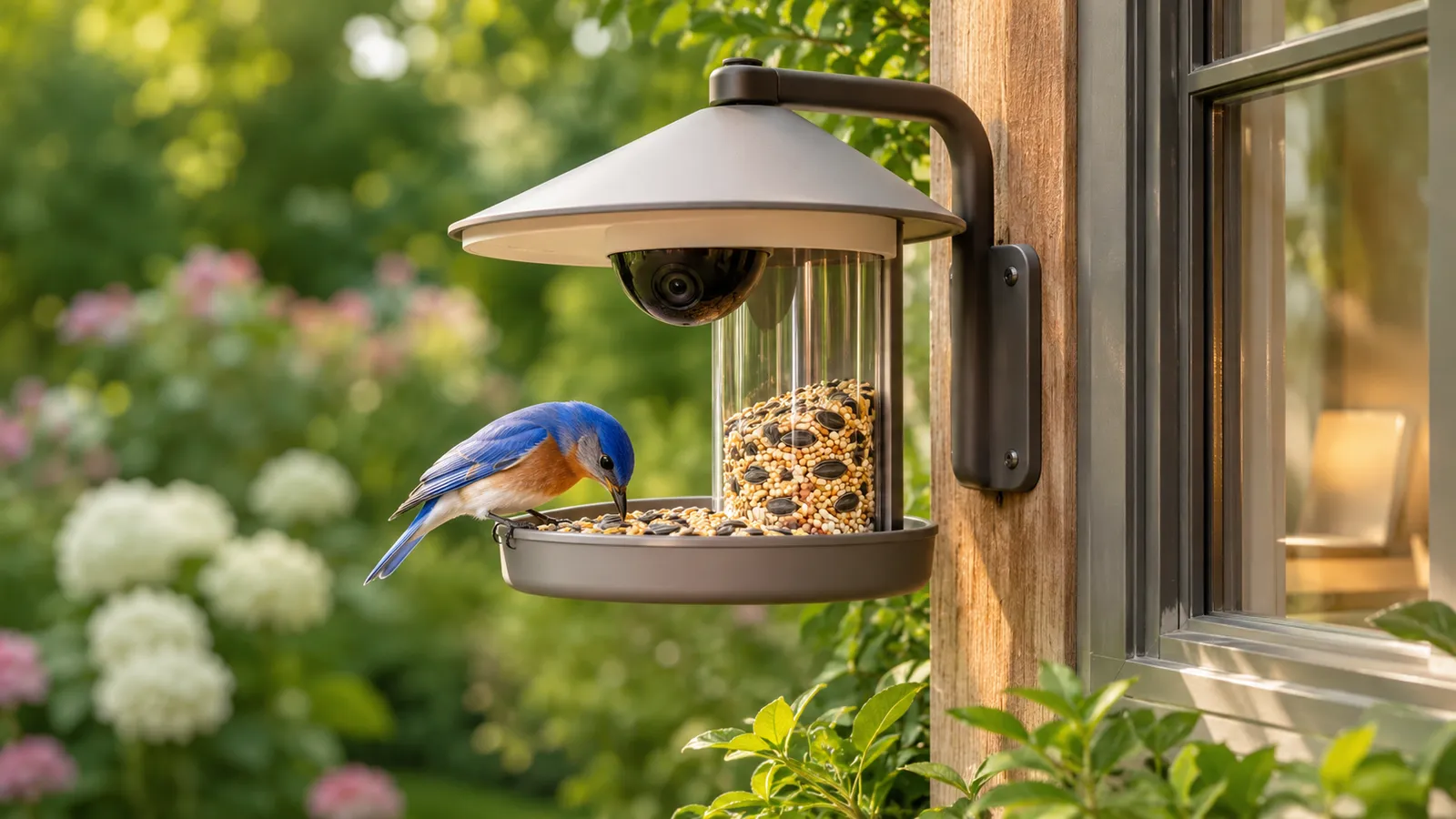
A feeder that sticks to the glass gives you kitchen-window views. Clean it often, because it is so close to the house, and check the suction cups regularly.
What we like
- Close, kitchen-window views of birds
- Good for apartments and small spaces
- Cheap to try
Trade-offs
- Must be cleaned often, because it is so close to the house
- Suction cups can fail in cold or heat
- Can attract squirrels
- Best for
- Apartments, small spaces and watching from a desk.
- Skip it if
- You want a big feeder for many birds.
How to choose a bird feeder
Start with the seed
Black oil sunflower seed is the all-round winner, and a tube feeder with it will attract finches, chickadees, cardinals and more. Nyjer suits finches, and suet suits woodpeckers.
Squirrels
No feeder is perfect against a determined squirrel, but a squirrel-resistant design on a pole with a baffle works best. Place the feeder away from anything a squirrel can jump from.
Easy cleaning
A feeder you hate cleaning is one you will not clean, and dirty feeders can spread disease among birds. Choose one that comes apart easily.
Placement
Place feeders close to cover such as shrubs, so birds can duck away from hawks, and either within about three feet of windows or more than thirty feet away. Keep them where you can see them.
Keep it going
Birds come to rely on a steady supply, especially in winter. If you leave for a long time, ask a neighbor to help, or reduce how much you put out.
Watch for sickness
If you see sick or dead birds, take feeders down, clean them, and follow local wildlife agency advice. During disease outbreaks some agencies recommend taking feeders down temporarily.
Keep going
Learn how to attract birds to your yard, add the best hummingbird feeders, try a smart camera feeder or provide winter water with a heated bird bath.
Frequently asked questions
What is the best seed for a bird feeder?
Black oil sunflower seed is the most widely recommended single choice because so many species eat it. Add a separate feeder with nyjer for finches or suet for woodpeckers and nuthatches when you are ready to branch out.
How do I keep squirrels off my bird feeder?
The most reliable method is a squirrel-resistant feeder on a smooth pole with a baffle. Common advice is to place the feeder well away from branches and fences a squirrel can jump from, and to keep the baffle high enough that they cannot leap over it.
How often should I clean a bird feeder?
Many bird organizations suggest every couple of weeks, and sooner in warm or wet weather or if you see wet or moldy seed. Wash with hot soapy water, soak briefly in a weak bleach solution of about one part bleach to nine parts water, rinse well and let it dry completely.
Where should I put a bird feeder to avoid window strikes?
Common advice from bird conservation groups is to place feeders either very close to a window, within about three feet, or far away, more than about thirty feet. Close feeders give birds no room to build up speed, and far ones keep them away from the glass.
Alex Mercer brings 15 years of experience and a practical editorial approach to Backyard Review. Alex compares published product information, installation needs and ownership costs, highlighting trade-offs and distinguishing research from documented hands-on experience.