Our top picks at a glance
A feeder to start with
Droll Yankees tube feedersSee itPrice tier 2 of 4:$150–$500A feeder you will keep for years and refill every week.Water that stays open in winter
Farm Innovators heated bird bathSee itPrice tier 1 of 4:Under $150Winter water for birds without any fuss.A feeder for hummingbird season
Perky-Pet hummingbird feedersSee itPrice tier 1 of 4:Under $150A first hummingbird feeder.
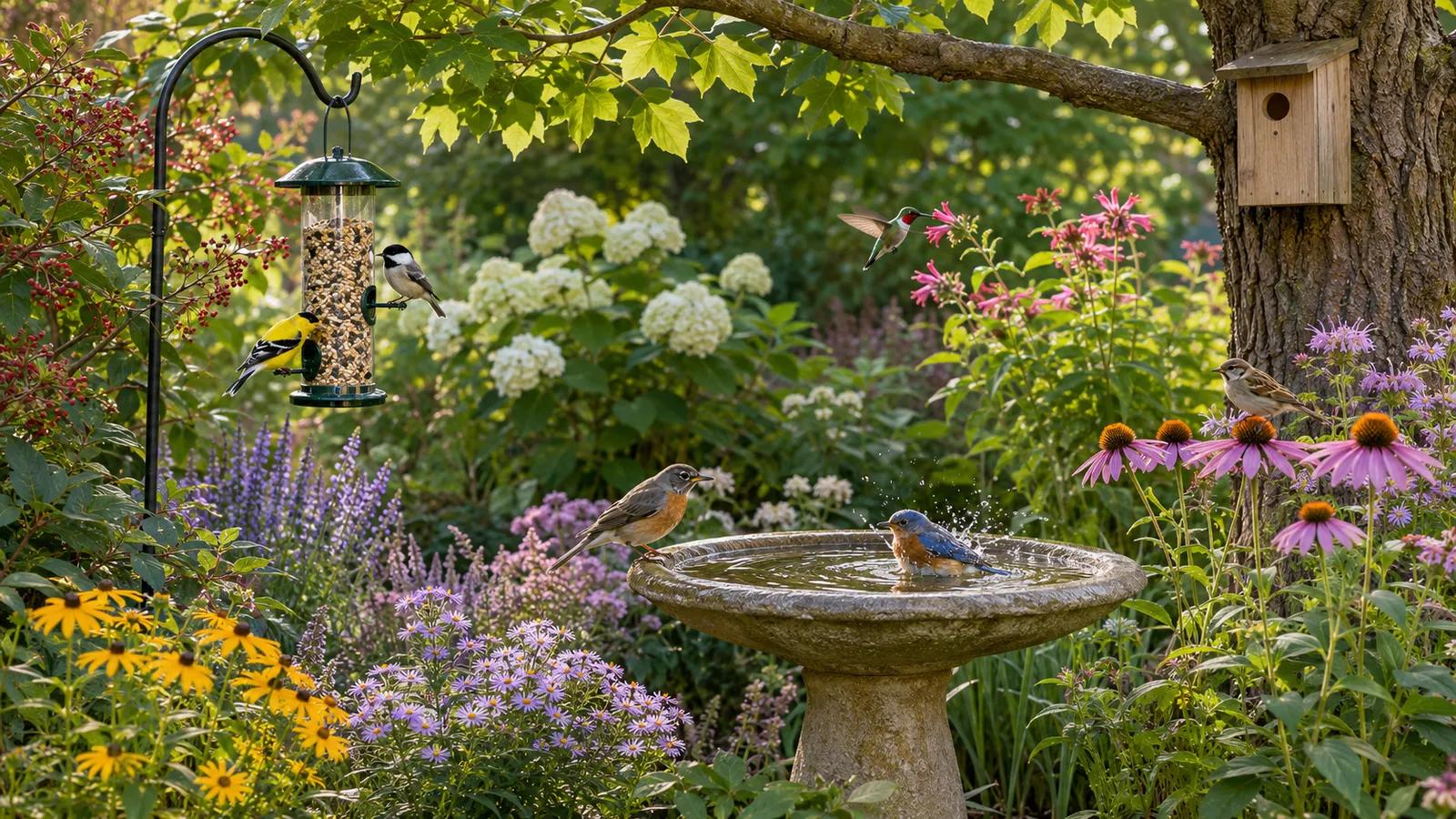
You do not need a big yard or a pile of equipment to attract birds. A few habits, repeated, do almost all of the work. Here are eight that make the biggest difference.
The short answer
Offer food, water, shelter and safety. Start with a feeder of black oil sunflower seed near shrubs, add a shallow bath, and keep everything clean.
The eight things
1. Offer the right seed
Black oil sunflower seed is the most widely recommended choice, because so many species eat it. Add nyjer for finches and suet for woodpeckers. See our guide to the best bird feeders.
2. Add water
A shallow bath, about one to two inches deep, brings in birds that never visit feeders. In winter, a heated bird bath is a big draw.
3. Give them cover
Birds want a quick place to hide. Put feeders near shrubs or trees, within a few feet of cover.
4. Plant natives
Native plants host the insects that feed baby birds, and they provide seeds and berries. Even a few native shrubs or perennials help.
5. Place feeders safely
Put feeders either within about three feet of a window or more than about thirty feet away, to reduce collisions. Keep them away from places cats can hide.
6. Keep everything clean
Dirty feeders can spread disease. Clean them every couple of weeks, and more often in wet or warm weather. Use hot soapy water and a weak bleach solution of about one part bleach to nine parts water, rinse well and let dry.
7. Be consistent
Birds come to rely on a steady supply. Keep feeders filled through winter, when food is scarcest.
8. Add something for hummingbirds and more
A nectar feeder brings in hummingbirds in season, and a camera feeder adds fun. See the best hummingbird feeders, the smart camera feeders, and our nectar calculator.
Our top picks
A feeder to start with
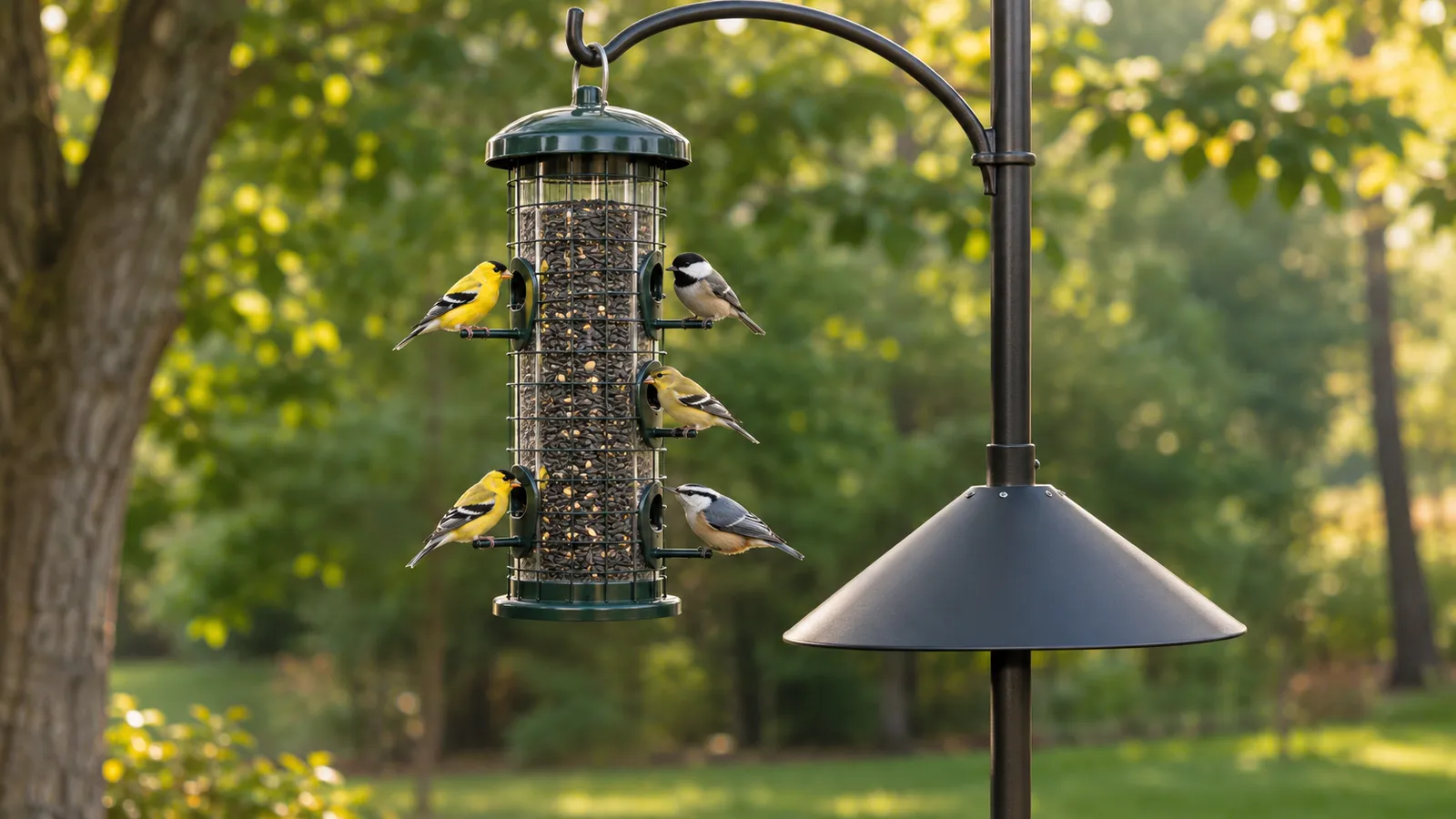
Droll Yankees tube feeders
Metal-port tube feeders built to outlast the squirrels and the seasons.
A sturdy tube feeder filled with black oil sunflower seed is the classic starter setup. Add a baffle if squirrels live nearby.
What we like
- Metal feeding ports resist chewing better than all-plastic feeders
- Sturdy construction that is designed to be used for years
- Several sizes and port styles for different seeds
Trade-offs
- Costs more than plastic feeders
- Not squirrel-proof on its own, so pair it with a baffle
- Different models suit different seeds, so check which you are buying
- Best for
- A feeder you will keep for years and refill every week.
- Skip it if
- You want the cheapest feeder to test the hobby.
Water that stays open in winter
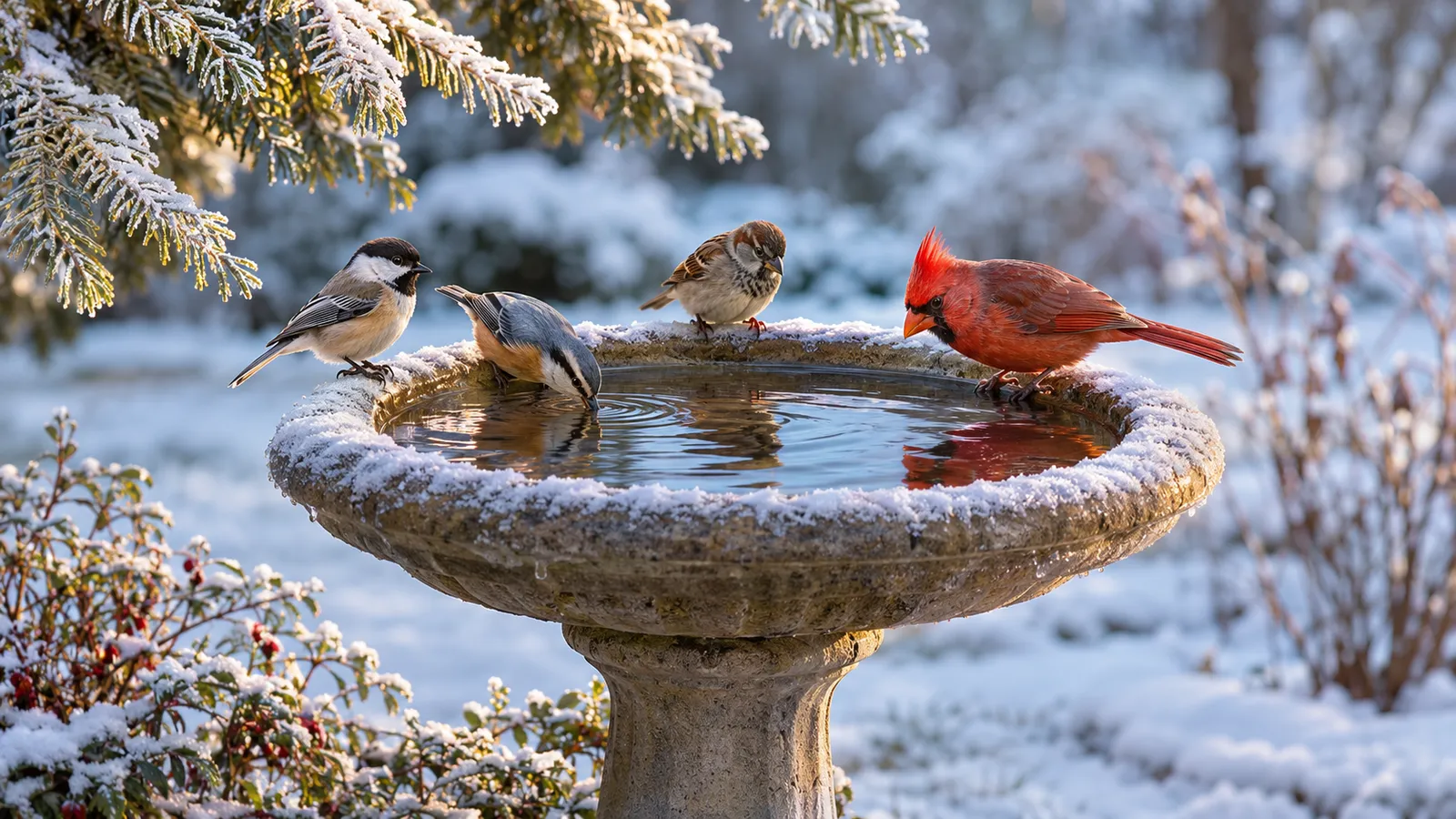
Farm Innovators heated bird bath
A thermostat-controlled heated bowl that keeps water open in freezing weather.
Water is a magnet for birds, especially when everything else is frozen. A heated bath is a cheap way to provide it.
What we like
- Keeps drinking water from freezing
- Low-wattage heater that switches on only when needed
- Inexpensive
Trade-offs
- Needs an outdoor outlet and cord
- Plastic bowls can discolor over time
- Basin is shallow, so it needs frequent cleaning
- Best for
- Winter water for birds without any fuss.
- Skip it if
- You have no outdoor power.
A feeder for hummingbird season
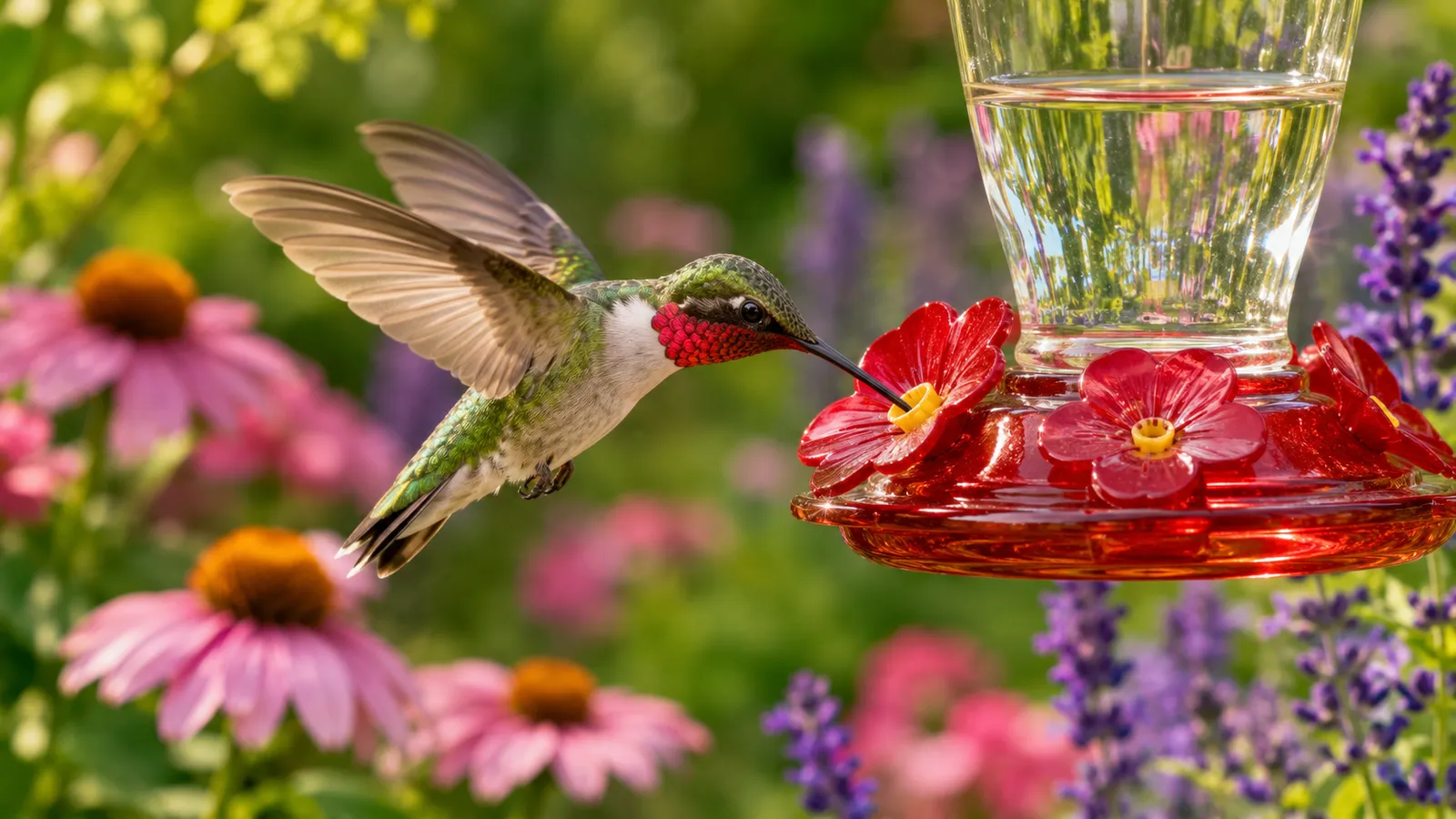
Perky-Pet hummingbird feeders
A budget-friendly, widely sold choice for hummingbird feeding.
A simple hummingbird feeder adds a second kind of visitor. Change the nectar often and keep the feeder clean.
What we like
- Affordable and easy to find
- Many styles, including glass options
- Parts are easy to replace
Trade-offs
- Cheaper plastic feeders can leak in heat
- Some designs are fussy to clean
- Needs ant protection in some yards
- Best for
- A first hummingbird feeder.
- Skip it if
- You want the easiest-to-clean design.
What to avoid
- Moldy or wet seed. Throw it out.
- Honey, dye and sweeteners in nectar. Stick to one part sugar to four parts water.
- Pesticides. They kill the insects birds rely on.
- Disease outbreaks. If you see sick or dead birds, take feeders down, clean them and follow local wildlife agency advice.
Frequently asked questions
How long does it take to attract birds?
It can take anywhere from a few hours to a few weeks. Birds need to discover a new feeder. Keep it filled, put it near cover, and be patient.
What is the best seed for attracting birds?
Black oil sunflower seed attracts the widest variety. Add nyjer for finches and suet for woodpeckers.
Why are no birds coming to my feeder?
Common reasons are a spot with no nearby cover, a recently moved feeder, old or moldy seed, predators nearby, or simply that they have not found it yet. Keep seed fresh, add water, and give it time.
Do native plants really make a difference?
Yes. Native plants support the insects that many birds, including most songbirds, feed to their young, and they provide natural seeds, berries and shelter.
Alex Mercer brings 15 years of experience and a practical editorial approach to Backyard Review. Alex compares published product information, installation needs and ownership costs, highlighting trade-offs and distinguishing research from documented hands-on experience.