Our top picks at a glance
Fixes a click-but-no-spark igniter
Replacement igniter and electrode kitsCheck pricePrice tier 1 of 4:Under $150A grill that clicks but never sparks.For a damaged hose or failed regulator
Replacement regulator and hose kitsCheck pricePrice tier 1 of 4:Under $150Anyone whose maker lists a matching part for a damaged hose or regulator.Stop running out mid-cook
Propane tank gauges and scalesCheck pricePrice tier 1 of 4:Under $150Anyone who has run out of propane mid-cook.Safer handling when cleaning burners
Heat-resistant grill glovesCheck pricePrice tier 1 of 4:Under $150Anyone moving hot grates and trays.
A gas grill that will not light is almost always one of a handful of things, and most are free to fix. Work through them in this order, which goes from the safest and cheapest to the ones that need parts.
Safety first. If you smell gas, turn off the burners and the cylinder valve, move away, keep flames and sparks away, and do not use the grill until it has been leak tested. If the smell continues, call your gas supplier or the fire department. This is general guidance, and your manual comes first.
The short answer
Check the tank and valve, then do the regulator reset, then the igniter battery, then clean the burners. Leak test any time you touch a connection.
The seven checks, in order
1. Is there gas, and is the valve open?
Lift the cylinder or use a gauge, because a "full" tank is often empty. Make sure the cylinder valve is open all the way. If you use a natural gas line, check the supply valve.
2. Reset the regulator
Most regulators have a safety flow limiter that trips if gas is released too fast, which leaves you with a tiny flame or none. Most makers describe a version of this reset:
- Turn all burner knobs off and close the tank valve.
- Disconnect the regulator from the tank.
- Wait about a minute.
- Reconnect it, hand-tight.
- Open the tank valve slowly, then wait a few seconds before lighting with the lid open.
Follow your manual's exact steps. Our troubleshooter has this and the other checks in one place.
3. Check the igniter
Replace the battery. Look for a spark at the burner in dim light. Wipe the electrode tip. If it still does not spark, light the grill by hand if your manual allows it, with the lid open, a long-reach lighter, and your face and arms back. A worn igniter is cheap to replace.
4. Look for blocked burner ports and spider webs
With the grill cold, look into the burner tubes. Spiders nest there and can block gas flow. Clear them with a flexible brush, and clear clogged ports with a stiff wire or a burner-port tool, with the gas off.
5. Inspect the hose
Look along the hose for kinks, cracks and burned spots. Replace a damaged hose with a part your grill's maker approves, and do not use the grill until you have.
6. Leak test
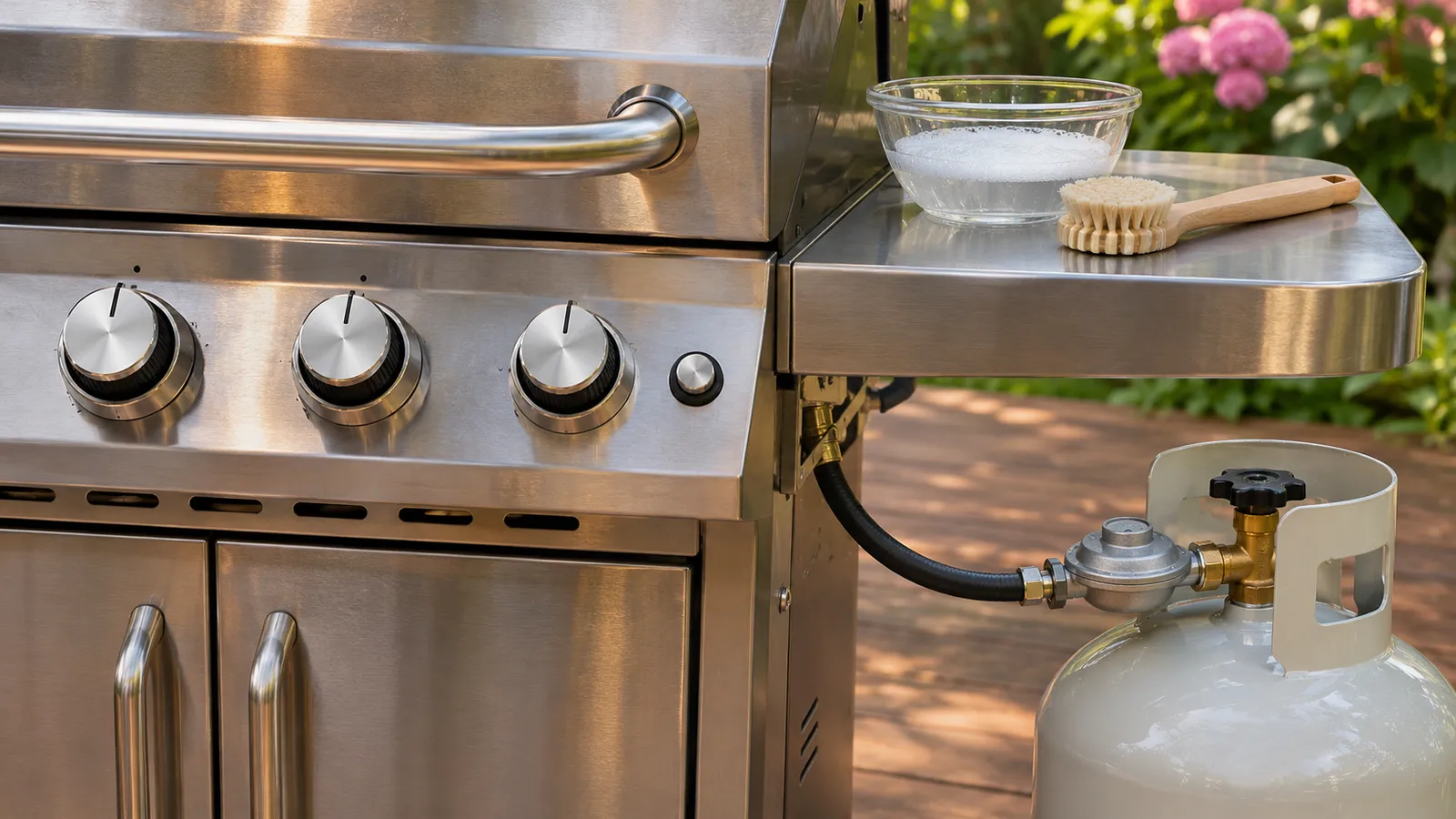
Mix dish soap and water, brush it on the hose and every connection, open the tank valve and watch for bubbles. Bubbles mean a leak. Turn the gas off and fix it before cooking. Never use a flame to check for leaks.
7. Check for wind and cold
Wind can blow out burners and cold lowers propane pressure. Turn the grill so the wind hits the back, and use a full tank.
Our top picks
Fixes a click-but-no-spark igniter
Replacement igniter and electrode kits
Fixes a clicking-but-no-spark igniter on many grills.
A replacement igniter or electrode is cheap and quick on many grills. Fit varies by model, and it will not fix a fuel or regulator problem.
What we like
- Cheap and quick to fit on many grills
- Restores push-button lighting
- Often a better fix than a new grill
Trade-offs
- Fit varies by model, so check yours
- Only the igniter, so it will not fix a gas problem
- Wiring varies
- Best for
- A grill that clicks but never sparks.
- Skip it if
- The problem is fuel or the regulator, not the spark.
For a damaged hose or failed regulator
Replacement regulator and hose kits
Swap-in parts for a cracked hose or failed regulator, if they match your grill.
Replacement parts restore flow if a hose or regulator has failed. Use only parts your grill's maker approves for your model, check the connection type, and leak test after any change.
What we like
- Cheap compared with a new grill
- Easy to swap on many grills
- Restores flow if a part has failed
Trade-offs
- Only use parts your grill's maker approves for your model; generic parts can be wrong
- Check the connection type (for example, POL or Type 1) and rating
- Leak test after every change, and replace damaged parts rather than repairing them
- Best for
- Anyone whose maker lists a matching part for a damaged hose or regulator.
- Skip it if
- You are unsure of the part, in which case contact the maker.
Stop running out mid-cook
Propane tank gauges and scales
Stop running out of gas halfway through the burgers.
A gauge or scale is cheap insurance against an empty tank. Gauges are approximate, so treat them as a guide.
What we like
- Cheap insurance against an empty tank
- Easy to fit between the tank and regulator
- Scales can show weight precisely
Trade-offs
- Gauges are approximate, not exact
- Check that the fitting is compatible
- Do not use damaged parts
- Best for
- Anyone who has run out of propane mid-cook.
- Skip it if
- You always carry a spare.
Safer handling when cleaning burners
Heat-resistant grill gloves
Silicone or aramid gloves for handling hot grates, trays and pans.
Handy for moving warm grates and shields. Check the temperature rating, and let the grill cool before cleaning burners.
What we like
- Protects hands on hot surfaces
- Makes cleaning a warm grill easier
- Washable
Trade-offs
- Check the stated temperature rating and read the care label
- Wet gloves can conduct heat
- Bulky gloves reduce dexterity
- Best for
- Anyone moving hot grates and trays.
- Skip it if
- You rarely handle hot parts.
When to stop and call someone
If you smell gas that does not go away after you shut off the supply, see damaged parts you are not sure how to replace, or the grill has been exposed to a fire, stop. Contact the grill's maker or a qualified technician, or your gas utility for natural gas.
Keep the grill healthy
Regular cleaning prevents most problems. See our guide on how to clean a grill and the best grill covers, or if it is time for a new one, our best gas grills.
Frequently asked questions
Why won't my gas grill light even though the tank is full?
The most common cause is the regulator's safety flow limiter tripping, which restricts gas to a tiny flow. The reset is described in most manuals: turn everything off, disconnect the regulator from the tank, wait about a minute, reconnect, and open the tank valve slowly. Blocked burner ports, a dead igniter battery and spiders in the burner tubes are the next suspects.
What should I do if I smell gas?
Turn off the burners and the cylinder valve, move away, and keep flames and sparks away. Do not use the grill until you have leak tested it. If the smell continues, call your gas supplier or the fire department.
How do I check for a propane leak?
Mix dish soap and water, brush it on the hose and connections, open the tank valve, and look for bubbles. Bubbles mean a leak. Turn the gas off and fix it before cooking. Never check for leaks with a flame.
Can I light a gas grill with a match?
Many grills allow it through a lighting hole, but follow your manual. Keep the lid open, use a long-reach lighter or match holder, and keep your face and arms back.
Alex Mercer brings 15 years of experience and a practical editorial approach to Backyard Review. Alex compares published product information, installation needs and ownership costs, highlighting trade-offs and distinguishing research from documented hands-on experience.