Our top picks at a glance
Everything in one buy
Griddle seasoning and cleaning kitsSee itPrice tier 1 of 4:Under $150A new griddle or a re-season.For rust and burnt-on residue
Grill cleaning bricks and stonesCheck pricePrice tier 1 of 4:Under $150Griddles and heavy build-up.Keep rust away
Blackstone griddle coversSee itPrice tier 1 of 4:Under $150Griddle owners who want to prevent rust.
A well-seasoned flat-top is the difference between a griddle that glides and one that glues your eggs to the steel. Seasoning is simple: thin oil, baked on, repeated.
The short answer
Wash and dry the steel, heat it, wipe on a very thin coat of high-smoke-point oil, heat until it stops smoking, and repeat three to five times. Thin coats are the secret.
How to season a new griddle
- Wash it. Follow your maker's first-use instructions. Many call for warm soapy water on a new griddle to remove factory residue. Rinse and dry thoroughly.
- Heat it. Turn the burners on to dry the surface completely.
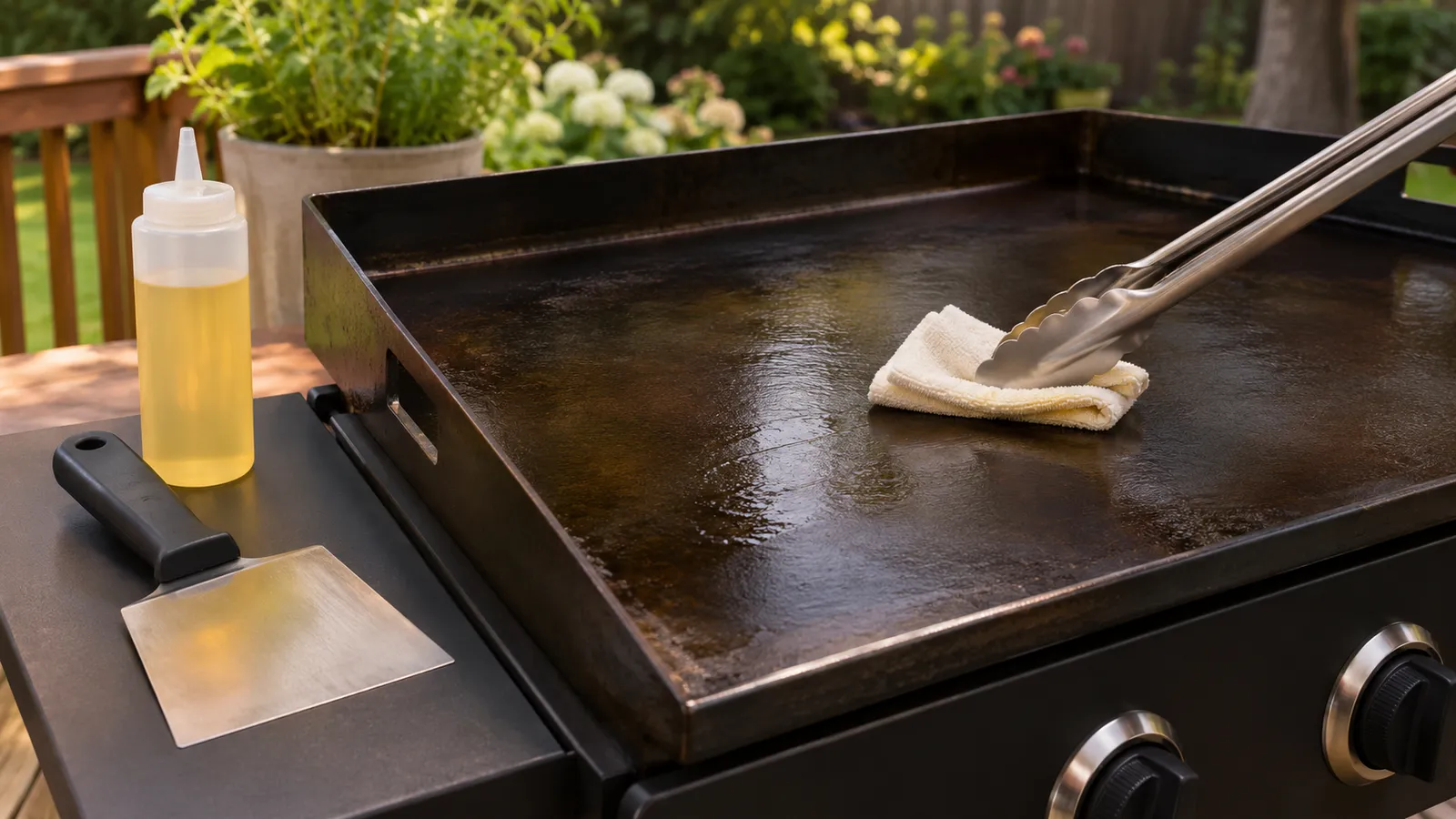
- Oil it thinly. Pour a small amount of high-smoke-point oil, such as canola, vegetable or avocado, onto the surface. Spread it in a very thin, even layer with tongs and a folded cloth or paper towel. Wipe off the excess until it looks almost dry. Thick coats turn sticky and flake.
- Heat until it stops smoking. Turn the burners up and let the oil bake on until the smoke fades. The surface will darken.
- Repeat three to five times, letting it cool slightly between coats.
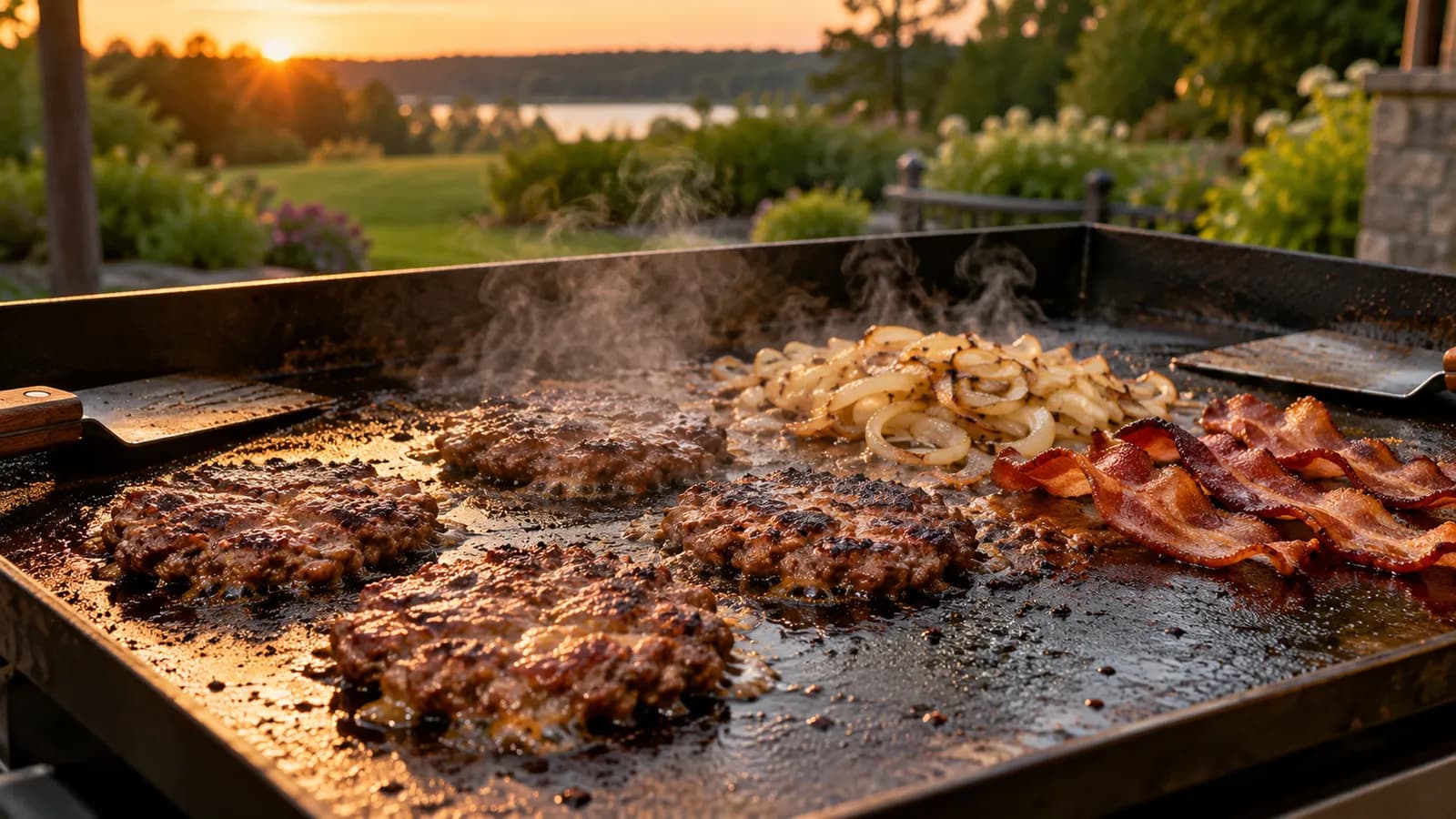
- Cook something fatty. Bacon or burgers build the seasoning further.
Keeping the seasoning
- Scrape while it is warm after each cook.
- Wipe on a thin film of oil before it cools, to protect the steel.
- Avoid strong soap and long soaks on a seasoned top.
- Cover it after every use.
Fixing problems
Rust
Scrub with a griddle stone or steel wool, wash, dry and re-season. Prevent a repeat with oil and a cover.
Food sticks
Thin or damaged seasoning, a cold surface or too little oil. Preheat fully and add a thin layer of oil as you cook, or re-season.
Flaking
The coats were too thick. Scrape the flakes off and re-season with thinner coats.
Uneven heat
Wind and blocked burners cause it. Shelter the griddle and clean the burners when cold. Never splash cold water on a hot top, because thermal shock can warp it.
Our top picks
Everything in one buy
Griddle seasoning and cleaning kits
Seasoning oil, a scraper and a squeeze bottle in one kit.
A seasoning conditioner, a scraper and a squeeze bottle cover the basics. Any high-smoke-point cooking oil can season a griddle, so you may not need a kit, and none fixes heavy rust.
What we like
- Gets you the basics in one buy
- Seasoning conditioners are made for steel tops
- Cheap
Trade-offs
- Any cooking oil with a high smoke point can season a griddle
- Kits vary in contents
- Not a fix for heavy rust
- Best for
- A new griddle or a re-season.
- Skip it if
- You already have oil and a scraper.
For rust and burnt-on residue
Grill cleaning bricks and stones
A pumice-style block for scouring flat-tops and grates.
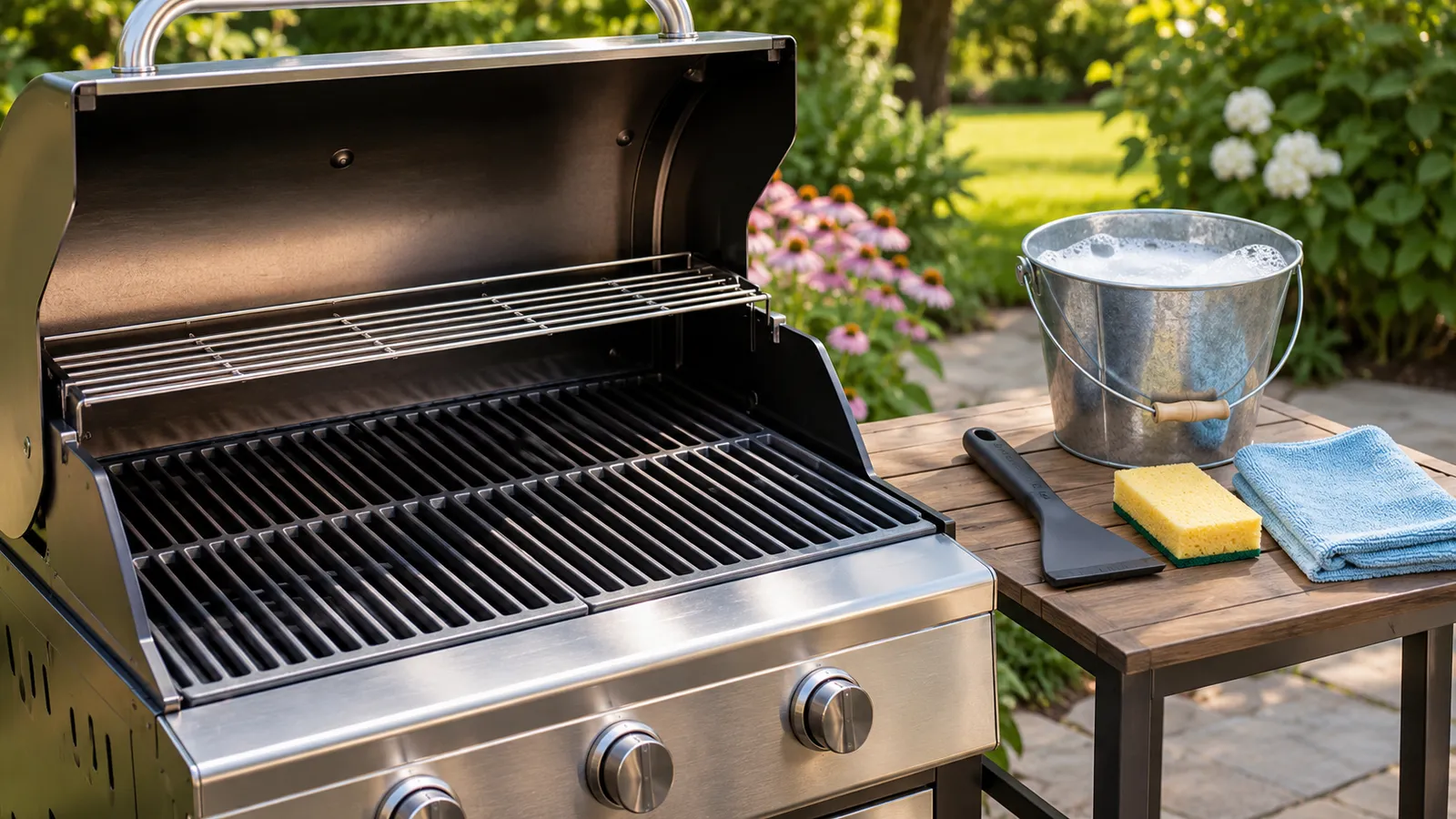
A pumice-style stone scrubs off rust and stuck-on food before you re-season. It wears away as you use it.
What we like
- Cuts through burnt-on residue on griddles
- Cheap
- No bristles
Trade-offs
- Can scratch some finishes
- Wears away as you use it
- Check that your grate or top is compatible
- Best for
- Griddles and heavy build-up.
- Skip it if
- You have porcelain-coated or non-stick grates.
Keep rust away
Blackstone griddle covers
Soft and hard covers sized to Blackstone griddles.
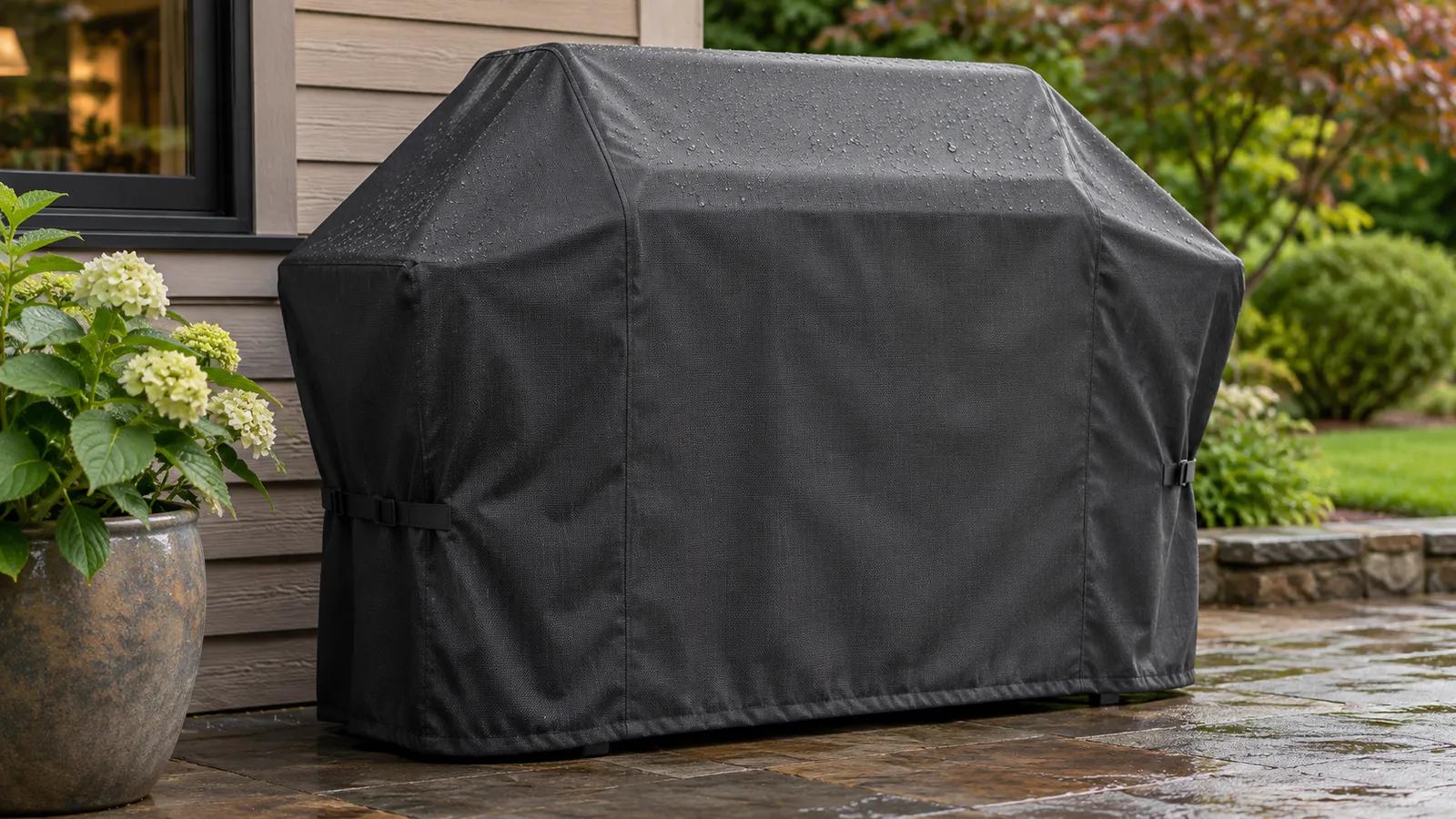
A fitted cover protects the seasoned top from rain and moisture. Check the size for your griddle, and oil the top lightly before storing.
What we like
- Sized for Blackstone griddles
- Hard covers also act as a prep surface on some models
- Protect the seasoned top from rain and rust
Trade-offs
- Check the size for your griddle
- Hard covers cost more
- Not a substitute for oiling the top before storage
- Best for
- Griddle owners who want to prevent rust.
- Skip it if
- You store the griddle indoors.
Related guides
See our best flat-top griddles, learn how to clean a grill, and get a cover.
Frequently asked questions
Why do you have to season a griddle?
Seasoning bakes thin layers of oil onto the steel to form a hard, slick, protective coating. It makes the surface non-stick and protects it from rust.
What oil is best for seasoning a griddle?
Any cooking oil with a high smoke point, such as canola, vegetable or avocado oil, works. Many people like flaxseed oil, though thick coats of it can flake. What matters most is applying very thin coats.
How many coats of seasoning do I need?
Three to five thin coats is a common starting point, with each one heated until it stops smoking. Cooking fatty foods like bacon builds more over time.
How do I fix a rusty griddle?
Scrub off the rust with a griddle stone or steel wool, wash and dry the surface, then re-season with several thin coats. Cover the griddle after use to keep rust from coming back.
Alex Mercer brings 15 years of experience and a practical editorial approach to Backyard Review. Alex compares published product information, installation needs and ownership costs, highlighting trade-offs and distinguishing research from documented hands-on experience.