Our top picks at a glance
Measure the stone, not the air
Infrared thermometer gun (rated to 1,000°F+)Check pricePrice tier 1 of 4:Under $150Anyone who wants consistent results on the first pizza, not the third.Easier launching
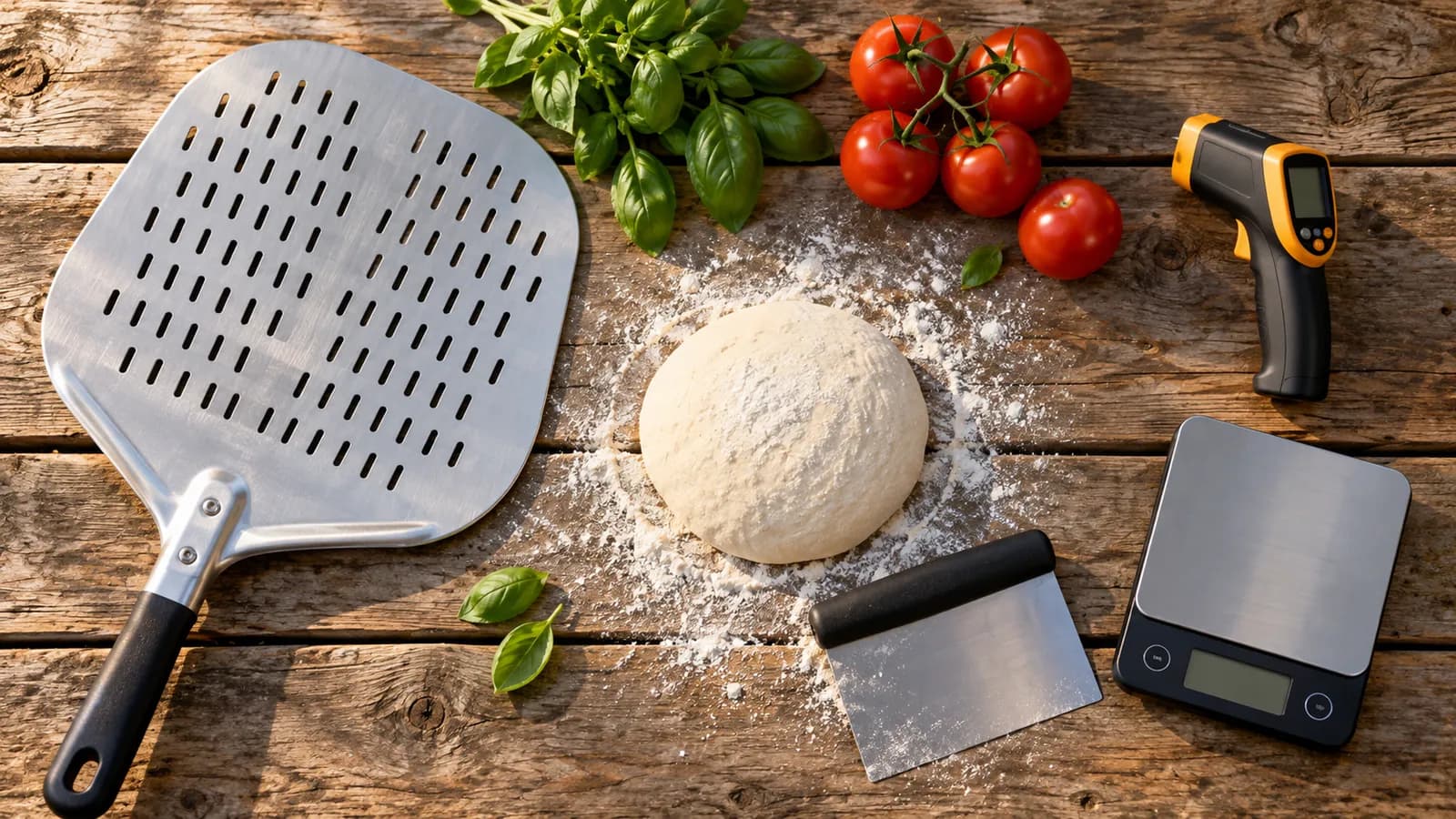
Perforated aluminum pizza peel (12–14 in)Check pricePrice tier 1 of 4:Under $150Anyone with a pizza oven — buy this before anything else.Protect it between uses
Weatherproof pizza oven coverCheck pricePrice tier 1 of 4:Under $150Any oven that lives outdoors.
An outdoor pizza oven that will not get hot enough makes pale, floppy pizza. Fortunately it is almost always a preheating, wind or fuel problem, and each has a simple fix.
The short answer
Preheat longer, measure the stone with an infrared thermometer, block the wind, and check your fuel (a nearly empty or cold propane tank, or damp wood).
Common causes and fixes
1. Not enough preheat time
A heavy stone takes a while to soak up heat, and the dome air gets hot first. Preheat as long as your manual says, then check the stone floor with an infrared thermometer.
2. Wind
Wind blows heat out of the oven and can blow out the flame. Turn the oven so the wind hits the back or move it to a sheltered spot.
3. Low gas pressure (gas ovens)
- Empty or cold tank. Cold lowers propane pressure, and an almost-empty tank gives a weak flame. Swap in a full one.
- Tripped regulator. If the flame is weak even with a full tank, do the regulator reset in your manual: turn everything off, disconnect the regulator, wait a minute, reconnect and open the valve slowly.
- Blocked burner. Clean it when cold. If you smell gas, stop and follow the safety steps in your manual.
4. Wood problems (wood-fired ovens)
- Damp wood. Use dry, seasoned hardwood, which burns hotter and cleaner.
- Too big a fire, too early. Build a small, hot fire, and add wood in stages.
- Not enough airflow. Keep the vents and flue clear.
5. Measuring the wrong thing
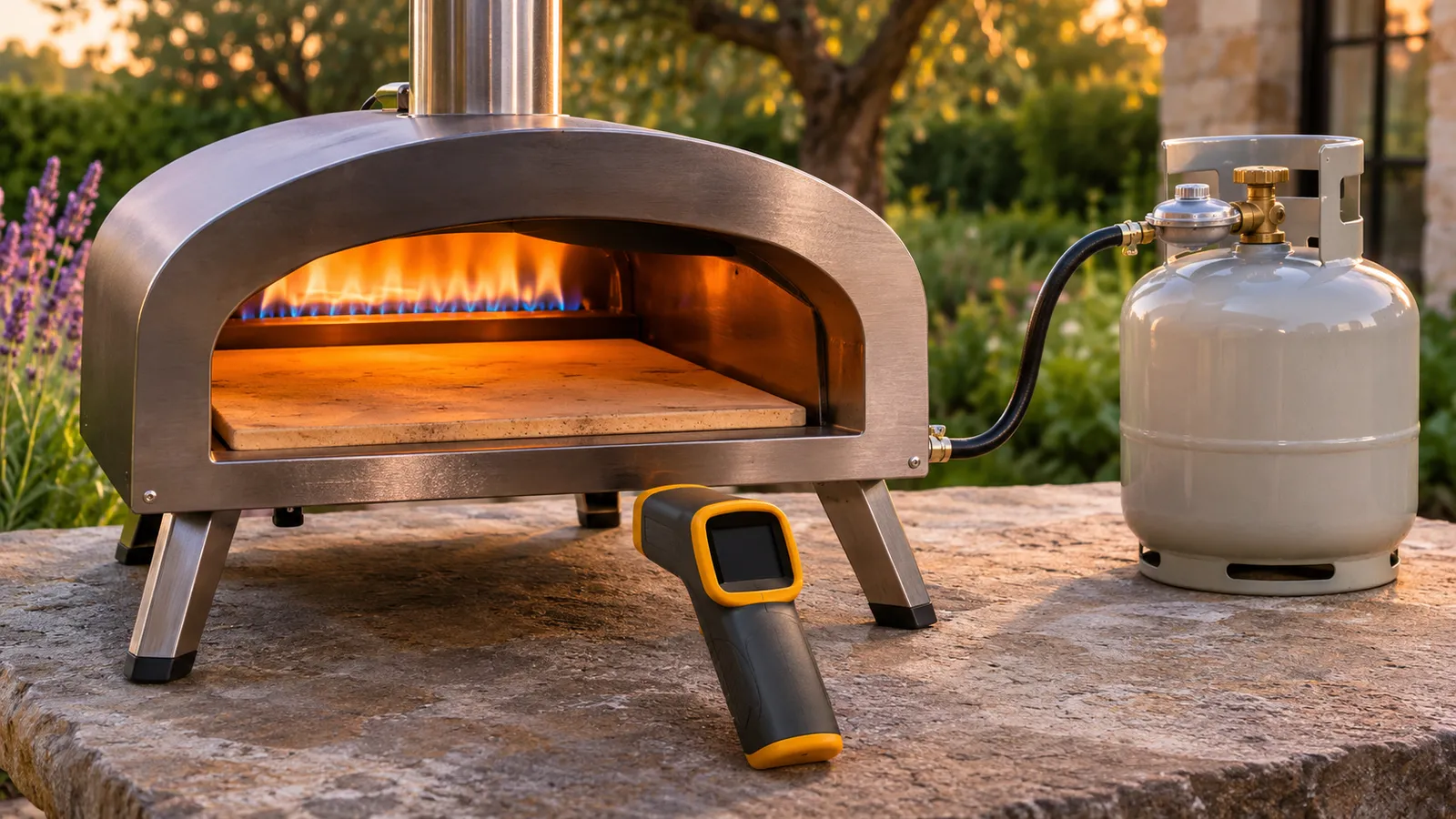
The temperature at the dome is not the temperature of the stone. Point an infrared thermometer at the stone, which is what cooks the base.
6. Burnt bottom, raw top
The stone is hotter than the dome. Turn the flame down after preheating, let the dome catch up, and rotate the pizza every 20 to 30 seconds. Sugar in the dough also browns faster, so use less.
7. Pizza sticks to the peel
Use a little flour or semolina, build the pizza fast and launch right away. A perforated peel helps.
8. A cracked stone
Thermal shock, from cold water or a wet tool on a hot stone or from heating too fast, cracks stones. Let them cool and dry, and replace a cracked one.
Our top picks
Measure the stone, not the air
Infrared thermometer gun (rated to 1,000°F+)
The easiest way to know the stone is actually ready.
An infrared thermometer tells you the actual temperature of the stone, which is what cooks the bottom of the pizza. Point it at the stone floor, and remember it reads surfaces, not air.
What we like
- Instantly reads the stone surface temperature
- Prevents under-heated stones and burnt bottoms
- Handy for grills, griddles and smokers too
Trade-offs
- Cheap units top out at low temperatures — check the maximum rating before buying
- Best for
- Anyone who wants consistent results on the first pizza, not the third.
- Skip it if
- You already have one, or the only model in reach tops out below pizza-oven temperatures.
Easier launching
Perforated aluminum pizza peel (12–14 in)
The tool you'll touch every single pizza.
A perforated peel sheds excess flour, which helps with sticking and burnt specks. It is a nice upgrade, not a cure for an oven that is cold.
What we like
- Perforations shake off excess flour, so it doesn't burn on the stone
- Thin aluminum slides easily under a finished pizza
- Light enough for one-handed turning
Trade-offs
- Aluminum handles get hot near the oven — pick one with a long, insulated handle
- Best for
- Anyone with a pizza oven — buy this before anything else.
- Skip it if
- You already own a peel with a long, insulated handle.
Protect it between uses
Weatherproof pizza oven cover
Cheap insurance for a $500+ purchase.
A fitted cover keeps rain and moisture off the stone and burner. Let the oven cool completely first.
What we like
- Keeps rain, pollen and bird droppings out
- Extends the life of stone, paint and fittings
- Fabric covers designed for your exact model fit better than generic ones
Trade-offs
- Never cover an oven until it is completely cool
- Best for
- Any oven that lives outdoors.
- Skip it if
- Your oven lives indoors or in a garage.
Related guides
See our guides to the best pizza ovens, gas vs wood-fired and the best pizza oven accessories. Our free pizza dough calculator helps with the dough, and the troubleshooter has more checks.
Frequently asked questions
How long should I preheat my outdoor pizza oven?
Follow your maker's guidance, since it varies by model, but many ovens need around 15 to 20 minutes or more, and wood-fired ovens can take longer. Use an infrared thermometer to check the stone, because the air temperature in the dome rises first.
Why is my pizza oven not reaching temperature?
Common reasons are not enough preheat time, wind blowing out the heat, low gas pressure from a nearly empty or cold tank or a tripped regulator, damp wood, or measuring the dome air instead of the stone.
Why does the bottom of my pizza burn before the top cooks?
The stone is hotter than the dome. Turn the flame down after preheating, let the dome catch up, rotate the pizza every 20 to 30 seconds, and use less sugar in the dough.
Why does my pizza stick to the peel?
Wet dough, too long on the peel, or too little flour or semolina are the usual causes. Build the pizza quickly, dust the peel lightly and shake it before launching.
Alex Mercer brings 15 years of experience and a practical editorial approach to Backyard Review. Alex compares published product information, installation needs and ownership costs, highlighting trade-offs and distinguishing research from documented hands-on experience.