Our top picks at a glance
Best budget net
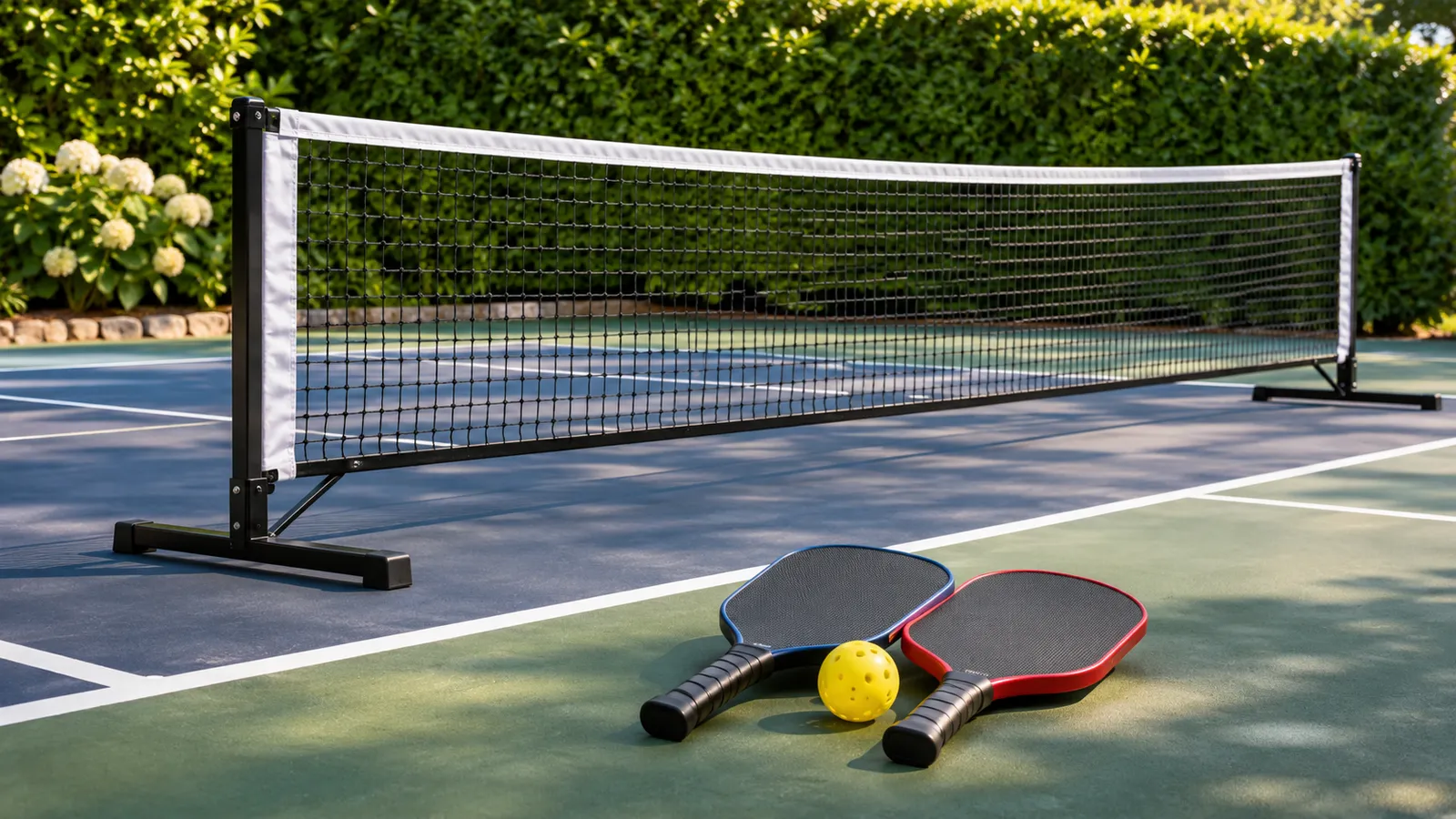
Franklin Sports portable pickleball netsSee itPrice tier 1 of 4:Under $150Families and casual players who want to try pickleball without a big spend.Best step-up net
Onix portable pickleball netsCheck pricePrice tier 2 of 4:$150–$500Regular players who want a more solid portable net.Best for regular play
Park & Sun Sports portable pickleball netsCheck pricePrice tier 2 of 4:$150–$500A regular pickleball group that sets up the same net weekly.Best way to get everyone playing
Pickleball starter paddle setsCheck pricePrice tier 1 of 4:Under $150Beginners and guests.
Pickleball is easy to learn and hard to put down, and a portable net is the quickest way to turn a driveway or sport court into a game. Before you buy one, check the space and the surface, because those matter more than the net.
The short answer
- Casual and budget: Franklin Sports.
- Regular games: Onix or Park & Sun Sports.
- Start playing today: add a paddle set.
How we picked
We compared the makers' descriptions of each net line and weighed them on frame strength, how portable and quick to set up they are, how close they are to regulation and what they cost. We list lines rather than exact models, and we have not hands-on tested them. See our methodology.
Our top picks
Best budget net
Franklin Sports portable pickleball nets
An affordable, easy-to-set-up net for a driveway or sport court.
An affordable, easy-to-set-up net that is perfect for a casual game. Light frames can shift in wind, budget nets are not always exactly regulation, and these are not meant to live outside.
What we like
- Affordable, and widely available in a few designs
- Portable frames pack into a bag
- Quick setup for a casual game
Trade-offs
- Light frames can shift in wind
- Budget nets are not always perfectly regulation, so check the height and tension
- Not designed to stay out in the weather
- Best for
- Families and casual players who want to try pickleball without a big spend.
- Skip it if
- You play competitively or want a net that stays rock-solid in wind.
Best step-up net
Onix portable pickleball nets
A sturdier portable net from a well-known pickleball brand.
A sturdier portable net from a brand that focuses on pickleball. It costs more and is heavier to carry, so check the exact model's dimensions.
What we like
- Made by a brand focused on pickleball
- Sturdier frames are common among the step-up nets
- Folds for storage in a carry bag
Trade-offs
- Costs more than entry-level nets
- Heavier to carry than the lightest options
- Check the exact model's dimensions and weight
- Best for
- Regular players who want a more solid portable net.
- Skip it if
- You only plan to play a few times.
Best for regular play
Park & Sun Sports portable pickleball nets
Heavier-duty portable nets that aim at tournament-like play.
A heavier-duty portable net that is closer to tournament feel, with wheels or a carry bag on many models. It is pricier and takes longer to assemble, so it suits a group that plays weekly.
What we like
- A step up in frame strength for people who play often
- Designs include wheels or carry bags on many models
- Closer to regulation feel than the lightest nets
Trade-offs
- Heavier and pricier than basic nets
- Assembly takes longer
- Check each model's details before you buy
- Best for
- A regular pickleball group that sets up the same net weekly.
- Skip it if
- You want the cheapest or lightest possible net.
Best way to get everyone playing
Pickleball starter paddle sets
Two or four paddles and balls in one box, enough to start.
A box with a few paddles and balls is the cheapest way to start. Starter paddles feel basic, and outdoor balls differ from indoor balls, so check which come in the box.
What we like
- The cheapest way to get everyone playing
- Usually includes balls and a carry bag
- Good for families and guests
Trade-offs
- Starter paddles feel basic compared with better paddles
- Outdoor balls differ from indoor balls, so check which come in the box
- Quality varies by seller
- Best for
- Beginners and guests.
- Skip it if
- You already own paddles.
What you need before you buy
Space
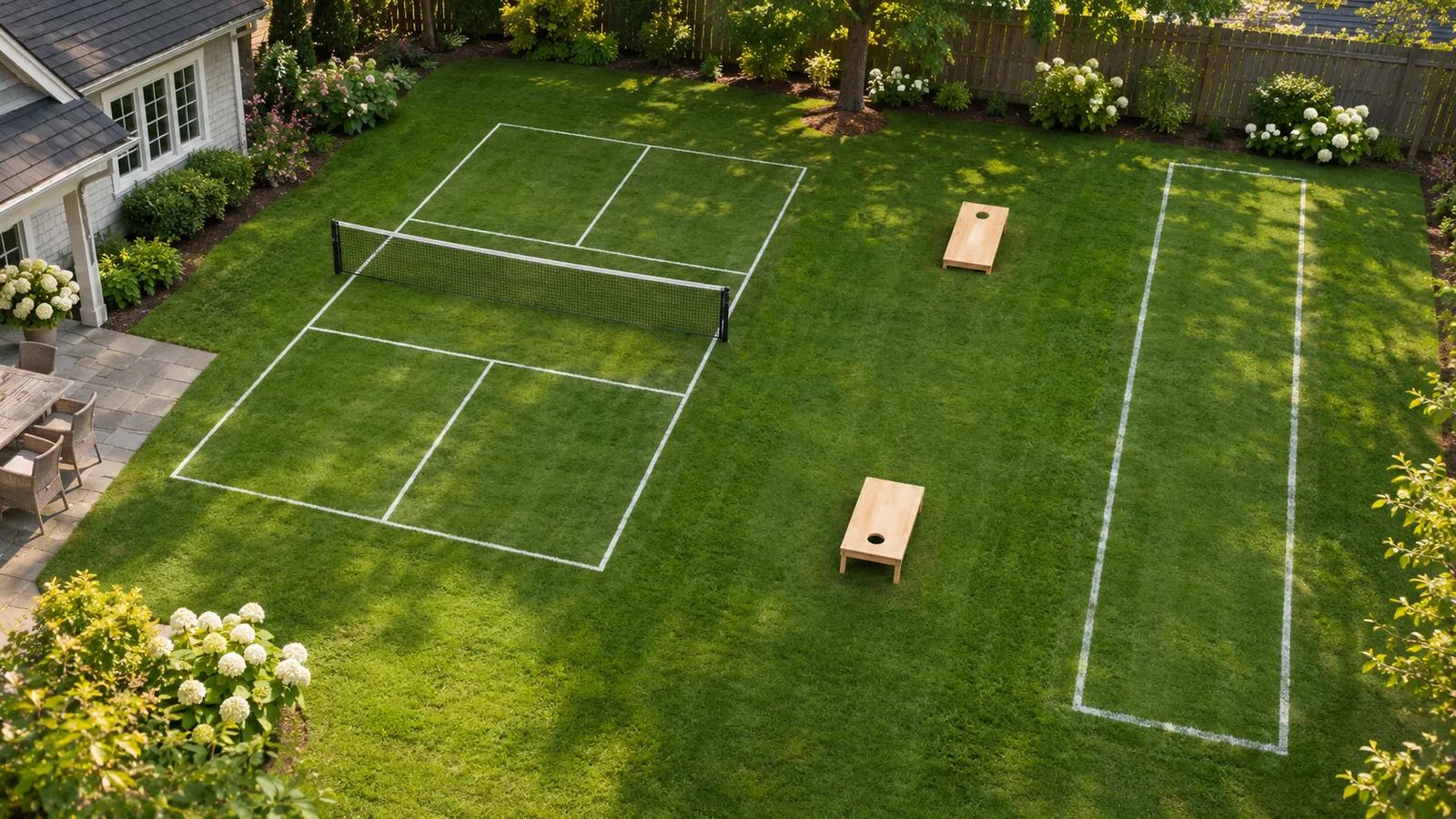
A pickleball court is 20 by 44 feet, and a 30 by 60 foot area gives players room to run. Use our game space checker to see whether your yard fits one, or the Yard Fit Planner to try different layouts.
A hard, flat surface
Driveways, patios and sport courts work. Grass does not give a proper bounce.
Court lines
Court-marking tape or chalk works for casual play. Permanent paint is better if you will play often.
Net height
Regulation height is 36 inches at the posts and 34 inches in the middle. Cheap nets often sag, so check with a tape measure.
Wind and storage
A portable net is not meant to stay out. Take it down and store it dry, and use extra weights in wind.
Keep going
See our lawn games guide and the full space guide for backyard games.
Frequently asked questions
What size is a pickleball net?
A regulation net is 21 feet 9 inches wide, 36 inches high at the posts and 34 inches high in the middle. Many portable nets are close to these numbers but not exact, so check the specs and adjust the center strap.
How big is a pickleball court?
The court is 20 feet wide by 44 feet long, and the common recommendation is a 30 by 60 foot area so players can run past the lines. It is the same for singles and doubles.
Can I play pickleball on grass?
You can rally, but the ball will not bounce properly. Pickleball is designed for a hard, flat surface such as asphalt or concrete.
Do I need special balls?
Outdoor pickleballs are harder and have smaller holes than indoor balls, which helps them fly better in wind. Use outdoor balls on outdoor courts.
Alex Mercer brings 15 years of experience and a practical editorial approach to Backyard Review. Alex compares published product information, installation needs and ownership costs, highlighting trade-offs and distinguishing research from documented hands-on experience.