Our top picks at a glance
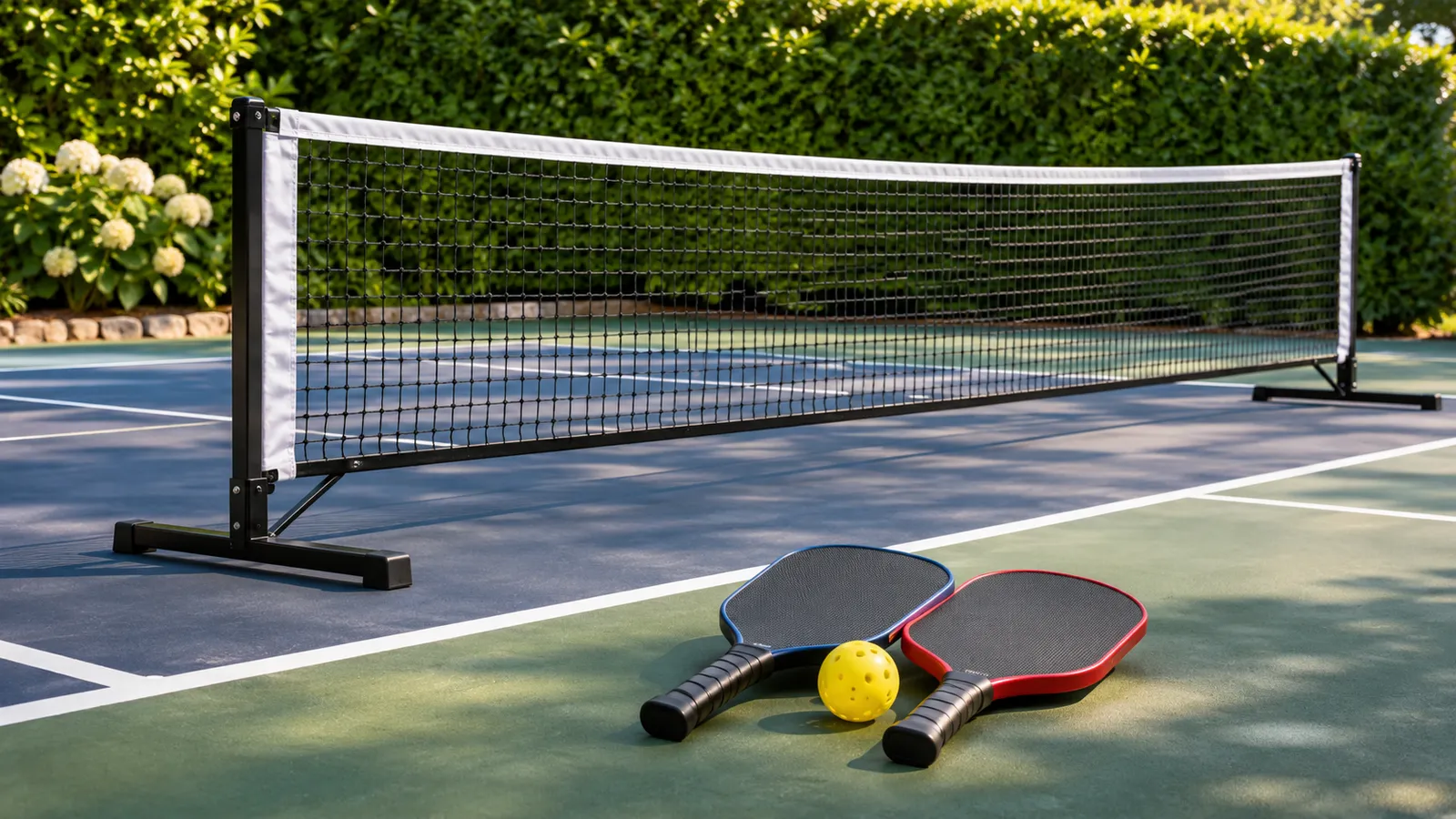
A portable net for a driveway court
Franklin Sports portable pickleball netsSee itPrice tier 1 of 4:Under $150Families and casual players who want to try pickleball without a big spend.A game that fits most yards
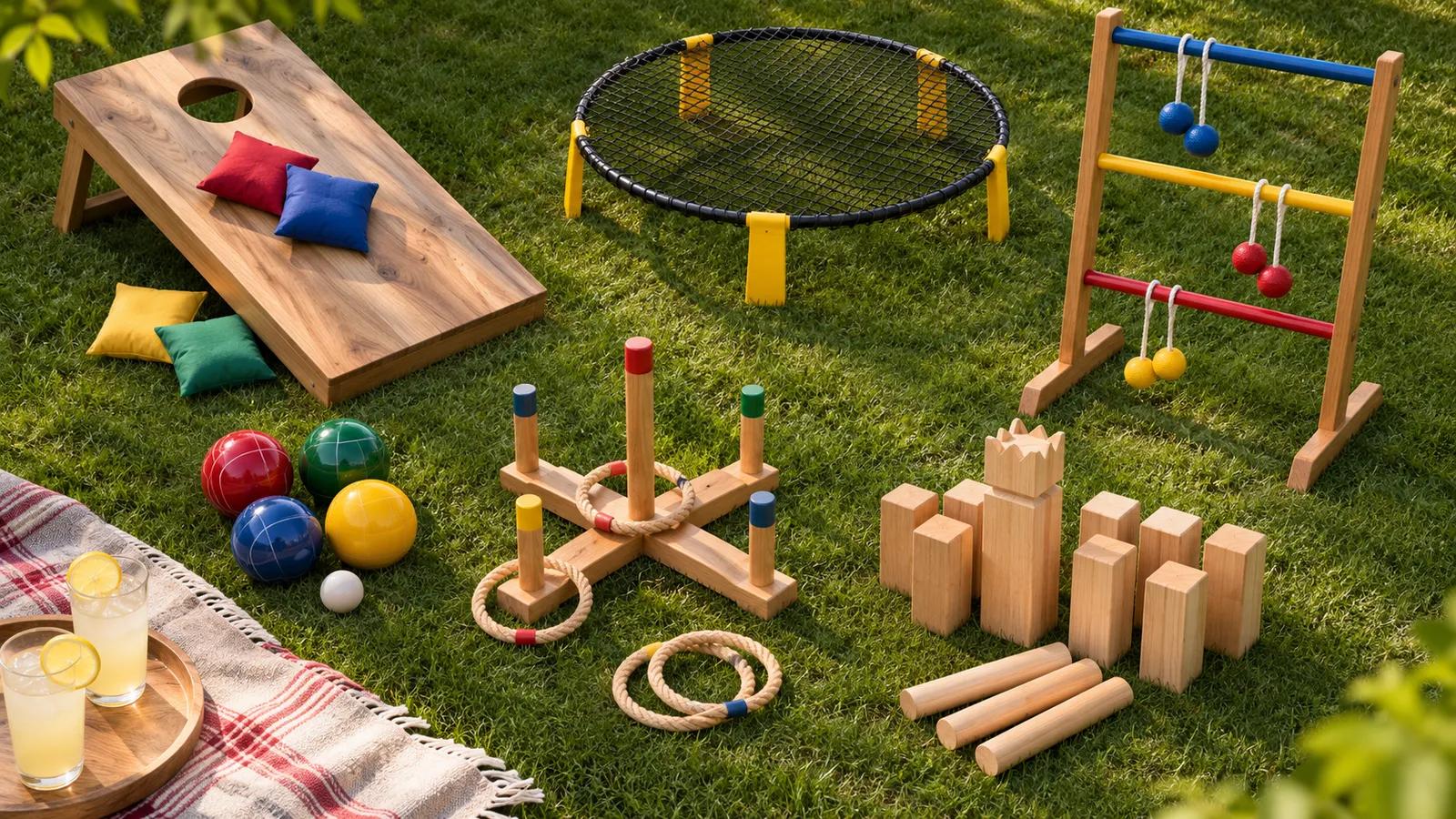
GoSports cornhole setsSee itPrice tier 2 of 4:$150–$500Cookouts, tailgates and families.A game for a small clearing
Spikeball roundnet setSee itPrice tier 1 of 4:Under $150Active groups, teens and adults.
Space is the thing people get wrong about backyard games. A box says a game is "portable" and says nothing about the 60-foot strip it needs. Here is what each game really takes.
The short answer
Cornhole, ladder toss and roundnet fit almost any yard. Bocce, horseshoes and kubb want long strips. Pickleball, badminton and volleyball need a lot of room, and tennis needs more than most yards have.
Court sizes at a glance
| Game | Playing area | Plan for (with run-off) |
|---|---|---|
| Cornhole | Boards 4 × 2 ft, 27 ft apart | About 35 ft long |
| Horseshoes | Stakes 40 ft apart | About 46 ft long, plus pits |
| Roundnet (Spikeball) | A small net | Roughly a 20 ft circle |
| Kubb | About 16 × 26 ft (5 × 8 m) | Add a few feet around |
| Bocce (backyard) | About 10 × 60 ft is common | Regulation courts are larger |
| Pickleball | 20 × 44 ft | About 30 × 60 ft |
| Badminton (doubles) | 20 × 44 ft | Wind is the enemy outdoors |
| Volleyball | About 30 × 60 ft | Add run-off for diving |
| Tennis | 36 × 78 ft | About 60 × 120 ft |
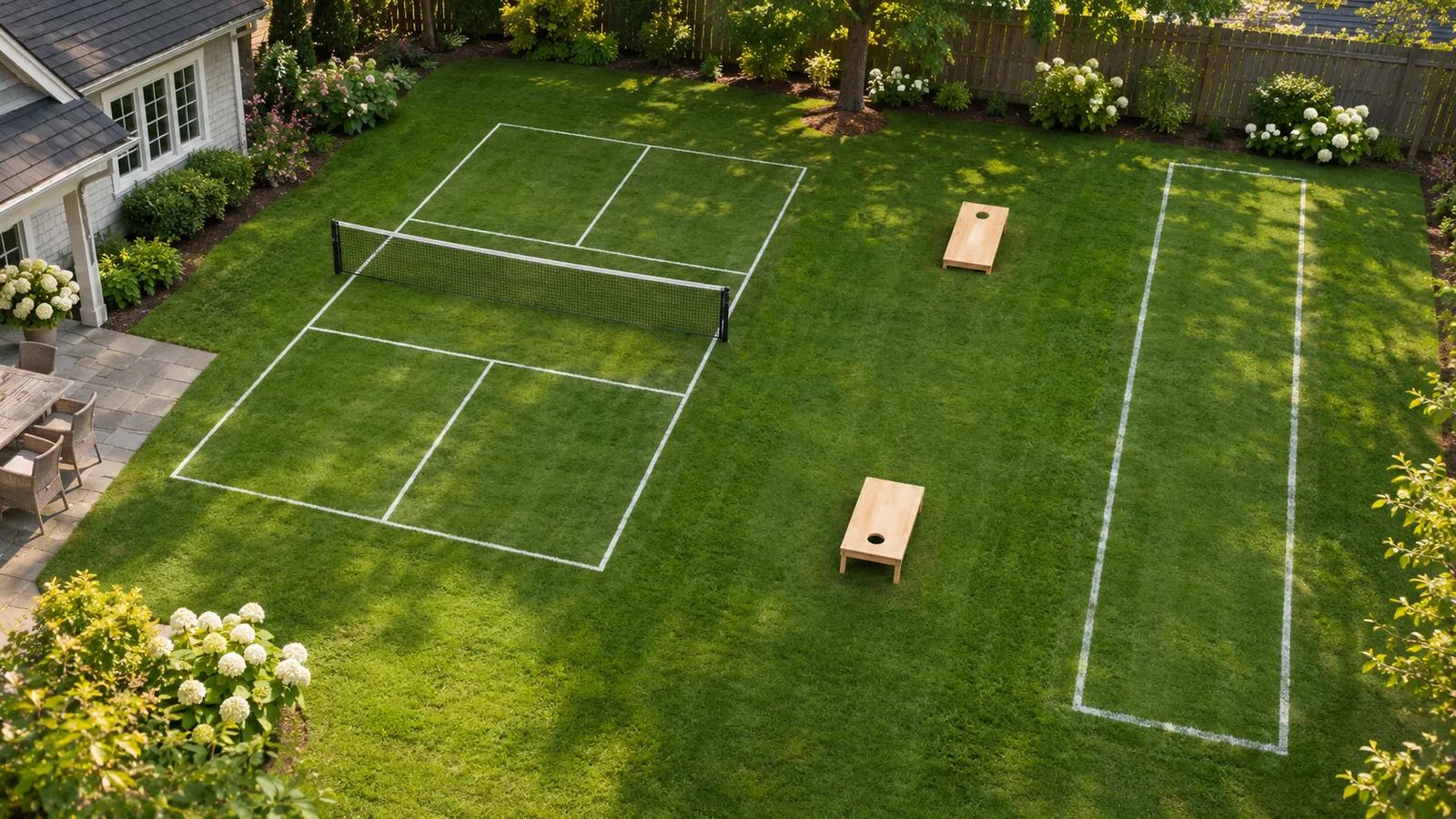
Our free game space checker takes your yard size and shows which of these fit, drawn to scale, and the Yard Fit Planner lets you lay one over your patio, fire pit and everything else.
Surfaces matter
- Pickleball, badminton and tennis want hard, flat, level ground. Asphalt and concrete are the standards, and grass gives a dead bounce.
- Cornhole, bocce, horseshoes and kubb work on lawn, but bocce wants it level and fairly short.
- Roundnet works on grass, sand or a patio.
Marking a court
- Chalk or tape works for casual play and is easy to remove.
- Paint is better if you will play often. Use paint that is suitable for the surface.
- Portable lines or rope suit lawn games.
Other things to think about
- Fences and neighbors. Balls fly. Think about where they will go.
- Sun. Our sun and shade planner shows where the light falls.
- Noise. Pickleball is loud, so check local rules and be considerate.
- Safety. Keep heavy or hard equipment away from windows and young children.
Our top picks
A portable net for a driveway court
Franklin Sports portable pickleball nets
An affordable, easy-to-set-up net for a driveway or sport court.
A portable net lets you turn a driveway or patio into a pickleball court only when you need it. Measure first, because the court needs more room than most people expect.
What we like
- Affordable, and widely available in a few designs
- Portable frames pack into a bag
- Quick setup for a casual game
Trade-offs
- Light frames can shift in wind
- Budget nets are not always perfectly regulation, so check the height and tension
- Not designed to stay out in the weather
- Best for
- Families and casual players who want to try pickleball without a big spend.
- Skip it if
- You play competitively or want a net that stays rock-solid in wind.
A game that fits most yards
GoSports cornhole sets
Regulation-size boards with bags and a carry case, ready for a cookout.
Cornhole needs a lane about 35 feet long but only a few feet wide, which fits many backyards.
What we like
- Regulation-size boards on many sets
- Carry cases make them easy to move and store
- Fun for every age
Trade-offs
- Boards are bulky to store
- Heavier than lightweight folding sets
- Quality of boards differs between price levels
- Best for
- Cookouts, tailgates and families.
- Skip it if
- You are short on storage space.
A game for a small clearing
Spikeball roundnet set
A fast, athletic game that needs little more than a flat patch of lawn.
Roundnet needs roughly a 20-foot circle of clear space, so it is a good pick when you do not have a long strip.
What we like
- Easy to learn and quick to set up
- Works on grass, sand or a patio
- Packs into a small bag
Trade-offs
- Fast and physical, so it is not for everyone
- Needs about a 20 ft circle of clear space
- The ball is hard, so mind faces and fingers
- Best for
- Active groups, teens and adults.
- Skip it if
- You want a relaxed game for all ages.
Keep going
See our guide to portable pickleball nets and our lawn games roundup.
Frequently asked questions
How much space do I need for a pickleball court?
A pickleball court is 20 by 44 feet, and a 30 by 60 foot area is the common recommendation so players can run past the lines. It needs a hard, flat surface.
How much space do I need for cornhole?
Regulation boards are 4 feet long and 2 feet wide, set 27 feet apart front edge to front edge. Including the boards, you need a lane about 35 feet long.
How big is a volleyball court?
A full court is about 30 by 60 feet, so it takes more space than most yards allow. Many backyard players use a smaller court or a short net.
What is the smallest backyard that can fit a game court?
Cornhole, ladder toss and roundnet fit most yards. Pickleball needs roughly 30 by 60 feet including run-off, and tennis needs about 60 by 120, which few yards have.
Alex Mercer brings 15 years of experience and a practical editorial approach to Backyard Review. Alex compares published product information, installation needs and ownership costs, highlighting trade-offs and distinguishing research from documented hands-on experience.