Our top picks at a glance
Weekly water checks
Hot tub test stripsCheck pricePrice tier 1 of 4:Under $150Weekly checks.Restores a tired filter
Hot tub filter cleanersCheck pricePrice tier 1 of 4:Under $150Cloudy water that a rinse does not fix.
Hot tub water problems look scary, but nearly all of them come from the same three things: a dirty filter, unbalanced water, or water that has simply been used too long. A weekly routine prevents most of it.
Safety first. Follow your maker's manual and each chemical's label. Never mix chemicals, store them separately, and do not add them to a tub with people in it. Electrical problems, such as a GFCI that keeps tripping, need your dealer or a licensed electrician.
The short answer
Test weekly, clean the filter on schedule, shower before you soak, and drain on your maker's schedule. Most cloudy or smelly water is fixed by one of those.
The weekly routine
- Test the sanitizer, pH and alkalinity with fresh test strips or a liquid kit.
- Adjust to the ranges on your maker's manual and the product labels. Public-health guidance generally lists a pH of about 7.2 to 7.8 for hot tubs, but your maker's range wins.
- Rinse the filter with a hose. Soak it in a filter cleaner on a regular schedule, and replace it when it is worn.
- Run the pump long enough to circulate the water, especially after heavy use.
- Keep the cover on to cut heat loss and keep debris out.
Common problems and fixes
Cloudy water
- Dirty or worn filter. Rinse, soak or replace it.
- Low sanitizer or water out of range. Test and adjust.
- Not enough filtration time. Run the pump longer.
- Old water. Drain and refill.
Foamy water
- Body products and soap residue. Rinse before getting in, and wash suits without strong detergent.
- Old water. Drain, clean the shell and refill.
- A defoamer can help as a stopgap.
Strong chemical smell
- Chloramines from bather waste. Test, shock per the label and ventilate.
- Out-of-range pH. Adjust.
Green or slimy water
- No sanitizer, or algae. Test, shock and clean the filter. If it returns, flush the plumbing with a line cleaner, drain, scrub the shell and refill. Consult your dealer if it persists.
Scale or stains
- Hard water. Test calcium hardness and use a stain and scale product per the label.
Won't heat
- Clogged filter or low water level. Clean the filter and check the level.
- Controller settings or error codes. Check the manual.
- Tripped GFCI. Reset once. If it trips again, leave it off and call your dealer or a licensed electrician.
Our top picks
Weekly water checks
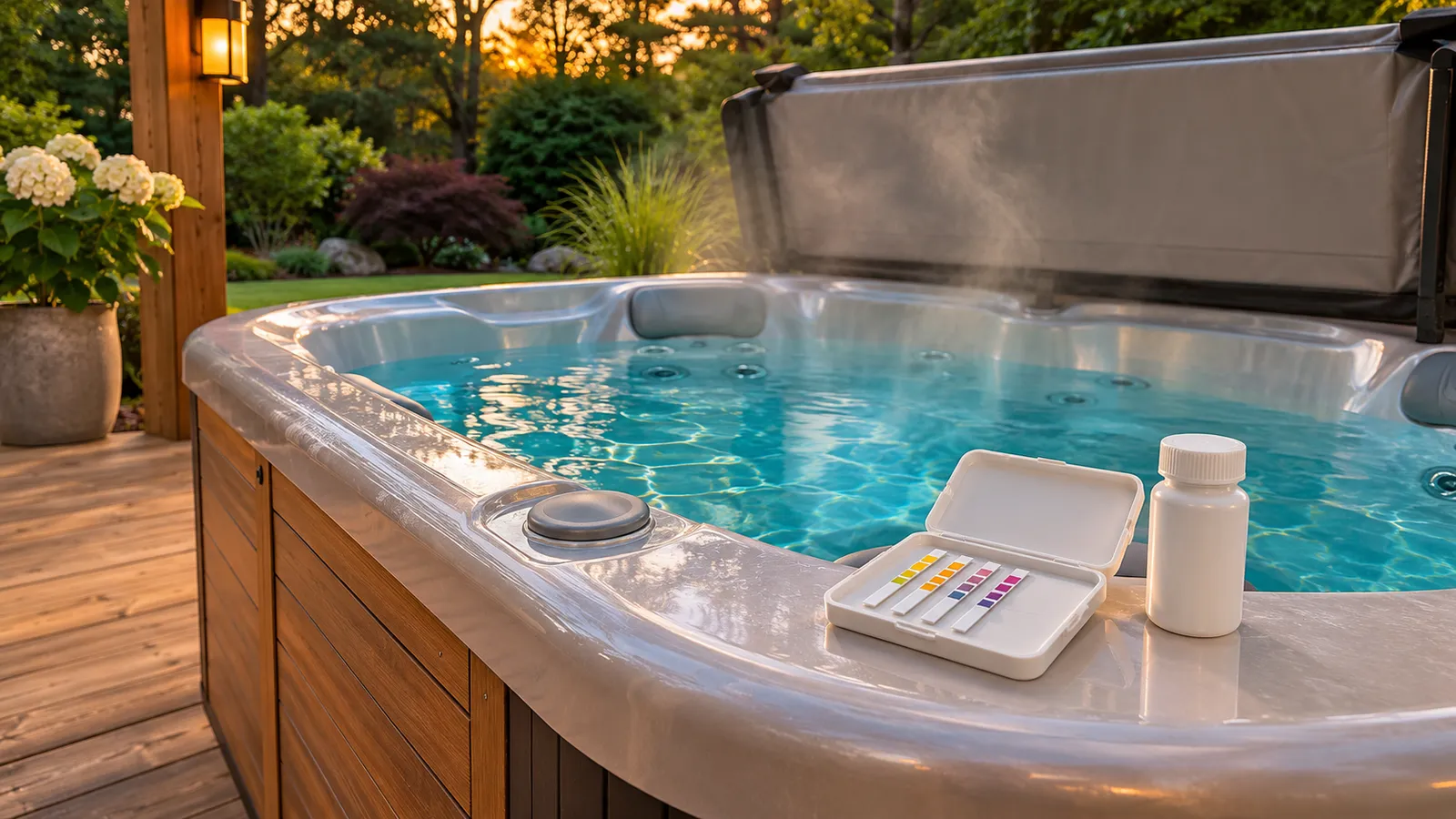
Hot tub test strips
A quick way to check sanitizer, pH and alkalinity.
Fast and cheap, and good for weekly checks of sanitizer, pH and alkalinity. Strips expire and are less precise than a liquid kit, so use fresh ones and make sure they test the sanitizer you use.
What we like
- Fast and cheap
- No equipment needed
- Good for weekly checks
Trade-offs
- Strips expire, so use fresh ones
- Less precise than a liquid kit or a pool store test
- Make sure they test the sanitizer you use (chlorine or bromine)
- Best for
- Weekly checks.
- Skip it if
- You want lab-grade accuracy.
Restores a tired filter
Hot tub filter cleaners
A soak that strips oils and minerals from pleated filters.
A soak strips oils and minerals from pleated filters. Follow the label closely and rinse thoroughly, and replace a filter that is worn out.
What we like
- Restores filter flow
- Cheap and easy to use
- Stretches the life of a filter
Trade-offs
- Follow the label closely and rinse thoroughly
- Worn filters still need replacing
- Keep it away from other chemicals
- Best for
- Cloudy water that a rinse does not fix.
- Skip it if
- Your filter is worn out.
When to drain and refill
Many makers suggest every three to four months. Drain sooner after heavy use, if the water stays cloudy or foamy after treatment, or if you cannot get a stable reading. Follow your manual for the right way to drain, clean the shell and flush the lines. Our volume calculator helps you work out how much water you are dealing with.
Related guides
See our hot tub buying guide, the best inflatable hot tubs, and our hot tub running-cost calculator.
Frequently asked questions
Why is my hot tub water cloudy?
Usually a dirty or worn filter, low sanitizer, out-of-range pH or alkalinity, too little filtering time, or old water with a lot of body products in it. Test the water, clean or replace the filter, and run the pump longer.
Why is my hot tub foamy?
Body products, soap residue in swimsuits and old water are the usual causes. Rinse before you get in, balance the water, and drain and refill if the foam keeps coming back.
Why does my hot tub smell like chlorine?
A sharp chlorine smell usually means used-up sanitizer, called chloramines, not too much. Test the water, then shock it per the product label and leave the cover off for a while to ventilate.
How often should I drain a hot tub?
Many makers suggest every three to four months, depending on use. Heavy use, very cloudy or foamy water, or a high dissolved-solids reading means sooner. Follow your manual.
Alex Mercer brings 15 years of experience and a practical editorial approach to Backyard Review. Alex compares published product information, installation needs and ownership costs, highlighting trade-offs and distinguishing research from documented hands-on experience.