Our top picks at a glance
Know if your wood is dry
Firewood moisture metersCheck pricePrice tier 1 of 4:Under $150Smoky fire pit owners.Skip the waiting
Kiln-dried firewood bundlesCheck pricePrice tier 1 of 4:Under $150Smokeless pits and quick fires.A smokeless-design pit
Solo Stove Bonfire 2.0See itPrice tier 2 of 4:$150–$500Most households with a patio or lawn who want an easy, mostly smokeless fire.A permanent smokeless pit
Breeo X SeriesSee itPrice tier 3 of 4:$500–$1,500People who want a permanent centerpiece that doubles as an outdoor cooking station.
A smoky fire pit is a fire that is not burning completely. The smoke is fuel that did not burn, and that is almost always a problem with the wood or the airflow, both of which you can fix.
The short answer
Burn dry, seasoned hardwood, keep the fire below the vents on a smokeless pit, and clear the ash. A moisture meter will tell you whether the wood is the problem.
The seven causes
1. Wet or unseasoned wood
This is the big one. Wet wood steams and smolders, giving thick white smoke. Aim for about 20 percent moisture or less. Check with a meter on a freshly split face.
2. The wrong wood
Softwoods like pine are resinous and produce sparks and sooty smoke. Hardwoods like oak, hickory and maple burn hotter and cleaner.
3. Overfilling a smokeless pit
A double-wall smokeless pit works by pulling air through vents. Stacking wood above those vents starves the burn and makes smoke. Keep the fire below the upper vent ring.
4. Ash blocking the airflow
Ash piles up in the base and covers the vents. Empty cold ashes into a metal container before each fire.
5. Packing logs too tightly
Fire needs air. Leave gaps between logs and build on a base of dry kindling.
6. Wind
A gust can push smoke into your face. Place the pit where the prevailing wind carries the smoke away from seating and your neighbors' windows.
7. A cold start
Every fire smokes while it gets going. Use dry kindling and a small starter, and let it catch before adding big logs.
Our top picks
Know if your wood is dry
Firewood moisture meters
A cheap probe that tells you if wood is dry enough to burn clean.
A cheap meter takes the guesswork out of seasoning. It reads best on a freshly split face, and aiming for under about 20 percent moisture is a common target.
What we like
- Takes the guesswork out of seasoning
- Cheap
- Useful for any wood-burning pit or stove
Trade-offs
- Reads best on freshly split faces
- Cheaper meters vary in accuracy
- Aim for under about 20% moisture
- Best for
- Smoky fire pit owners.
- Skip it if
- You only burn kiln-dried wood.
Skip the waiting
Kiln-dried firewood bundles
Dry, consistent wood that lights fast and burns cleaner.
Kiln-dried bundles are consistently dry, light fast and burn cleaner. They cost more per log than seasoning your own, so they suit occasional fires.
What we like
- Consistently dry
- Lights easily and burns cleaner
- Convenient bundles
Trade-offs
- More expensive per log than seasoning your own
- Small bundles go quickly
- Check the species
- Best for
- Smokeless pits and quick fires.
- Skip it if
- You have a lot of seasoned wood.
A smokeless-design pit
Solo Stove Bonfire 2.0
The default smokeless fire pit — and still the best all-rounder.
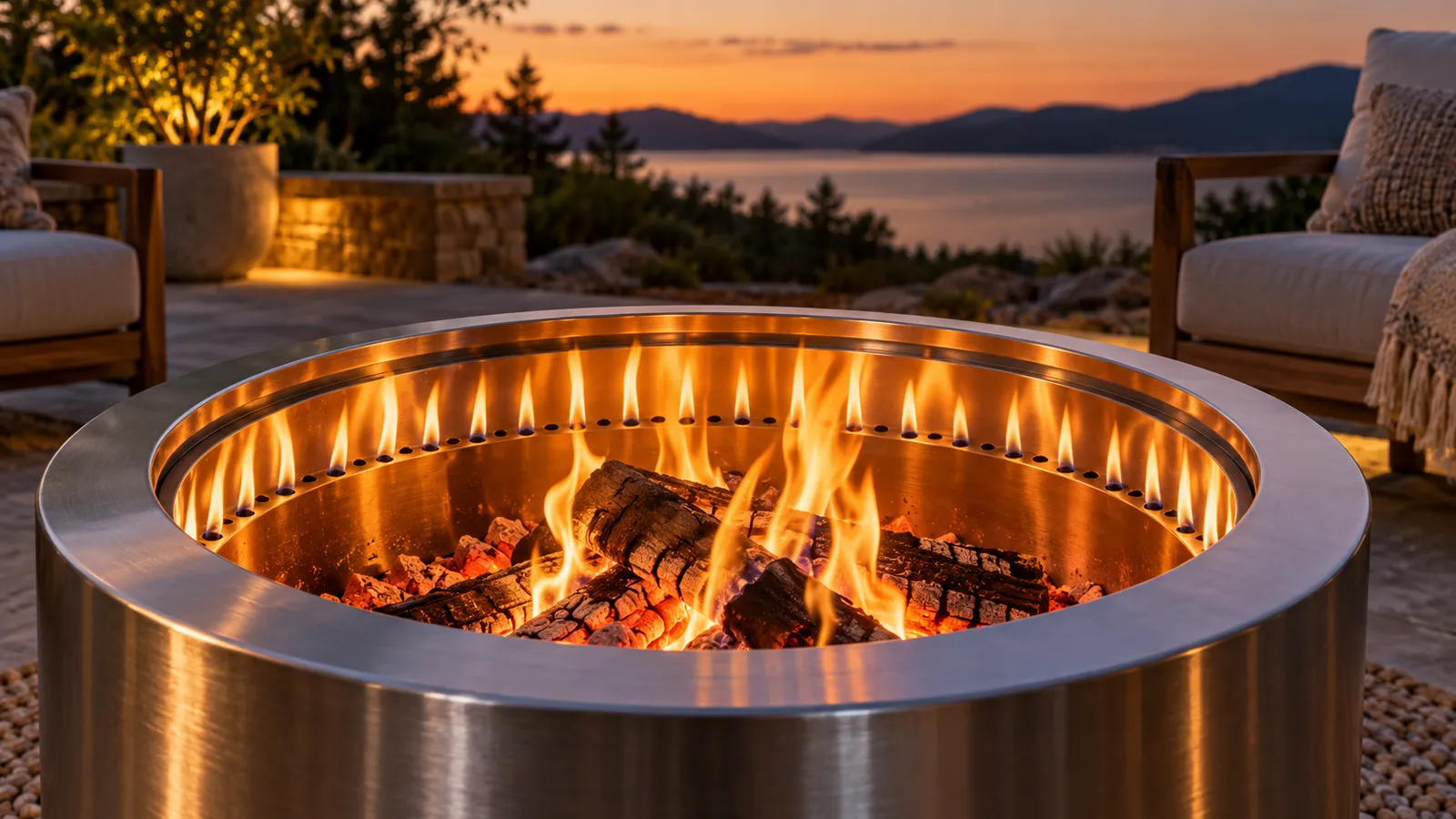
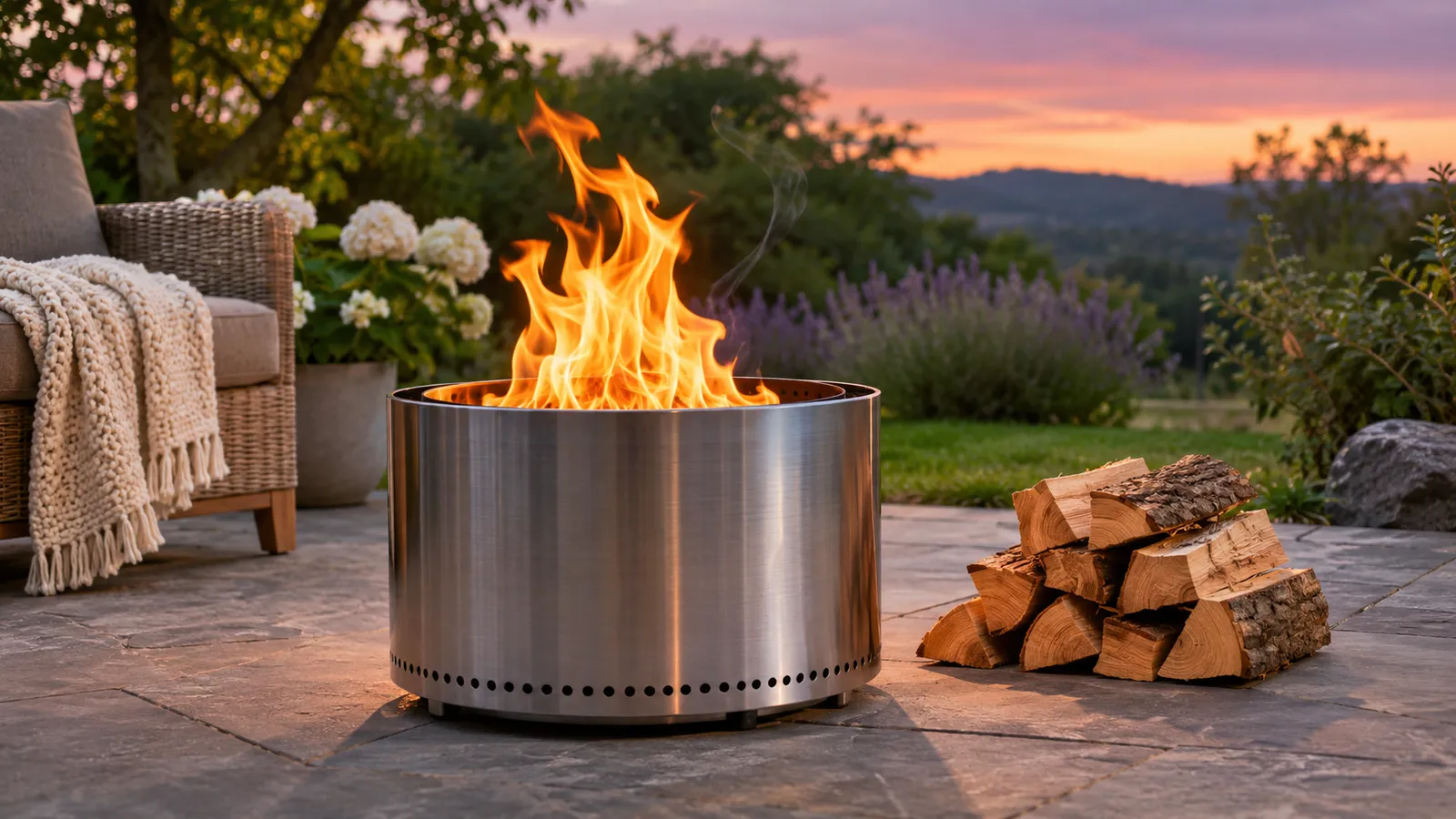
A double-wall design pulls air through to burn wood more completely, so it makes less smoke. It still needs dry wood, and it is not magic.
What we like
- Double-wall design pulls air through to burn wood more completely, so less smoke
- Portable stainless steel construction that's easy to move and store
- Large accessory ecosystem: stands, shields, lids, cooking tools
Trade-offs
- Needs dry, seasoned wood to stay smokeless
- Stainless steel discolors with heat — that's normal, but not everyone likes it
- Best for
- Most households with a patio or lawn who want an easy, mostly smokeless fire.
- Skip it if
- You want a pit you can leave out and forget — consider a heavier steel pit.
A permanent smokeless pit
Breeo X Series
The heavy-duty smokeless pit built to live outside.
A heavy steel pit with airflow designed to reduce smoke. It is a bigger investment, and it also wants dry hardwood.
What we like
- Thick Corten steel that's built to weather outdoors for years
- Smokeless airflow design and a wide range of cooking accessories
- Available in multiple sizes up to large installations
Trade-offs
- Heavy — plan on a permanent location
- Costs more than portable stainless pits
- Best for
- People who want a permanent centerpiece that doubles as an outdoor cooking station.
- Skip it if
- You want something portable or inexpensive.
What not to burn
Never burn trash, painted, stained or treated wood, plywood or anything with chemicals, because it releases harmful fumes. Use only dry, untreated firewood.
Check your local rules
Many places restrict wood fires, especially in dry periods. Check with your city or fire department. If wood is restricted or you hate the smoke, a propane fire table avoids it, so read wood vs. propane fire pits.
Keep going
See the best smokeless fire pits, the fire pit distance guide, and our troubleshooter.
Frequently asked questions
Why does my fire pit smoke so much?
Smoke is unburned fuel, and the most common cause is wet or unseasoned wood. Resinous softwood, overfilling a smokeless pit above its vents, and ash blocking airflow also cause it.
How dry does firewood need to be?
A common target is about 20 percent moisture or less. A cheap moisture meter, used on a freshly split face, tells you. Seasoned hardwood often needs six months to a year or more after splitting, depending on species and climate.
Are smokeless fire pits really smokeless?
They make far less smoke than an open fire when burned correctly with dry, seasoned hardwood, but they are not magic. Wet or resinous wood still smokes, and most produce some smoke at startup.
What should I never burn in a fire pit?
Never burn trash, painted, stained or treated wood, plywood or anything with chemicals, because it releases harmful fumes. Stick to dry, untreated firewood and follow local burn rules.
Alex Mercer brings 15 years of experience and a practical editorial approach to Backyard Review. Alex compares published product information, installation needs and ownership costs, highlighting trade-offs and distinguishing research from documented hands-on experience.